

monday CRM is a strong pick for UK teams that want the cheapest GBP-priced entry into a board-based, visual CRM. It scores 8.2/10 in our review. Basic starts at £10/seat/month billed annually. But a 3-seat minimum means the real entry cost is £30/month, not the £10 headline figure most ads lead with.
monday CRM is a different product from monday.com Work Management. They share a brand and a board-based interface. But they run on separate pricing pages with different tiers. Confusing the two is the single most common mistake buyers make when researching this provider. This review covers monday CRM’s pricing, features, where it falls short, and how it stacks up against Pipedrive, Salesforce and HubSpot’s free tier. For the full shortlist of UK CRM options, see our best CRM software UK guide, which ranks monday CRM against seven other verified providers.
FREE QUOTE COMPARISON
Compare CRM Software Quotes from Trusted Suppliers
100% free • No obligation • Takes under 2 minutes
- Cheapest GBP entry in the cluster - monday CRM Basic is £10/seat/month billed annually, undercutting Pipedrive’s £14/seat and Salesforce’s £20/user.
- 3-seat minimum changes the real cost - plans “start from 3 users”, so the actual entry price is £30/month, not £10.
- No permanent free tier for the CRM - only a 14-day trial, unlike monday.com Work Management’s separate free plan.
- Built-in quoting from day one - Basic includes 20 quotes and invoices a month, a feature Pipedrive and Salesforce don’t offer at entry level.
- Feature ceiling is shallow - Basic caps at 1,000 contacts and 5 columns per board, thinner than dedicated sales CRMs at the same price point.
What Is monday CRM?
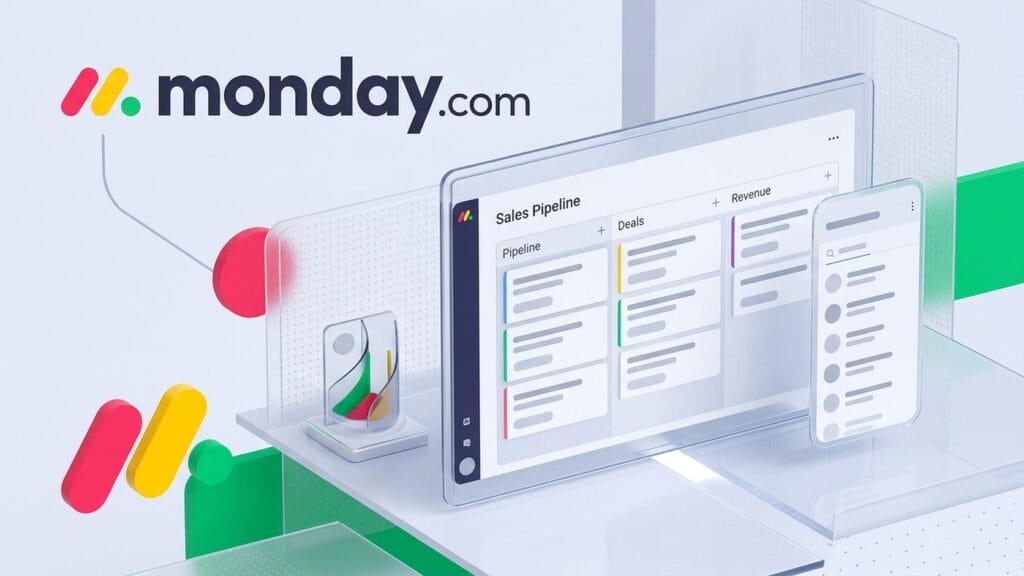
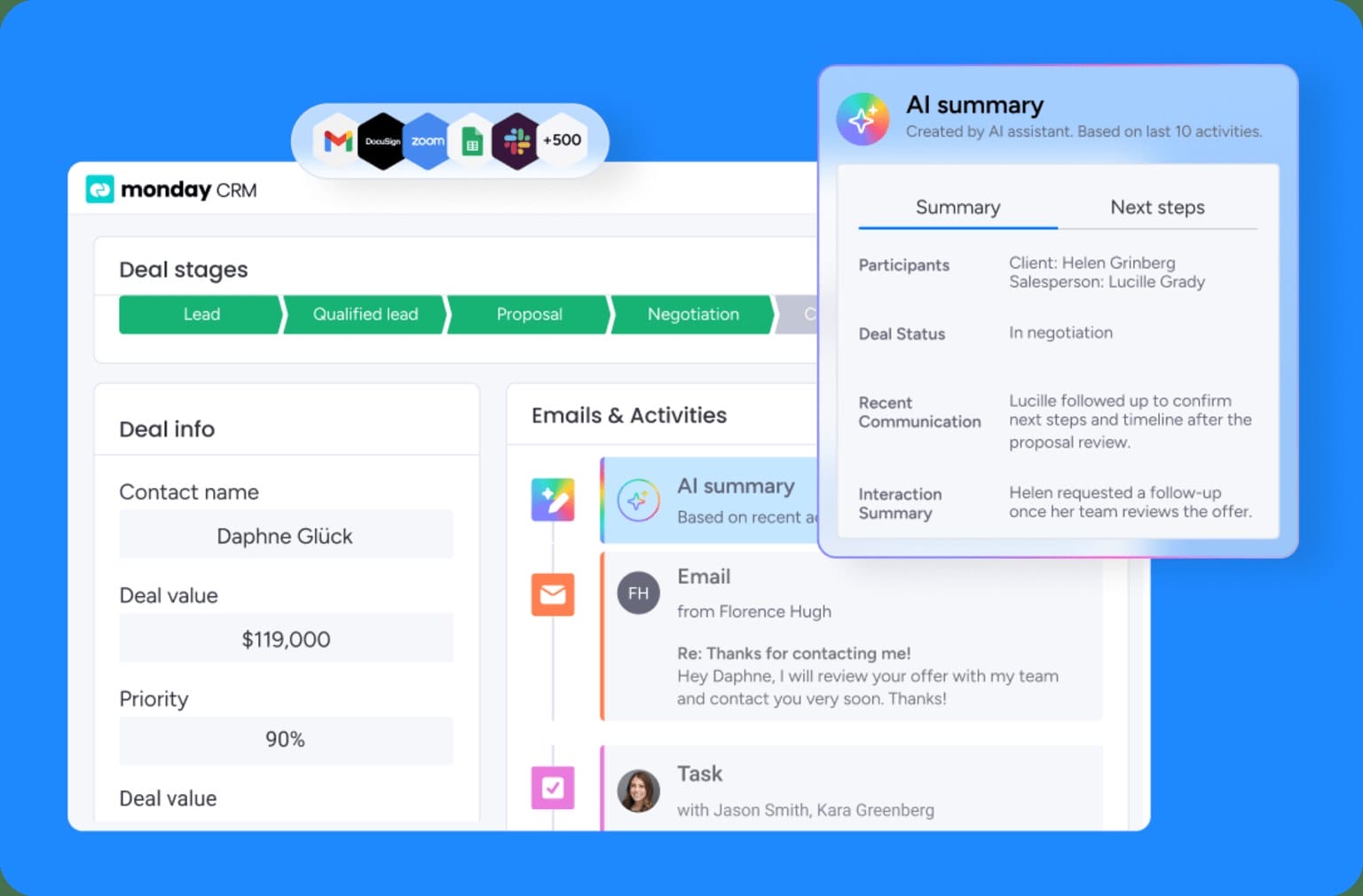
monday CRM is a sales pipeline tool built on monday.com’s board-based work platform. Every deal, contact and task lives on a customisable, colour-coded board, rather than a traditional list view. It’s designed to feel like a spreadsheet you already know how to use. That’s why teams who find conventional CRM screens intimidating tend to get a working pipeline live within hours.
monday CRM is not the same product as monday.com Work Management. Work Management is monday.com’s general project and task-tracking platform. It has its own Free/Basic/Standard/Pro/Enterprise tiers and a genuine permanent free plan for up to 2 seats. monday CRM is a separate, sales-specific product with its own pricing page, its own tier names and its own quoting and invoicing tools built in. If you land on monday.com’s general pricing page while researching the CRM, you’re looking at the wrong product and the wrong figures.
Four tiers, Basic, Standard, Pro and Ultimate, add contacts, dashboards, automations and workspaces as a team’s needs grow. G2 rates monday.com 4.7/5 across more than 18,000 verified reviews. That score covers the company’s products broadly, not the CRM specifically, so treat it as a directional signal rather than a CRM-only rating. For the full CRM shortlist, our best CRM software UK guide compares monday CRM against Pipedrive, Salesforce and five other verified providers.
monday CRM Pricing UK 2026
monday CRM’s four tiers run from £10 to £24 per seat per month on annual billing. GBP figures are confirmed directly on monday.com’s UK pricing page. The catch that trips up small teams is the 3-seat minimum. It means the real entry cost on Basic is £30/month, not the £10 headline rate that gets quoted everywhere.
monday CRM has four tiers. Basic is £10/seat/month billed annually, or £13/seat/month billed monthly. Standard is £14/seat/month. Pro is £24/seat/month billed annually, or £31/seat/month billed monthly, and is marked “Most Popular” on the pricing page. Ultimate is a custom quote for enterprise-scale teams. Every figure is confirmed in GBP directly on monday.com’s UK pricing page, not converted from another currency, and a footnote states prices exclude tax. monday CRM’s own FAQ states: “Plans start from 3 users.” A solo founder cannot buy a single seat, and the per-seat prices shown on the page are displayed at a 10-seat example team size. That means the real minimum monthly cost on Basic is £30, not the £10 headline rate. Budget for that before comparing monday CRM’s sticker price against a provider with no seat minimum, such as Pipedrive.
| Tier | Price (Annual Billing) | Price (Monthly Billing) | What It Unlocks |
|---|---|---|---|
| Basic | £10/seat/month | £13/seat/month | 1,000 active contacts & deals, 1 dashboard, 5 columns/board, 20 quotes & invoices/month, 1 workspace, mass email & email sequences |
| Standard | £14/seat/month | £18/seat/month | Everything in Basic, plus 10,000 contacts & deals, 5 dashboards, 15 columns/board, 50 quotes & invoices/month, 3 workspaces, 250 automations/month |
| Pro MOST POPULAR | £24/seat/month | £31/seat/month | Everything in Standard, plus 100,000 contacts & deals, 50 dashboards, 75 columns/board, 250 quotes & invoices/month, 15 workspaces, 25,000 automations/month |
| Ultimate | Contact sales | Contact sales | Unlimited contacts, deals, dashboards & workspaces, security & governance, multi-level permissions, HIPAA compliance, enterprise-grade 24/7 support |
Every paid tier also includes AI features on a credits basis: an AI-powered Sidekick assistant and AI Notetaker hours, sold on a “start free, buy more as needed” model layered on top of seat pricing. There’s no permanent free CRM plan on any tier, only a 14-day free trial with no credit card required. For how monday CRM’s pricing sits against the other seven UK CRM providers we’ve verified, see our CRM software costs UK guide. For tier-by-tier starting recommendations by team size, see our best CRM for small business guide.
monday CRM Key Features
monday CRM’s standout features are its board-based visual pipeline, built-in quoting and invoicing from the entry tier, and credits-based AI tools on every paid plan. Together they let a small sales team run deals, paperwork and follow-up from one screen, without a separate invoicing tool bolted on.
Boards and Visual Pipeline
Every deal, contact and task sits on a customisable board, moved between stages by drag and drop, with colour-coding that shows status at a glance. Basic caps a board at 5 columns and 1 dashboard. That’s enough for a simple pipeline but limiting once a team wants to track more than the basics. Standard raises that to 15 columns and 5 dashboards. Pro raises it further to 75 columns and 50 dashboards, so the ceiling scales with the tier you pay for.
Built-In Quoting and Invoicing
Basic includes 20 quotes and invoices a month directly in the platform, rising to 50 on Standard and 250 on Pro. This is a genuine differentiator against Pipedrive and Salesforce. Neither bundles quoting into its entry tier. For a small team that currently emails quotes as PDFs from a separate tool, having them attached to the deal record from day one removes a manual step.
Automation and AI
Automations scale sharply by tier. Basic has none listed, Standard unlocks 250 automations a month, and Pro jumps to 25,000. Every paid tier also includes the AI Sidekick assistant and AI Notetaker on a credits basis. Lighter users pay less for AI than heavy users, rather than a flat fee baked into every seat regardless of use.
Workspaces and Contact Limits
Basic covers 1,000 active contacts and deals in a single workspace, which suits a small sales team with one pipeline. Standard triples that to 10,000 contacts across 3 workspaces, useful for a business running separate pipelines for sales and account management. Pro’s 100,000 contacts and 15 workspaces target a growing mid-market team rather than a two-person startup.
monday CRM Limitations
monday CRM’s biggest drawbacks are the 3-seat minimum that inflates the real entry cost, tier limits that cap contacts and automations more tightly than dedicated sales CRMs at a similar price, and the absence of any permanent free plan for the CRM product itself.
The 3-seat minimum is the detail most likely to catch a solo founder or two-person team out. You can’t buy a single seat at the advertised £10 rate, so the realistic floor for a small team is £30/month on Basic. Unlike Zoho CRM or Freshsales, which both offer a genuine forever-free tier for small teams, monday CRM’s only no-cost option is a 14-day trial.
monday CRM is also shallower than a dedicated sales CRM once you look past the visual layer. Basic’s 5-column board and 1,000-contact cap are tight for anything beyond a simple pipeline. Features like lead scoring, e-signatures and phone-call tracking aren’t part of monday CRM’s core feature set at any tier, though Pipedrive and Salesforce both build these in from a mid tier. A board-based interface also asks more of a team that wants structured, sales-specific reporting, rather than a general-purpose visual tool repurposed for sales.
How Does monday CRM Compare?
monday CRM undercuts Pipedrive and Salesforce on headline price and wins on ease of setup. But it trades some sales-specific depth for that simplicity. Which one fits depends on whether your team wants a purpose-built pipeline, enterprise-grade customisation, or a free start that grows later.
monday CRM vs Pipedrive
Pipedrive starts at £14/seat/month billed annually on its Lite tier, with no seat minimum, so a solo founder can buy in at that exact rate. monday CRM’s £10/seat headline looks cheaper, and stays cheaper even once the 3-seat minimum is factored in: 3 seats of monday CRM Basic costs £30/month against £42/month for 3 seats of Pipedrive Lite (full tier-by-tier maths in our monday CRM vs Pipedrive comparison). Where Pipedrive is a dedicated, sales-first pipeline tool, monday CRM is built on a general work-management board format. That trades some sales-specific polish for broader flexibility and built-in quoting. Read our Pipedrive review for the full tier breakdown.
monday CRM vs Salesforce
Salesforce starts at £20/user/month for Starter Suite and climbs to £440/user/month for its full Max edition, all billed annually above the entry tier. That range buys deep customisation, advanced pipeline management and a much larger app ecosystem, one monday CRM doesn’t attempt to match. For a small UK team that wants a working pipeline without a steep learning curve or enterprise pricing, monday CRM is the faster, cheaper starting point. For a business planning to scale a large, complex sales organisation, Salesforce’s depth becomes worth the cost. Our Salesforce review covers Salesforce’s tiers and features in full.
monday CRM vs HubSpot’s Free Path
HubSpot’s Smart CRM is free for up to 2 users, with no time limit and no credit card required. Free-tier tools carry HubSpot branding, and Professional adds a mandatory £1,310 one-time onboarding fee on top of seat pricing. If your team is 1-2 people and £0 matters more than features, HubSpot’s free tier beats monday CRM’s 14-day trial and 3-seat minimum outright. Once a team needs 3 or more seats and built-in quoting, monday CRM’s £10/seat Basic tier is the cheaper, faster-to-configure option. Our free CRM software UK guide compares HubSpot’s free tier against Zoho and Freshsales in depth.
Who Should Choose monday CRM?
monday CRM suits UK teams of 3 or more people who want the fastest possible setup, a visual board they’ll actually use daily, and quoting built into the pipeline. It’s a weaker fit for solo founders, teams under the 3-seat minimum, and anyone needing sales-specific depth like lead scoring or native calling.
monday CRM is the strongest fit for a small sales or account-management team that already finds spreadsheets comfortable, and wants that same visual logic applied to a proper pipeline, with quotes and invoices attached to each deal rather than emailed separately. It also suits a business already using monday.com Work Management elsewhere, since adding the CRM keeps everything on one familiar interface, though the two remain separately priced products.
It’s a weaker fit for a solo founder who can’t justify 3 seats, since the real entry cost is £30/month rather than the advertised £10. It’s also not the right choice for a team that needs native calling, advanced lead scoring or e-signatures as a core requirement. Pipedrive and Salesforce both build these in more directly. If your team is still deciding whether a CRM makes sense at all, our what is a CRM guide is the place to start. Our best sales CRM UK guide compares monday CRM against calling-first and pipeline-first alternatives.
monday CRM Pros and Cons
monday CRM’s biggest strength is the combination of the cheapest GBP headline price in the cluster with a genuinely fast setup and built-in quoting. Its main limitations are the 3-seat minimum that inflates the real cost, and tier limits that cap out sooner than a dedicated sales CRM at the same price.
Our Verdict
monday CRM earns an 8.2/10 in our review for pairing the cheapest GBP headline price in the cluster with a setup speed few CRMs can match, quoting and invoicing built in from the start. The 3-seat minimum and shallower feature ceiling versus dedicated sales CRMs are real trade-offs. But for a small UK team that wants a visual pipeline live within hours, monday CRM is one of the fastest, most affordable ways to get there.
monday CRM is the fastest, cheapest way for a UK team of 3 or more to get a working visual pipeline live, with quoting and invoicing built in from day one. The 3-seat minimum and a feature ceiling that's shallower than dedicated sales CRMs are worth weighing, but for teams that value speed and price over sales-specific depth, monday CRM is a strong, defensible pick.