




Pipedrive is a strong pick for UK sales teams that want a genuinely easy-to-use, pipeline-first CRM without Salesforce-level cost or complexity, scoring 8.5/10 in our review. Its Lite tier starts at £14/seat/month billed annually, and its 500+ integrations and AI-assisted reporting scale it well beyond a simple deal tracker as a team grows.
Built around a visual, drag-and-drop sales pipeline, Pipedrive has become one of the most widely used CRMs among UK small and mid-sized sales teams precisely because it does one thing well rather than trying to be an all-in-one platform. This review covers Pipedrive’s four pricing tiers, its core features, where it falls short, and how it stacks up against Salesforce, monday CRM and Close. For the full shortlist of UK CRM options, see our best CRM software UK guide, which ranks Pipedrive against seven other verified providers.
FREE QUOTE COMPARISON
Compare CRM Software Quotes from Trusted Suppliers
100% free • No obligation • Takes under 2 minutes
- Best for pipeline-first sales teams - Pipedrive scores 8.5/10, built around a visual, drag-and-drop deal pipeline.
- Pricing starts at £14/seat/month - the Lite tier, billed annually and ex-VAT; four tiers scale up to £79/seat/month on Ultimate.
- No permanent free tier - only a 14-day full-access trial, no credit card required.
- 500+ integrations from the entry tier - full email sync, automation and e-signatures unlock on Growth and Premium.
- Annual billing saves up to 42% - versus paying monthly, though the exact monthly rate isn’t published on Pipedrive’s pricing page.
What Is Pipedrive?
Pipedrive is a sales-focused CRM built around a visual pipeline, where every deal moves through stages you define, from first contact to close. It’s designed for sales teams first, rather than as a general business platform, which keeps the interface simple compared with broader suites like Salesforce.
The platform organises everything around deals, contacts and activities, with a real-time sales feed showing what your team is working on. Pipedrive’s own pricing page cites strong third-party sentiment: Capterra rates it 4.5/5, G2 4.2/5, Gartner 4.3/5 and GetApp 4.5/5, figures consistent with a tool most reps find quick to learn rather than one that needs weeks of onboarding. Four pricing tiers, Lite, Growth, Premium and Ultimate, add automation, lead generation and enterprise controls as a team’s needs grow, without forcing a small team to pay for features it doesn’t use yet.
Pipedrive Pricing UK 2026
Pipedrive’s four tiers run from £14 to £79 per seat per month on annual billing, with every figure confirmed in GBP directly on Pipedrive’s own UK pricing page. Pipedrive states plainly that its prices are VAT-exclusive, so budget for tax on top of every figure below, and there’s no permanent free plan, only a 14-day full-access trial.
Pipedrive’s annual pricing runs Lite at £14/seat/month (£168/seat/year), Growth at £39/seat/month (£468/seat/year), Premium at £59/seat/month (£708/seat/year) and Ultimate at £79/seat/month (£948/seat/year). Pipedrive marks Premium as its “Most Popular” tier on the pricing page. All four figures are confirmed directly on pipedrive.com for a UK visitor, not converted from another currency, and the page explicitly states prices are VAT-exclusive. Paying monthly instead costs Lite £24, Growth £49, Premium £79 and Ultimate £99 per seat per month, so annual billing saves between 20% and 42% depending on tier, with Lite carrying the biggest gap.
| Tier | Price (Annual Billing, Ex-VAT) | Annual Total | What It Unlocks |
|---|---|---|---|
| Lite | £14/seat/month | £168/seat/year | Lead, calendar and pipeline management; AI-powered report creation; real-time sales feed; 500+ integrations |
| Growth | £39/seat/month | £468/seat/year | Everything in Lite, plus full Gmail/Outlook email sync with tracking, sales automations, subscription and forecast reports, meeting scheduler |
| Premium MOST POPULAR | £59/seat/month | £708/seat/year | Everything in Growth, plus LeadBooster lead generation and routing, custom lead scoring, company data enrichment, AI multi-email tools, e-signature contracts |
| Ultimate | £79/seat/month | £948/seat/year | Everything in Premium, plus account security rules and alerts, phone and email data enrichment, a sandbox testing account, extended phone support, partner discounts |
Is Pipedrive Cheaper Billed Monthly or Annually?
Annual billing is always cheaper per seat. Billed monthly, Pipedrive costs £24 (Lite), £49 (Growth), £79 (Premium) and £99 (Ultimate) per seat per month, all ex-VAT. Against those figures, annual billing saves 42% on Lite, 20% on Growth, 25% on Premium and 20% on Ultimate.
| Tier | Billed Monthly | Billed Annually | Annual Saving |
|---|---|---|---|
| Lite | £24/seat/month | £14/seat/month | 42% |
| Growth | £49/seat/month | £39/seat/month | 20% |
| Premium | £79/seat/month | £59/seat/month | 25% |
| Ultimate | £99/seat/month | £79/seat/month | 20% |
Monthly billing only makes sense for a short-term trial beyond the 14 days, or a seasonal team that genuinely switches the CRM off for part of the year. For everyone else the annual rate is the real price, and it is the one Pipedrive shows by default on its pricing page.
Pipedrive also sells several optional add-ons on top of any tier: LeadBooster from £32.50/month, Projects from £16/month, Campaigns from £13.33/month, Web Visitors from £41/month, and Smart Docs from £32.50/month. None of these are bundled into the base per-seat price, so a team that wants lead-gen tools on Lite, rather than upgrading to Premium, can add LeadBooster separately instead. For how Pipedrive’s pricing sits against the other seven UK CRM providers we’ve verified, see our CRM software costs UK guide.
Pipedrive Key Features
Pipedrive’s strongest features are its visual sales pipeline, deep automation once you’re on Growth or above, and a set of AI tools that write reports and score leads automatically. Together they let a sales team run its entire deal cycle from one screen without bolting on separate tools for email, forecasting or lead routing.
Visual Pipeline Management
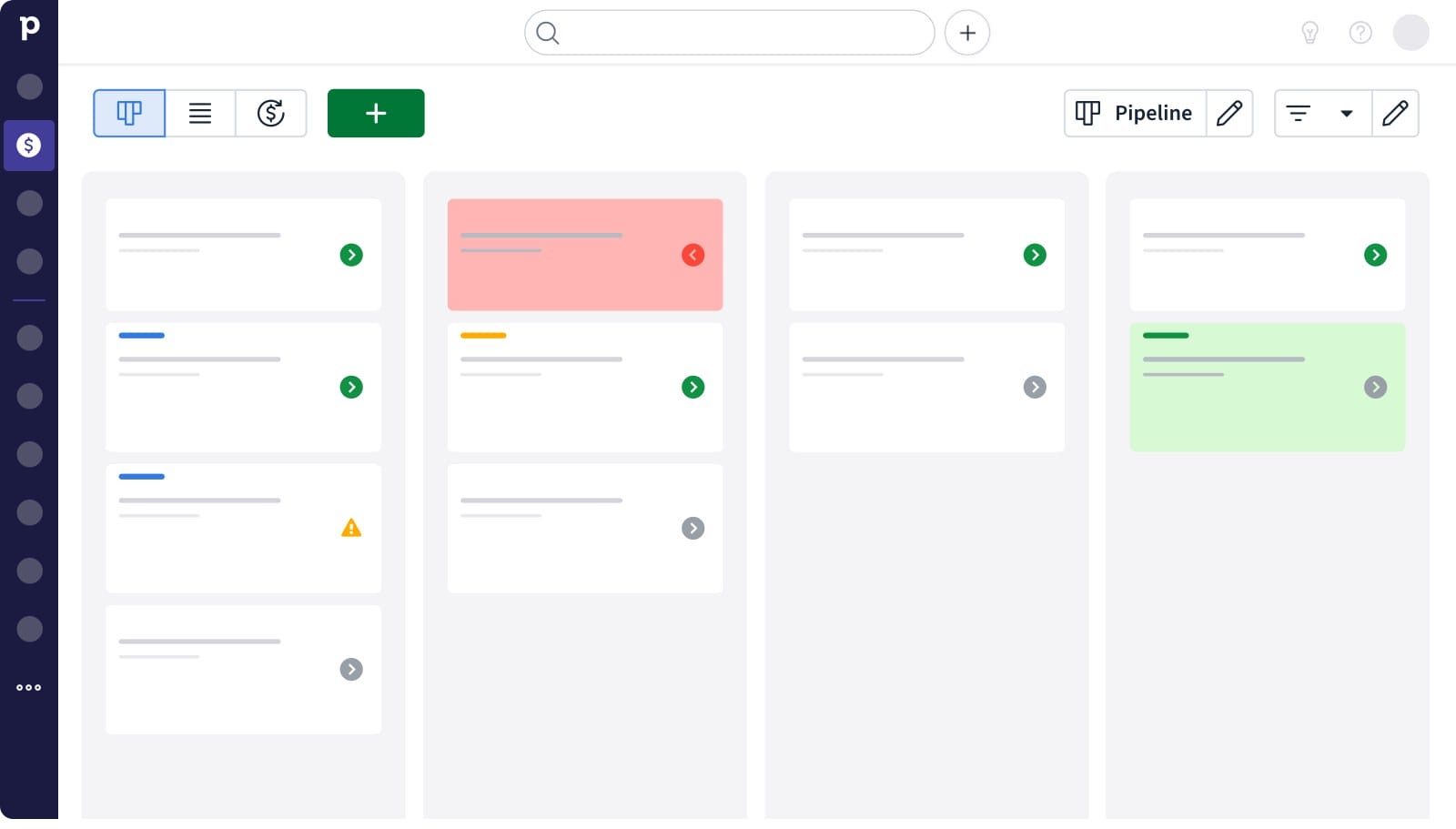
Every deal sits as a card on a customisable pipeline, moved between stages by drag and drop as it progresses. Reps see exactly where every opportunity stands at a glance, and the real-time sales feed surfaces recent activity across the team, so managers don’t need a separate reporting tool to know what’s moving. This is included from the entry-level Lite tier, along with calendar management and 500+ integrations to connect email, calling and marketing tools most UK sales teams already use.
Automation and Email Sync
Growth tier and above add full two-way email sync with Gmail and Outlook, tracking opens and replies directly against each deal, plus workflow automations that move deals forward or trigger follow-ups without manual input. Subscription billing and forecast reporting round out Growth, giving a growing sales team the visibility a founder previously had to build in a spreadsheet.
AI Tools and Lead Generation
From Premium upward, Pipedrive adds AI-powered multi-email drafting, LeadBooster for inbound lead capture and routing, and custom lead scoring built from company data enrichment. Ultimate layers on account security rules, phone and email enrichment, and a sandbox account for testing changes before they hit a live pipeline, features that matter more to a larger sales org than a five-person team just getting started.
Pipedrive Limitations
Pipedrive’s biggest gaps are the lack of any permanent free plan, per-seat costs that climb quickly once you need Premium or Ultimate features, and thinner marketing and customer-service tools than an all-in-one platform like HubSpot or Salesforce offers.
Unlike Zoho CRM or Freshsales, which both offer a genuine forever-free tier for small teams, Pipedrive’s only no-cost option is a 14-day trial. After that, every seat needs a paid plan. The jump from Lite to Premium is steep too: £14 to £59 per seat per month is a fourfold increase, and add-ons like LeadBooster or Web Visitors sit outside even that price if you want them on a cheaper tier.
Pipedrive is also a sales-pipeline tool first, not a marketing or service platform. A business that wants built-in email marketing campaigns or a support ticketing system alongside its CRM will likely need a second tool, or a heavier suite like HubSpot.
How Does Pipedrive Compare?
Pipedrive sits in the middle of the UK CRM market: simpler and cheaper than Salesforce, similarly priced to monday CRM but more sales-specific, and lighter on built-in calling than Close. Which one wins depends on whether you need enterprise depth, visual flexibility, or an outbound-calling engine.
Pipedrive vs Salesforce
Salesforce starts at £20/user/month for Starter Suite, the only tier billed at the same rate monthly or annually. It then jumps to £80/user/month for Pro Suite, and up to £440/user/month for the full Max edition, all billed annually. That range buys deeper customisation, advanced pipeline management, conversation intelligence and a much larger app ecosystem. G2 rates Salesforce 4.4/5 across more than 95,000 reviews.
For a UK SME that wants a simple, visual pipeline without a steep learning curve or enterprise pricing, Pipedrive is the better starting point. For a business planning to scale a large, complex sales org, Salesforce’s depth becomes worth the cost. Our dedicated Salesforce vs Pipedrive comparison breaks this down feature by feature, and our Salesforce review covers Salesforce on its own.
Pipedrive vs monday CRM
monday CRM prices lower at entry, £10/seat/month annually on Basic (£13 monthly) rising to £24/seat/month on Pro (£31 monthly), but requires a minimum of 3 seats, a trade-off our full Pipedrive vs monday CRM comparison prices out in detail. Where Pipedrive is a dedicated pipeline tool, monday CRM is built on monday.com’s board-based work platform, which makes it more flexible for teams that want to customise workflows heavily but can feel less purpose-built for sales specifically than Pipedrive’s deal-first design. Read our monday CRM review for the full breakdown of its tiers and features.
Pipedrive vs Close (for Outbound Sales)
Close prices in US dollars, from $9/user/month annually on its single-seat Solo tier up to $139/user/month on Scale. It’s built specifically for high-volume outbound teams that call, email and text leads directly from the CRM, using its built-in “Chloe” AI sales agent.
Pipedrive covers calling through integrations rather than a native dialer. A team that lives on the phone all day may get more out of Close’s built-in power and predictive dialers, while a team that wants a strong visual pipeline with lighter calling needs will likely prefer Pipedrive. For teams weighing calling-first tools against pipeline-first ones, our best sales CRM UK guide compares both alongside the rest of the market.
Who Should Choose Pipedrive?
Pipedrive suits UK sales teams of roughly 2 to 50 reps that want a visual, easy-to-learn pipeline without Salesforce-level cost or a lengthy onboarding process. It’s a weaker fit for teams that need built-in marketing automation or heavy outbound calling as a core feature.
Pipedrive is the strongest fit for a founder-led or small sales team replacing a spreadsheet. It also suits a business that wants deal tracking and automation without paying for features it won’t use, or a team that tried a heavier CRM before and found it too complex to adopt.
It’s also a solid choice for a growing team that expects to need lead generation and e-signatures eventually, since Premium adds both without a full platform migration later. If your team is still deciding whether a CRM makes sense at all, our what is a CRM guide is the place to start. If budget is the main constraint, compare Pipedrive against the genuinely free CRM options, and against smaller-team picks in our best CRM for small business guide.
Pipedrive is less suited to a business that needs email marketing campaigns, a support ticketing system, or enterprise-grade customisation built into the same platform as its CRM. A team calling leads all day, every day, will likely get more out of Close’s native dialer, and a large sales org planning significant future scale may outgrow Pipedrive’s ceiling faster than Salesforce’s.
Pipedrive Pros and Cons
Pipedrive’s biggest strength is a visual pipeline that’s genuinely easy for a sales team to adopt, backed by strong third-party ratings and 500+ integrations from the entry tier. Its main limitations are the absence of any free plan and per-seat costs that climb fast once you need Premium-level features.
Our Verdict
Pipedrive earns an 8.5/10 in our review for combining a genuinely easy-to-use sales pipeline with pricing that scales sensibly from Lite through to Ultimate. For most UK sales teams that want a focused pipeline tool rather than an all-in-one platform, it’s a stronger starting point than Salesforce and a more sales-specific choice than monday CRM.
Pipedrive is a strong choice for UK sales teams that want a visual, easy-to-adopt pipeline without Salesforce-level cost or complexity. There's no free tier and per-seat pricing climbs at the top end, but the entry price, integration depth and genuine ease of use make it one of the safest first CRMs for a growing sales team.