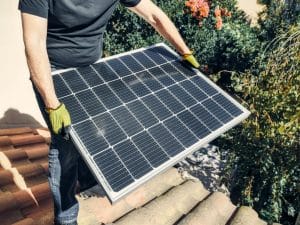
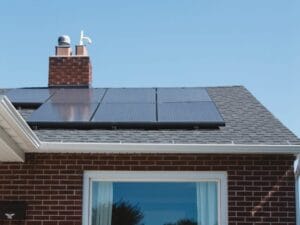
The Tesla Powerwall 3 costs £7,999 installed as a standalone unit through Octopus Energy, or £12,362 when bundled with four solar panels (April 2026 prices, still current as of July 2026). At 13.5 kWh of usable capacity with a built-in hybrid inverter, it is the most capable home battery available in the UK in 2026 – but it is not the cheapest, and whether it makes financial sense depends heavily on your energy use, tariff, and whether you already have solar panels.
Powerwall 3 launched in the UK in late 2024, replacing the Powerwall 2 as Tesla’s flagship home battery. The key upgrade was the integration of a solar inverter directly into the unit, eliminating the need for a separate inverter and reducing installation complexity. For households with solar panels already installed, this changes the payback calculation significantly – excess solar generation charges the battery cheaply during the day, then displaces expensive grid electricity in the evening.
In this guide, we break down the full cost of a Tesla Powerwall 3 in the UK, compare it against competing battery storage systems, examine which energy tariffs unlock the most value, and give you a clear picture of whether it is worth the investment for your home.
FREE QUOTE COMPARISON
Compare Solar Panel Quotes from Trusted Suppliers
✓ Save up to £975/year on energy bills
100% free • No obligation • Takes under 2 minutes
- Tesla Powerwall 3 costs £7,999 standalone - or £12,362 with 4 solar panels installed via Octopus Energy, the UK’s primary authorised installer
- 13.5 kWh usable capacity with integrated inverter - no separate solar inverter needed, reducing total installation cost and complexity versus Powerwall 2
- Payback in 10-15 years standalone - dropping to 7-10 years when paired with solar and an Octopus Intelligent Flux tariff
- 10-year warranty guarantees 70% capacity - Tesla guarantees the battery retains at least 70% of original capacity after a decade of use
- Cheapest installed alternative is a 5 kWh smart battery at £3,947 - Octopus fits Fox or Enphase units at roughly 37% of Powerwall capacity for 49% of the price
Tesla Powerwall 3 UK Price Breakdown
The Tesla Powerwall 3 costs £7,999 installed as a standalone unit in the UK, based on Octopus Energy’s published April 2026 pricing, confirmed still current in July 2026. That price covers the 13.5 kWh battery, installation labour, and grid connection – but not a solar system if you do not already have one. Adding four solar panels brings the total to £12,362, with the Powerwall’s built-in hybrid inverter handling solar input directly. Each expansion pack adds another 13.5 kWh for £3,773 fitted at the same install, or £5,909 retrofitted later.
Every unit carries a 10-year warranty guaranteeing at least 70% of original capacity, and UK units deliver up to 11.04 kW of on-grid power output. For comparison, the cheapest installed home battery from the same installer is a 5 kWh unit at £3,947 – about half the price of a Powerwall 3 for roughly a third of the capacity.
In the UK, Tesla sells the Powerwall exclusively through authorised installers rather than direct to consumers. Octopus Energy is the dominant UK channel, offering transparent published pricing and same-day installation in most parts of England, Scotland, and Wales. Other MCS-accredited installers may quote different prices; always obtain at least three quotes.
| Configuration | What’s Included | Price (Installed) | Notes |
|---|---|---|---|
| Powerwall 3 – Standalone MOST COMMON | Battery unit + installation | £7,999 | Requires existing solar or grid-only charging |
| Powerwall 3 + 4 Solar Panels | Battery + 4 panels + inverter | £12,362 | Integrated inverter handles solar input directly |
| Tesla Expansion Pack (+13.5 kWh) | Additional battery capacity (no extra inverter) | £3,773 same install / £5,909 retrofit | Up to three packs; doubles capacity to 27 kWh usable |
Installation costs are included in the Octopus quoted price. For other installers, expect to pay £500–£1,500 for labour on top of the hardware cost, depending on installation complexity (internal vs. external mounting, existing consumer unit compatibility, and distance from the solar array).
Powerwall 3’s integrated solar inverter means you do not need a separate hybrid inverter when adding solar – a saving of approximately £800–£1,200 compared to competitor batteries that require a separate inverter.
FREE QUOTE COMPARISON
Compare Solar Panel Quotes from Trusted Suppliers
✓ Save up to £975/year on energy bills
100% free • No obligation • Takes under 2 minutes
Tesla Powerwall 3 vs Powerwall 2: What Changed?
Powerwall 3 differs from Powerwall 2 in three significant ways: it includes a built-in solar inverter, delivers far higher power output (up to 11.04 kW in the UK vs 5 kW), and connects solar directly without additional hardware.
The most consequential change is the integrated solar inverter. Powerwall 2 required a separate inverter – either a string inverter or microinverters – adding £800–£1,500 to total system cost. Powerwall 3 eliminates this, making it genuinely cheaper for new solar+storage installations even though the unit price is higher. Understanding solar panel output is essential to sizing the battery correctly – a system generating 3,400 kWh/year may only need a single Powerwall, while higher-output arrays benefit from stacked units.
| Specification | Powerwall 2 | Powerwall 3 |
|---|---|---|
| Usable Capacity | 13.5 kWh | 13.5 kWh |
| Power Output (UK, on-grid) | 5 kW | Up to 11.04 kW (configurable) |
| Solar Inverter Included | No | Yes (up to 12 strings) |
| Efficiency (Tesla datasheet) | 90% round-trip | 89% solar-to-battery-to-home; 97.5% solar direct to home |
| On-Grid / Off-Grid | Both | Both |
| Warranty | 10 years / 70% capacity | 10 years / 70% capacity |
| UK Price (2026) | Discontinued (legacy) | £7,999 installed |
The jump to 11.04 kW output is particularly relevant for homes with electric vehicle charging and high-demand appliances. Powerwall 2’s 5 kW limit meant it could not power an EV charger and a hob simultaneously from battery alone; Powerwall 3 handles this comfortably. For most standard UK homes without EVs, the Powerwall 2’s capacity limit was rarely a practical problem – but for energy-intensive households it was a genuine bottleneck.
Tesla Powerwall 3 vs Competitors
Powerwall 3 is the most expensive single home battery at £7,999 installed. But its integrated inverter, high efficiency, and Tesla app ecosystem make it the benchmark for every rival – and per usable kWh it is closer to mid-market than the sticker price suggests.
The UK home battery market has matured – Fox ESS and Enphase offer credible lower-cost alternatives, though none match Powerwall 3’s combination of capacity, power output, and software integration. One caution: GivEnergy, long the value benchmark, entered administration in April 2026. Its hardware warranties are no longer honoured, so we have removed it from this comparison. The right choice depends on whether you are starting from scratch (integrated inverter matters) or retrofitting to an existing solar array (where separate battery-only units may be more cost-effective). Choosing the best solar panels to pair with a Powerwall also matters – premium monocrystalline panels with higher output per m² make the most of the integrated inverter’s capacity.
| Battery | Usable Capacity | Price (Installed) | Inverter Included | Warranty | Best For |
|---|---|---|---|---|---|
| Tesla Powerwall 3 PICK | 13.5 kWh | £7,999 | Yes (hybrid) | 10 years | New solar + storage installations, EV homes |
| 5 kWh smart battery (Fox EVO / Enphase, via Octopus) | 5 kWh | £3,947 installed | Yes | 10–15 years (unit-dependent) | Budget-first, smaller homes |
| 10 kWh smart battery (via Octopus) | 10 kWh | £5,336 installed | Yes | 10–15 years (unit-dependent) | Mid-budget, close to Powerwall capacity |
| Enphase IQ Battery 5P (direct) | 5.0 kWh usable | Price on application (installer-quoted) | No (microinverter system) | 15 years / 6,000 cycles | Enphase solar system owners |
| Tesla Expansion Pack | +13.5 kWh | £3,773 (same install) | Uses Powerwall 3 inverter | 10 years | Scaling an Octopus-fitted Powerwall system |
On cost per usable kWh, the Powerwall beats its sticker price. £7,999 over 13.5 kWh is £592 per kWh installed. A 5 kWh smart battery costs £789/kWh (£3,947); a 10 kWh install is £534/kWh (£5,336). Add a same-install Expansion Pack and a 27 kWh system drops to £436/kWh – the cheapest per-unit storage here. Small batteries win on upfront outlay. The Powerwall wins on price per kWh at scale.
Use our solar panel savings calculator to estimate how much a Powerwall 3 would save on your specific electricity bill, factoring in your tariff, usage pattern, and solar generation.
Best Energy Tariffs for Tesla Powerwall
The Tesla Powerwall delivers the fastest financial returns when paired with a time-of-use tariff that lets you charge cheaply overnight and discharge during peak-rate hours – cutting effective import cost by 60–70% on the right plan.
Without a time-of-use tariff, a Powerwall installed without solar panels has a weak financial case – grid electricity costs the same at all times on a flat-rate tariff, so there is no arbitrage opportunity. The Octopus Intelligent Flux and Tesla Energy Plan are specifically designed to maximise Powerwall economics.
| Tariff | Provider | Off-Peak Rate | Peak Rate | Key Feature |
|---|---|---|---|---|
| Intelligent Flux BEST | Octopus Energy | ~7p/kWh | ~35p/kWh | Automated Powerwall charging via smart API |
| Tesla Energy Plan | Octopus (Tesla-branded) | ~7p/kWh | ~35p/kWh | Direct Tesla app integration, auto-scheduling |
| Agile Octopus | Octopus Energy | Variable (can be negative) | Variable (up to 100p) | Half-hourly pricing, manual or automated dispatch |
One important caveat as of July 2026: Intelligent Octopus Flux is temporarily closed to new sign-ups, with Octopus citing energy-price volatility. Standard Octopus Flux and Agile remain open. Check availability before building your payback case on this tariff.
When available, Intelligent Flux is the most plug-and-play option. Tesla and Octopus have a direct API integration, so the Powerwall automatically charges when rates are lowest (typically 00:30–05:30) and discharges during evening peak periods. In practice, this means households can reduce their grid import cost by £500–£700 per year versus a standard flat-rate tariff, improving the payback period by 3–5 years. For households with an electric vehicle, combining solar + EV charger + battery creates the strongest possible financial case – daytime solar charges both the battery and the car, cutting fuel costs alongside grid import savings.
Tesla Powerwall Payback Period and ROI
A standalone Powerwall 3 at £7,999 has a payback period of roughly 10–15 years when used for time-of-use tariff arbitrage. Paired with solar panels, this drops to 7–10 years, and to under 8 years with active EV charging from stored solar.
The payback calculation depends on three variables: your current electricity unit rate, the off-peak charging rate you can access, and how much solar generation you have available to charge the battery cheaply. Use our battery storage payback calculator to compare illustrative savings with and without solar, then check its fixed cost and tariff assumptions against your quote. Our solar panel calculator also estimates generation and panel savings. Using realistic UK assumptions – the 26.32p/kWh October-December 2026 cap rate, ~7p off-peak, and 3,400 kWh of solar generation from a 4kW system – the numbers look as follows.
| Scenario | Annual Saving | Payback Period | 25-Year Return |
|---|---|---|---|
| Standalone – tariff arbitrage only | ~£500–£700 | 10–15 years | £5,000–£10,000 |
| Solar + Powerwall + Intelligent Flux BEST ROI | ~£900–£1,200 | 7–10 years | £15,000–£22,000 |
| Solar + Powerwall + EV charging | ~£1,100–£1,500 | 6–9 years | £18,000–£28,000 |
These returns assume electricity prices remain broadly stable in real terms. Given that UK electricity prices remain volatile and well above pre-2021 levels, the actual payback period could be shorter for most households if rates rise again – and how much you save on bills depends significantly on your consumption profile and whether you are home during peak solar generation hours. The Warm Homes Plan may also provide grant support for battery storage in eligible households from 2025 onwards, further improving the financial case.
FREE QUOTE COMPARISON
Compare Solar Panel Quotes from Trusted Suppliers
✓ Save up to £975/year on energy bills
100% free • No obligation • Takes under 2 minutes
Who Should Buy a Tesla Powerwall 3?
The Powerwall 3 is best suited to households with new or existing solar panels, an EV, or time-of-use tariff access – and a budget of at least £7,999 for battery storage alone.
The Powerwall 3 delivers the strongest financial and practical case for three types of UK household. First, new solar adopters who can take advantage of the integrated inverter – the combination installation eliminates a separate inverter cost and simplifies setup. Second, EV owners who want to charge their vehicle from stored solar overnight rather than from the grid during peak hours. Third, high-energy-use households (4,000+ kWh/year) on time-of-use tariffs who can exploit the ~26p standard / ~7p off-peak arbitrage consistently.
If you already have solar panels with a working inverter and simply want to add battery storage, a standalone battery like Octopus’s 5 kWh or 10 kWh smart battery installs may cost far less upfront – you will not benefit from the integrated inverter, which is Powerwall 3’s main differentiating feature. Conversely, if you are investing in solar and storage together for the first time, Powerwall 3’s all-in-one design makes it the cleanest technical solution in the UK market.
FREE QUOTE COMPARISON
Compare Solar Panel Quotes from Trusted Suppliers
✓ Save up to £975/year on energy bills
100% free • No obligation • Takes under 2 minutes