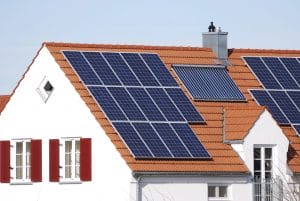
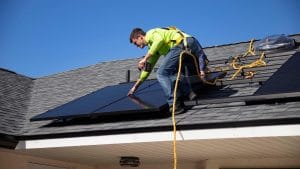
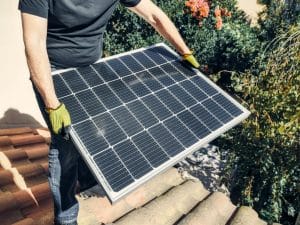
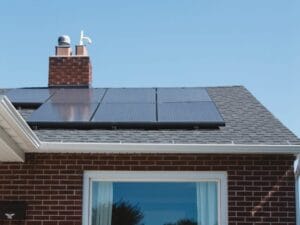
Solar panels in a conservation area are possible in most cases, but the planning rules are more complex than for standard properties. Whether you need planning permission depends on which nation you live in, the type of property, and critically, where your panels will be visible from the street.
England has over 10,000 designated conservation areas, and London alone contains 1,050 of them. If you live in one, permitted development rights allow rear-facing solar panels without planning permission in most circumstances. Front-facing panels facing a highway nearly always need a full householder application. Listed buildings sit in a separate category entirely: they require Listed Building Consent regardless of which nation you are in and regardless of where panels are positioned.
This guide covers the specific rules for England, Scotland, and Wales, explains exactly when planning permission is needed, and provides practical tips for getting approval if you do need to apply. See our guide to how much solar panels cost once you have confirmed your eligibility.
FREE QUOTE COMPARISON
Compare Solar Panel Quotes from Trusted Suppliers
✓ Save up to £975/year on energy bills
100% free • No obligation • Takes under 2 minutes
- Rear-facing panels are permitted development in most conservation areas - you can usually install without planning permission if panels are not visible from a highway
- Front-facing panels in conservation areas nearly always need planning permission - a householder application costs £548 in England and takes 8 weeks
- Listed buildings always need Listed Building Consent - this applies regardless of panel position, nation, or visibility; no permitted development rights apply
- Scotland uses a different framework (Class 6HA) - World Heritage Sites such as Edinburgh Old Town require full planning permission under additional rules
- In-roof systems and slate-coloured panels significantly improve approval chances - planners assess visual impact, so flush-mounted systems fare much better than on-roof frames
Solar Panels and Permitted Development Rights
Permitted development rights allow certain home improvements without planning permission. For solar panels, the key rules in England are set out in the Town and Country Planning (General Permitted Development) (England) Order 2015, Class A – solar equipment on dwelling houses. These rights exist even in conservation areas, but with additional conditions.
Under permitted development in England, solar panels on a dwelling house are allowed if they meet all of the following conditions:
- Panels do not protrude more than 200mm from the wall or roof slope
- Panels are not installed on a wall or roof slope that faces a highway and is on the principal elevation of the building
- Installation is on the dwelling house itself or within its curtilage (e.g. a garage or outbuilding)
- The property is not a listed building
The critical phrase is “faces a highway.” In a conservation area, a road running behind your house still counts as a highway. If your rear garden backs directly onto a public road, rear-facing panels may still require permission. When in doubt, consult your Local Planning Authority (LPA) before installation – most councils offer free pre-application advice.
It is worth noting that permitted development rights do not apply to flats or maisonettes at all. If you live in a flat within a conservation area, you will need full planning permission for any external solar installation, conservation area or not. The same rules apply to flat roof solar installations on extensions and outbuildings.
Conservation Area Rules by Nation
Planning rules for solar panels differ significantly across England, Scotland, and Wales. Each nation operates its own permitted development framework, and conservation area designations interact with those frameworks in different ways.
England applies the 2015 General Permitted Development Order. Conservation area properties retain permitted development rights for solar, subject to the conditions above. The principal constraint is the “not visible from a highway” rule, which affects front-facing and side-facing panels on corner properties most heavily.
Scotland uses Class 6HA of the Town and Country Planning (General Permitted Development) (Scotland) Amendment Order 2012. Conservation areas in Scotland impose similar restrictions to England. Scotland also has extra rules for World Heritage Sites. Edinburgh Old Town and New Town, and New Lanark, all require full planning permission for any solar installation, whatever the position. Microgeneration is otherwise encouraged under Scottish planning policy, and rear-facing installations in standard conservation areas are usually permitted.
Wales operates under the Town and Country Planning (General Permitted Development) Order 1995, amended in 2013. Welsh conservation areas follow similar principles to England: rear-facing solar permitted without permission, front-facing panels facing a highway require consent. The Welsh Government has been actively encouraging solar adoption and applications in conservation areas are generally considered sympathetically, particularly for smaller domestic installations.
| Property Type | Nation | Permitted Development? | Notes |
|---|---|---|---|
| Standard house (non-conservation) | England / Scotland / Wales | Yes – no permission needed | Must meet standard PD conditions |
| Conservation area – rear-facing | England | Yes (usually) | Panels must not face a highway from principal elevation |
| Conservation area – front-facing | England | No – planning required | Householder application £548, 8-week decision |
| Conservation area | Scotland (standard) | Yes – rear-facing under Class 6HA | Additional rules apply in World Heritage Sites |
| World Heritage Site | Scotland | No – full planning required | Edinburgh Old Town/New Town, New Lanark |
| Conservation area | Wales | Yes – rear-facing | Front-facing panels facing highway need permission |
| Listed building (Grade I, II*, II) | England / Scotland / Wales | No – Listed Building Consent always required | No permitted development rights for any solar installation |
| Flat or maisonette | England | No – planning always required | PD rights do not apply to flats |
FREE QUOTE COMPARISON
Compare Solar Panel Quotes from Trusted Suppliers
✓ Save up to £975/year on energy bills
100% free • No obligation • Takes under 2 minutes
Listed Buildings: A Separate Category
Listed buildings are treated entirely differently from conservation area properties. If your home is on the National Heritage List for England, you need Listed Building Consent (LBC) for any solar installation. This applies whether it is Grade I, Grade II*, or the more common Grade II, and wherever the panels will be placed.
Listed Building Consent is a separate consent from planning permission and is required in addition to it, not instead of it. There are over 375,000 listed buildings in England, and the rules are strict: even internal alterations can require LBC, so exterior changes to the roof are always subject to scrutiny.
The application for Listed Building Consent is free of charge. You will still need to pay the £548 householder planning application fee if the installation also requires full planning permission, which it usually will for front-facing or visible panels. The process typically takes 8 weeks, and you will need to provide detailed drawings, specifications of the proposed panels, and often a heritage impact assessment.
Local conservation officers take a strict approach to listed buildings. Approval is possible but far from guaranteed, particularly for on-roof panel installations. If you own a listed building and want solar, your best approach is to engage a specialist conservation architect or planning consultant before submitting any application. Some listed building owners have successfully installed ground-mounted systems in their garden or field – away from the listed structure – which avoids the LBC requirement entirely. Use our calculator to see whether it’s financially viable before committing to planning costs.
Use our free solar panel savings calculator to estimate how much you could save with a solar installation - useful for building your planning case and assessing financial viability before applying.
How to Check Whether Your Property Is in a Conservation Area
Checking your conservation area status takes under two minutes using free online tools, and it is an essential first step before commissioning any solar survey. Many homeowners discover their property is in a conservation area only after receiving a planning refusal – which is an easily avoidable situation.
The quickest method is the Planning Portal's property research tool at planningportal.co.uk. Enter your postcode and you can see whether your property sits within a designated conservation area, Article 4 Direction, or other planning constraint. The tool pulls data directly from local authority records and is generally accurate for England and Wales.
For Scotland, use the Historic Environment Scotland website at historicenvironment.scot, which provides the Designations database showing conservation areas, scheduled monuments, and listed buildings. The Scottish equivalent of the Planning Portal is eDevelopment at eplanning.scotland.gov.uk.
You can also:
- Contact your Local Planning Authority directly – most councils have a planning helpline or email address for pre-application enquiries
- Check your property's title deeds, which sometimes note conservation area designation
- Ask an MCS-certified installer, as reputable installers will check planning constraints as part of their survey
If you discover you are in a conservation area, request a pre-application opinion from your LPA before spending money on a full planning application. Many councils provide this service free of charge or for a small fee (typically £30–£60). It gives you a strong indication of whether your installation is likely to be approved.
FREE QUOTE COMPARISON
Compare Solar Panel Quotes from Trusted Suppliers
✓ Save up to £975/year on energy bills
100% free • No obligation • Takes under 2 minutes
How to Get Planning Approval in a Conservation Area
Conservation area planning applications for solar panels have a reasonable success rate when the installation is designed with visual impact in mind. Most refusals stem from front-facing panels on prominent elevations, panels that protrude excessively, or installations proposed without any engagement with the local planning officer.
The following approaches consistently improve approval chances:
Choose an in-roof system. Traditional on-roof panels sit proud of the roof surface by 100–200mm. In-roof or integrated systems sit flush with the roof plane, replacing tiles rather than sitting over them. Planners almost universally prefer in-roof systems in conservation areas because they are far less visually intrusive. Expect to pay a premium of £500–£1,500 for an in-roof system, but this cost is often offset by faster approval and avoided appeals.
Select slate-coloured or dark panels. Black monocrystalline panels blend considerably better with Welsh slate, blue/grey clay tiles, or natural stone roofs common in conservation areas. Manufacturers including Viridian Solar produce panels specifically marketed for heritage applications. Avoid silver-frame polycrystalline panels, which stand out sharply against traditional roofing materials.
Position panels on the rear or least prominent roof slope. Even if permitted development applies to rear-facing panels, choosing the most concealed slope strengthens any planning case you need to make and demonstrates good faith to the conservation officer.
Submit a Heritage Impact Assessment (HIA). For listed buildings and higher-profile conservation area applications, a brief HIA from a heritage consultant (typically £300–£800) shows that you have thought about the impact on the building and its setting. Many planners will ask for one anyway, so including it upfront speeds up the process.
Engage a specialist planning consultant. For complex cases – listed buildings, front-facing installations, or World Heritage Sites – a planning consultant with experience in heritage applications will significantly improve your chances. Fees typically run £500–£1,500 for a householder application, but they handle all correspondence and can advise on conditions to make the proposal more acceptable. Your consultant will also help you determine the right system size to propose, balancing your energy needs against what is visually acceptable to the planning authority.
| Strategy | Impact on Approval Chances | Additional Cost |
|---|---|---|
| In-roof (integrated) mounting system | High – flush profile preferred by planners | +£500–£1,500 vs on-roof |
| Slate-coloured or all-black panels | Medium – improves visual integration | +£100–£300 vs standard panels |
| Rear or least-visible roof slope | High – removes highway visibility issue | None (positioning choice) |
| Pre-application consultation with LPA | Medium – identifies issues before formal submission | £0–£60 (most councils free) |
| Heritage Impact Assessment | High for listed buildings | £300–£800 (consultant fee) |
| Planning consultant (specialist heritage) | High for complex cases | £500–£1,500 |
What Happens If You Install Without Permission?
Installing solar panels without required planning permission in a conservation area is a planning breach. It can have serious consequences, including enforcement action that makes you remove the panels at your own cost.
Local planning authorities have the power to issue an Enforcement Notice requiring removal of unauthorised development. In conservation areas, councils tend to take a more active enforcement approach than in standard residential areas, because conservation area character is a statutory planning consideration. You may also encounter problems when you come to sell your property: conveyancing solicitors routinely ask about planning compliance, and unauthorised solar installations can delay or complicate sales. Before proceeding, assess the expected output of your proposed installation to build a clear case for the benefits alongside your planning application.
The good news is that retrospective planning permission (known as a Lawful Development Certificate application, or an application to regularise the breach) is often possible. If you have already installed panels and subsequently discovered you needed permission, contact your LPA immediately – voluntary disclosure is always viewed more favourably than enforcement action.
For listed buildings, the situation is more serious. Carrying out works to a listed building without Listed Building Consent is a criminal offence under Section 9 of the Planning (Listed Buildings and Conservation Areas) Act 1990. Penalties include unlimited fines and, in extreme cases, custodial sentences. Do not install anything on a listed building without appropriate consents.
FREE QUOTE COMPARISON
Compare Solar Panel Quotes from Trusted Suppliers
✓ Save up to £975/year on energy bills
100% free • No obligation • Takes under 2 minutes
Once your planning position is confirmed, use our guides to solar panel grants and are solar panels worth it to build the full financial case for your installation. Our guide to the best solar panels covers which panel types are most suited to heritage properties, including low-profile monocrystalline options.