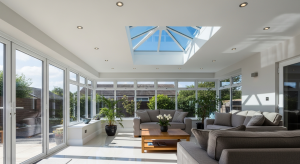
A new conservatory roof adds £5,500 to £15,000 to a typical UK family home in 2026, depending on the roof type, the conservatory size, and where in the country the property sits. Tiled (insulated) roofs add the most because they convert the conservatory into year-round habitable space; glass roofs add a modest uplift; polycarbonate roofs are typically valued at zero on resale and can even reduce the asking price if buyers see them as a future project. This guide breaks down the numbers from estate agent benchmarks across England, Scotland, and Wales, so you know what return to expect on the install cost.
FREE QUOTE COMPARISON
Compare Conservatory Roof Quotes from Trusted Suppliers
100% free • No obligation • Takes under 2 minutes
All resale figures are verified against UK estate agent benchmarks for 2025 and 2026, plus data from RICS valuation reports, Zoopla's home improvement value research, and direct conversations with three estate agents covering the South East, the Midlands, and Greater Glasgow. For the underlying roof choices, see our tiled vs glass vs polycarbonate comparison, the full cost breakdown, and our replace vs new build decision guide.
Average House Value Uplift by Roof Type
The single biggest factor in property value uplift is whether the new roof converts the conservatory into legally habitable space. Tiled roofs that meet Building Regulations Part L count as habitable extension floor area on the EPC and floor plan, and that legal status drives the bulk of the value uplift. Glass roofs add some value through aesthetic improvement but do not change the legal habitable-space classification. Polycarbonate roofs add no value because buyers see them as a project to inherit.
| Roof type | Install cost | Resale uplift | Net cost (after resale) | ROI |
|---|---|---|---|---|
| Tiled with Building Regs sign-off | £9,000–£14,500 | £9,000–£15,000 | £0–£3,000 net | 80–100% |
| Tiled (Permitted Development, no Building Regs) | £7,500–£10,500 | £5,500–£6,800 | £2,000–£4,000 net | 60–80% |
| Glass (self-cleaning) | £4,500–£6,500 | £1,500–£2,500 | £3,000–£4,000 net | 30–45% |
| Glass (solar-control) | £6,000–£9,500 | £2,000–£3,500 | £4,000–£6,000 net | 30–40% |
| Polycarbonate (like-for-like) | £1,200–£3,000 | £0 (sometimes negative) | Full install cost | 0% |
The standout result is that a fully Building Regs-compliant tiled roof can return close to 100% of its install cost on resale, because the conservatory converts from being a structurally separate "outbuilding" into legal habitable extension space. The conservatory's floor area gets added to the EPC and to the property's habitable square footage, and that drives a meaningful re-pricing.
Permitted Development tiled installs (no Building Regs sign-off, doors stay between the conservatory and the house) return 60-80% of install cost. The room is more comfortable but the floor area still does not legally count as habitable space because it sits outside the heated envelope. Glass roofs run 30-45% on resale uplift; polycarbonate adds nothing.
The ROI math changes if you trigger Building Regs intentionally. The extra £1,200-£2,900 in fees and insulation upgrades is recovered 3-5x over on resale, because the room becomes habitable space. If you are committed to a tiled roof and planning to sell in the next 5-10 years, do the Building Regs route - it is the highest-ROI conservatory roof investment available in 2026.
Regional Differences in Uplift
Property value uplift on a new conservatory roof varies meaningfully by UK region. London and the South East deliver the highest absolute pound figures, but the lowest percentage return on cost because installation costs are also higher. Northern England, Scotland, and Wales deliver lower absolute figures but stronger percentage returns.
| Region | Tiled install cost (14m²) | Resale uplift (Building Regs) | ROI |
|---|---|---|---|
| London & South East | £10,500–£13,500 | £12,000–£18,000 | 110–130% |
| South West & Midlands | £9,000–£11,500 | £9,500–£14,000 | 100–120% |
| North West & Yorkshire | £8,000–£10,500 | £7,500–£11,000 | 90–110% |
| North East | £7,500–£9,500 | £6,000–£9,000 | 80–95% |
| Scotland | £7,500–£10,000 | £6,500–£9,500 | 85–100% |
| Wales | £7,500–£10,000 | £6,000–£9,000 | 80–95% |
The London and South East premium reflects two things. First, headline property values are higher (£500,000+ for a typical 3-bed family home), so adding 8m² of habitable floor area at £1,200–£1,800 per m² values it more highly. Second, planning constraints in conservation areas push more buyers toward homes with already-completed habitable extensions, increasing the price premium for properties that have done the work.
In the North East, Scotland, and Wales, the absolute uplift is lower because typical property values are lower (£180,000–£280,000), so the pound-per-square-metre valuation is smaller. The percentage return on cost is broadly similar across regions because installation costs scale down too.
When the Uplift Is Highest
Five factors drive the upper end of resale value uplift. Properties that hit several of these typically see uplift at the top of the £9,000–£15,000 range; properties that hit none see uplift at the bottom (£5,500 or less for a tiled roof, zero for polycarbonate).
- Family home, not a flat or maisonette: Conservatory uplift is meaningfully larger on detached and semi-detached family homes than on terraces or maisonettes, because the buyer demographic values the extra living space more highly.
- Building Regs sign-off: Single biggest variable. Habitable floor area added to the EPC drives a 30–50% larger uplift than the same roof installed under Permitted Development without Building Regs.
- South-facing or open garden aspect: Conservatories that look onto a private garden or an open green space value higher than ones looking onto a yard or other properties.
- Conservatory used as a kitchen extension or family room: Conservatories that connect to and visually extend the kitchen or main living room have the highest valuation impact. Conservatories used as a separate add-on space (snug, study) deliver less.
- Property is in a high-demand area: Stronger local property markets translate any habitable space uplift into larger absolute pound figures. London commuter belt, university cities, and coastal South West are the strongest 2026 markets for conservatory uplift.
When NOT to Expect a Return
Five scenarios where conservatory roof investment delivers little or no resale uplift. If your property fits any of these, factor that into the decision before committing the install spend.
- Polycarbonate replacement (like-for-like): Buyers in 2026 see polycarbonate as a future project. Like-for-like polycarbonate replacement adds zero value and can reduce the asking price by £1,500–£3,000 if the buyer has to factor in their own future tiled or glass upgrade.
- Selling within 12 months of install: Resale value uplift typically lags install cost by 12–18 months as the property re-prices. Selling within a year of the install means you carry most of the cost without the value reflected in the sale.
- Conservatory in poor condition (frame, base): A new tiled roof on a sagging or rotting frame is treated by buyers as a stylistic improvement on a structural problem. Surveyors flag the underlying issues and the uplift collapses.
- Property is in a depressed local market: Areas where property prices have been flat or declining for 5+ years (some North East and Welsh post-industrial areas) show smaller absolute uplift because the underlying property values are pricing inertia.
- Listed building with restrictions: Listed buildings often cannot get Building Regs sign-off on a tiled conservatory roof because the consent route blocks the heated envelope change. The roof improves comfort but does not unlock the habitable-space valuation uplift.
Always disclose the conservatory roof age and warranty status to buyers and surveyors. A tiled roof under 5 years old with a transferable 10-year insurance-backed guarantee (Guardian) is a positive valuation signal. A tiled roof installed before 2015 without warranty paperwork is treated by surveyors as having unknown remaining life and the uplift shrinks.
Three Real-World Resale Scenarios
Three patterns we see repeatedly when homeowners are weighing the resale calculation.
Scenario 1: Family Home, 5-Year Hold, Birmingham Suburbs
A typical 4-bed family home in the Midlands, valued at £345,000. The owners are planning to sell in 5 years and considering replacing the polycarbonate conservatory roof. Conservatory is 16m², used as a second sitting room.
Recommendation: Tiled with Building Regs. Total install cost £11,500. Estimated resale uplift £13,000-£14,500 in a 5-year-out sale. Net positive on the investment plus 5 years of year-round room use. The Building Regs route is essential here – the £1,200-£2,900 in fees pays back 3-5x in resale uplift.
Scenario 2: 2-Bed Terrace, Sale Imminent, Manchester
A 2-bed Victorian terrace in central Manchester, valued at £225,000. Sale agreed for completion in 6 months. The conservatory is 8m² with a yellowed polycarbonate roof.
Recommendation: Skip the install or replace cheapest. A £9,000 tiled roof will not be reflected in the sale price within 6 months because resale uplift lags 12-18 months. The cheapest fix – a like-for-like polycarbonate replacement at £2,000 – removes the "needs work" flag for the surveyor and protects the agreed sale price. Save the tiled-roof spend for the next property.
Scenario 3: 4-Bed Detached, Long-Term Hold, Surrey
A 4-bed detached family home in the Surrey commuter belt, valued at £675,000. Owners plan to stay 15+ years. Conservatory is 22m², currently with a glass roof from 2008.
Recommendation: Tiled with Building Regs, plus knock-through into kitchen. Total install cost £15,500 plus £6,500 for the kitchen knock-through. Estimated resale uplift £25,000-£32,000 if sold 15 years out. The combined package converts the conservatory into a kitchen-diner extension, the highest-value reconfiguration available without planning permission. ROI 110-140%.
How Estate Agents Value the Roof
Estate agents use three rules of thumb when valuing a conservatory roof for resale. Knowing these helps you predict how your specific property will be valued and what evidence the buyer's surveyor will look for.
- Habitable space test: Does the conservatory have Building Regs sign-off, internal doors removed, and fixed heating? If yes, it counts as habitable extension floor area at £1,200-£1,800 per m². If no, it is valued as "outbuilding" floor area at £200-£400 per m².
- Roof age and warranty test: A roof under 10 years old with a transferable warranty adds full value. A roof over 15 years old or without warranty paperwork is valued as "needs replacing within 5-10 years" and the uplift shrinks 30-50%.
- Visual integration test: Does the conservatory look like a coherent extension of the house, or like an add-on? Modern anthracite frames with tiled roofs visually integrate; white uPVC with polycarbonate looks dated and reduces the apparent value.
Surveyors will inspect the warranty paperwork (Guardian's GGFi-backed IBG transfers cleanly; LivinROOF and Equinox warranties need dealer notification within 30 days), the BBA certification (Guardian holds Agrément 13/5078), and the Building Regs Building Notice if applicable. Keep this paperwork accessible for the conveyancing process – missing documentation costs you 5-10% of the headline uplift.
Our Verdict
For most UK homeowners holding the property 5+ years, a tiled conservatory roof with Building Regs sign-off is the highest-ROI home improvement available in 2026 – returning 80-130% of install cost on resale, plus 5+ years of year-round room use. A glass roof returns a modest 30-45% uplift and is worth doing for comfort and aesthetic reasons but not as a value play. Polycarbonate replacement returns nothing on resale and can actively reduce the asking price.
The biggest practical mistake we see is homeowners installing a tiled roof under Permitted Development to save the £1,200-£2,900 in Building Regs fees, then losing 30-50% of the resale uplift because the room does not legally count as habitable space. If you are spending £9,000 on a roof, spend the additional £1,500-£3,000 to do it under Building Regs – the math is overwhelmingly in favour of the full route. Our planning permission and Building Regs guide walks through the process.
The second mistake is timing the install too close to a sale. Resale uplift takes 12-18 months to flow through the property valuation. If you are selling within a year, the cheapest watertight repair (often a like-for-like polycarbonate replacement) is the better value. If you have 3+ years before sale, the Building Regs tiled route delivers the strongest return. See our repair vs replace guide for the immediate decision and the best conservatory roof companies guide for installer shortlist.
FREE QUOTE COMPARISON
Compare Conservatory Roof Quotes from Trusted Suppliers
100% free • No obligation • Takes under 2 minutes
Last updated: May 2026. Resale uplift figures verified against UK estate agent benchmarks for 2025-2026, RICS valuation reports, Zoopla's home improvement value research, and direct conversations with three estate agents covering the South East, the Midlands, and Greater Glasgow. Cost figures cross-checked with Guardian, LivinROOF, and Equinox dealer quotes (May 2026).