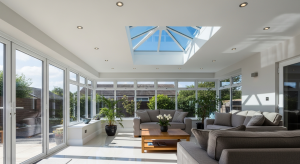
Replacing a polycarbonate conservatory roof with a tiled (solid) roof costs £5,500 to £14,500 fitted in the UK in 2026, with most homeowners paying £7,500 to £10,500 for a typical 12–18m² conversion. The total is driven by three things: the size and shape of your conservatory, the tile type (lightweight composite vs real slate or clay), and whether the existing aluminium or uPVC frame needs reinforcement to carry the extra 60–90kg per square metre. Most installs are completed in 4 to 7 days and typically qualify for Permitted Development – meaning no planning application is needed in the vast majority of cases.
FREE QUOTE COMPARISON
Compare Conservatory Roof Quotes from Trusted Suppliers
100% free • No obligation • Takes under 2 minutes
This guide breaks down the full cost of converting from polycarbonate to tiled in 2026, includes a worked example showing the heating-bill payback over 8–12 years, and explains exactly when your existing frame can take the load and when you need to budget for reinforcement. All prices are verified against quotes from Guardian Warm Roof, LivinROOF, Equinox, and three regional installers as of May 2026. For the cheaper (but worse-performing) alternative, see our glass conservatory roof cost guide, or for the wider market view, the conservatory roof replacement cost guide.
Polycarbonate to Tiled Conversion Cost by Conservatory Size
The single biggest cost driver for a polycarbonate-to-tiled conversion is roof area, because tiles, insulation boards, plasterboard, and labour all scale linearly with square metres. A 6m² porch-style conversion costs about a third of a 20m² family conservatory in the same tile spec, and the price per m² flattens out at around 18–20m².
Most quotes you receive will fall into one of four size brackets. The cost per square metre is highest on small conservatories (because there is a fixed minimum cost for scaffolding, building control, and a two-person install team) and lowest on jobs over 20m².
| Conservatory size | Total fitted cost | Cost per m² | Typical install time |
|---|---|---|---|
| Small lean-to (6–10m²) | £5,500–£7,500 | £700–£850 | 3–4 days |
| Edwardian / mid-size (12–18m²) | £7,500–£10,500 | £580–£700 | 4–5 days |
| Victorian or gable (15–20m²) | £9,500–£12,500 | £620–£750 | 5–6 days |
| P-shape, L-shape, or 20m²+ | £10,500–£14,500 | £520–£680 | 6–7 days |
Edwardian conservatories are the cheapest shape to convert because the rectangular roof needs only standard ridge and eaves detailing. Victorian and P-shaped roofs add 15–25% to the bill because each faceted bay needs bespoke tile cuts and additional flashing where two pitches meet.
The smallest jobs (under 8m²) sometimes hit a price floor of around £5,000 because the contractor still needs to pay for scaffolding, building control sign-off, two days of a two-person crew, and skip hire regardless of how small the roof is. If you have a porch-style conservatory, check whether a glass replacement at £2,500–£4,000 makes more financial sense.
What Affects Polycarbonate to Tiled Conversion Cost?
Beyond size, the four factors that move a polycarbonate-to-tiled quote up or down are tile type, frame condition, the number of new roof windows, and whether the conservatory will be brought inside the heated envelope of the house. A like-for-like conversion on a sound aluminium frame is the cheapest job; an upgrade to real slate with new roof lights and frame reinforcement can run double.
- Tile type: Lightweight composite tiles (Tapco Slate, Metrotile) sit at the bottom of the price range. Concrete interlocking tiles add £500–£1,200. Real slate or clay pantiles add £1,500–£3,500 because of weight (frame reinforcement) and hand-laying labour. Our tiled conservatory roof cost guide breaks down the price difference between each tile system in detail.
- Frame condition: Most aluminium and uPVC frames built after 2005 take the load of a lightweight tiled roof without modification. Older frames, sagging frames, or any signs of rot mean £800–£2,500 in steel reinforcement bars or replacement headers.
- Roof windows / Velux units: Tiled roofs lose the natural light of polycarbonate, so most homeowners specify 2–4 roof windows. Each Velux unit fitted runs £450–£750. Skip the roof windows on a north-facing room and you save £1,500–£3,000 but the conservatory will feel noticeably darker.
- Building Regulations route: A like-for-like roof replacement is exempt from Building Regs if the conservatory keeps its external doors and is not heated by the main house. If you plan to remove the doors and bring the room inside the heated envelope, you need a building notice and the cost adds £400–£900 in fees plus £800–£2,000 for upgraded insulation, U-value compliance, and SAP calculations.
- Internal finish: A plastered and painted ceiling adds £800–£1,500. Exposed pine cladding or beams add £1,200–£2,500. The cheapest spec is a foil-backed insulation board with a smooth white melamine face – functional but the least premium feel.
- Region: London and the South East run 10–15% above the national average, mainly on labour. Scotland and the North East are typically 5–10% below.
Always check that your quote includes scaffolding, building control fees, polycarbonate disposal (skip and labour), new gutters, lead flashing where the roof meets the house, and at least one roof light. Stripped-down headline prices that exclude these can balloon by £1,000-£2,500 once the work starts.
Polycarbonate vs Tiled: What You Gain (and Lose)
Converting from polycarbonate to tiled is the single biggest comfort upgrade you can make to a conservatory. Summer overheating drops by 10–15°C, winter heat loss falls by 80–90%, and rain noise becomes inaudible. The trade-off is light: tiled roofs cut natural daylight by 60–75% unless you specify roof windows, and the room feels more like a small extension than a bright garden room.
Worked Cost Example: 8 to 12 Year Heating Payback
For a typical 14m² Edwardian conservatory in the Midlands, converting from polycarbonate to a lightweight composite tiled roof costs £8,500 fitted with two roof windows. The poly roof was costing the household around £380 a year in additional heating, fans, and rarely-using-the-room-in-July penalties. After conversion, that figure drops to about £75 a year, saving £305 annually. The roof pays for itself on running costs alone in year 11, and over a 25-year life saves £7,625 against doing nothing. On top of running-cost savings, a converted roof typically adds resale value to your home – shortening the effective payback further if you’re likely to sell within 10 years.
Below is the full calculation. Energy figures are based on Energy Saving Trust 2026 data for unheated UK conservatories, plus a 4°C temperature delta for typical use as a living room May–September and a heated extension Oct–Apr.
| Cost component | Keep polycarbonate | Convert to tiled |
|---|---|---|
| Roof installation (fitted, 14m²) | £0 | £8,500 |
| Annual summer cooling fan / portable AC running cost | £180 | £15 |
| Annual winter heat loss (additional gas use) | £160 | £30 |
| Annual reduced room usage cost (lost living space May/July) | £40 | £30 |
| Combined annual running cost | £380 | £75 |
| Cumulative cost after 11 years | £4,180 | £9,325 |
| Cumulative cost after 25 years | £9,500 | £10,375 |
The crossover point is year 11, but the more important number is the property value uplift: estate agents in the Midlands typically value a tiled-roof conservatory conversion at 65–75% of the install cost on resale, where a polycarbonate conservatory is often valued at zero or even priced down because buyers see it as a project. On a £8,500 install you would expect to recover £5,500–£6,400 in property value – making the effective break-even closer to year 4 or 5 if you sell within a decade.
Will My Existing Frame Take the Weight?
Most aluminium and uPVC conservatory frames installed after 2005 will take a lightweight composite tiled roof without modification. Pre-2005 frames, frames showing any sign of sag or rot, and any frame supporting a real slate or clay tile roof typically need reinforcement – usually a steel ridge bar and additional support posts – adding £800 to £2,500 to the quote.
The average polycarbonate roof weighs around 5–8kg per square metre. A lightweight composite tile system (Tapco Slate, Metrotile Lightweight) adds 35–45kg per square metre to the existing frame load. Concrete interlocking tiles add 55–65kg per square metre, and real slate or clay pantiles 70–90kg per square metre. The frame, eaves, and ground supports were originally engineered for the lower polycarbonate load, so any tile choice above lightweight requires a structural assessment.
- Aluminium frame, post-2005, no sag: Lightweight composite tiles fit without modification in 90% of cases. Concrete tiles need a structural calc but usually pass.
- uPVC frame, post-2005: Lightweight composite is the safe choice. Reinforcement is needed for concrete or natural slate – budget £1,200–£2,000.
- Pre-2005 frame, any material: Always commission a structural calc before signing the quote. Reinforcement is needed in 60–70% of cases.
- Frame with visible sag, rot, or movement: The conservatory itself probably needs replacing, not just the roof. Most reputable installers will not warranty a tiled roof on a compromised frame – at this point, weigh up tearing it down and starting over instead.
Reputable installers (Guardian, LivinROOF, Equinox) include a free structural survey as part of the quote process. If a quote arrives without a survey, it has not been engineered for your specific frame and you carry the risk. Walk away from any installer who will not survey before they price.
How Long Does Polycarbonate to Tiled Conversion Take?
A polycarbonate-to-tiled conversion typically takes 4 to 7 days on site, with the conservatory weather-tight by end of day 2. Most jobs phase the work so the structure is never left fully open overnight, and the conservatory remains usable from day 3 once the tiled outer skin is on.
- Day 1: Scaffolding goes up. Polycarbonate sheets are lifted out (1–2 hours). Frame inspection, structural assessment, any reinforcement work begins.
- Day 2: New ridge beam and rafter system fitted. Insulation boards installed between rafters. Roof is weather-tight by end of day 2 with a temporary membrane.
- Day 3: Tile battens, breathable membrane, and outer tile or composite slate skin fitted. Roof windows installed and flashed.
- Day 4: Lead flashing where the roof meets the house. Gutter replacement. External finishes.
- Day 5–6: Internal plasterboard ceiling installed. First and second coats of plaster. Down-lights wired and fitted (if specified).
- Day 7: Painting, snagging, scaffolding removed, building control sign-off.
Bigger or more complex roofs (P-shape, L-shape, Victorian over 18m²) typically run an additional 1 to 2 days because each faceted bay needs bespoke ridge and hip detailing. Add a further day if the internal finish is exposed pine cladding instead of plaster.
Do You Need Planning Permission or Building Regs?
Replacing your conservatory roof with tiles on a like-for-like basis is covered by Permitted Development Rights and does not need planning permission – provided the tiled roof does not increase the conservatory's height, footprint, or volume. Building Regulations are also waived if the conservatory keeps its original external doors and is not heated by the main house. If you bring the room inside the heated envelope, both Building Regs and a building notice apply.
The tipping point is whether the conservatory remains a "substantially glazed" structure with thermally separated doors. If yes, you stay exempt and the roof is treated as a like-for-like replacement. If you remove the doors between the house and conservatory, install fixed radiators or extend underfloor heating into the room, you trigger Building Regs because the conservatory is now legally part of the heated dwelling. Building Regs compliance adds £1,200–£2,900 in upgraded insulation, SAP calculations, and submission fees but unlocks a year-round room that counts as living space on resale.
- Like-for-like, exempt: Polycarbonate to tiled, doors stay, no fixed heating extended in. No planning, no Building Regs.
- Bringing room inside heated envelope: Building Notice required, U-value compliance, SAP calc, full insulation spec.
- Listed building or conservation area: Always contact the local planning office before signing a quote. Some authorities object to dark composite tiles on conservation properties.
- National Park or AONB: Permitted Development is reduced. Apply for a lawful development certificate before starting work.
How Many Roof Windows Should You Specify?
For a typical 12–18m² tiled conservatory roof we recommend 2 to 4 roof windows – usually 2 standard 78x118cm Velux units on smaller roofs and 3 to 4 on Edwardian or P-shaped layouts. Each unit adds £450–£750 fitted, and skipping them entirely saves £1,500–£3,000 but leaves the room noticeably darker than before. For larger openings, see our roof lanterns and skylights cost guide covering Velux, Atlas, and Korniche options.
The best position for roof windows is on the south or west elevation to maximise afternoon and evening light, ideally not directly above seating to avoid summer glare. North-facing windows give consistent daylight without overheating but feel cooler. East-facing windows give morning light only. On Victorian and P-shaped roofs, position the windows on the rear-facing pitch where they will not be visible from the street, which preserves the kerb appeal of the new tiled roof.
Most installers will specify Velux GGL, GGU, or Fakro FTP units. Centre-pivot is the standard choice for conservatory roofs because it allows easy cleaning of the outer pane from inside. Top-hung is better for views and headroom but harder to clean. Solar-control or laminated glazing on the roof window adds £100–£180 per unit and is worth specifying on south-facing pitches.
Our Verdict
Most UK homeowners converting a polycarbonate conservatory in 2026 should budget £7,500–£10,500 for a 12–18m² roof with a lightweight composite tile, 2 to 3 roof windows, and a plastered ceiling. This is the configuration that pays back fastest on running costs, adds the most property value, and avoids the £1,200–£2,900 Building Regs trigger if you keep the existing external doors in place.
The biggest mistake we see is homeowners specifying real slate or clay tile on a frame that was not built for the load. Either commit to the full structural reinforcement up front (and pay the £1,500–£2,500 premium with eyes open) or pick a lightweight composite that gives the same look at half the structural risk. The second-biggest mistake is skipping the roof windows to save money – the resulting room is dark, feels unloved, and gets used about half as often as one with proper daylight.
For three quotes from FENSA-registered conservatory roof specialists in your area, use the form below, or see our pick of the best conservatory roof replacement companies in the UK. We pre-screen every installer for trade body membership, structural survey practice, and warranty cover, so the quotes you receive are from companies who will still be trading in five years.
FREE QUOTE COMPARISON
Compare Conservatory Roof Quotes from Trusted Suppliers
100% free • No obligation • Takes under 2 minutes
Last updated: May 2026. Prices verified against direct quotes from Guardian Warm Roof, LivinROOF (Ultraframe), Equinox, Tapco Slate, and three regional installers. Energy ROI calculations based on Energy Saving Trust 2026 figures.