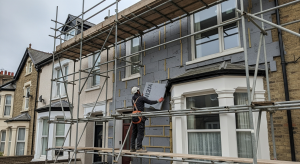
Free insulation is available to thousands of UK households through government grants in 2026. The main routes are ECO4 (means-tested, open to December 2026) and the council-run Warm Homes: Local Grant (open to March 2028); the Great British Insulation Scheme (GBIS) has closed (installations had to be complete by 31 March 2026). Both fund cavity wall, loft, and solid wall insulation at no cost to eligible homeowners. Your income, benefits, EPC rating, and council tax band determine whether you qualify.
FREE QUOTE COMPARISON
Compare Insulation Quotes from Trusted Suppliers
✓ GBIS grants available for eligible homes
100% free • No obligation • Takes under 2 minutes
We have mapped every insulation grant available in the UK. This covers national schemes, local authority programmes, and energy company obligations. Below, we explain who qualifies, what each scheme covers, and how to apply step by step. All eligibility criteria are current as of September 2026.
- ECO4 funds cavity wall, loft, and solid wall insulation for households on qualifying benefits - grants cover 100% of installation costs with no upfront payment required from the homeowner
- The Warm Homes: Local Grant extends eligibility beyond benefits claimants - homes in EPC band D-G with household income up to £36,000/yr can qualify, council-run to March 2028
- Loft insulation to 270mm saves £140-£360 a year on heating bills - the figure varies by house type (EST estimate), and professional installation is fully funded under ECO4 for eligible properties
- External wall insulation typically costs around £15,000 (Energy Saving Trust) - solid wall homes are a priority under ECO4, with the full cost of installation covered for qualifying households
- Applications go through ECO-approved installers, not directly to the government - the installer handles the eligibility check, application, and installation as a single process
What Insulation Grants Are Available in 2026?
Two national schemes currently fund most free insulation in the UK. ECO4 (Energy Company Obligation 4) is the larger programme. It targets low-income households. The Great British Insulation Scheme (GBIS) covered a broader range of properties with poor energy ratings but has closed (installations had to be complete by 31 March 2026); the council-run Warm Homes: Local Grant has since taken on this role.
| Scheme | Who Qualifies | What It Covers | Max Value | Runs Until |
|---|---|---|---|---|
| ECO4 | Households on qualifying benefits + EPC D-G | Cavity, loft, solid wall, floor, room-in-roof | Full installation cost for eligible measures | December 2026 |
| Warm Homes: Local Grant | England, EPC D-G + income up to £36,000/yr, or qualifying benefits/postcode | Insulation measures (cavity, loft, solid wall, floor) | Cost cap averaging £16,600 per home | March 2028 |
| Local authority grants | Varies by council | Varies – often top-up for ECO4/Warm Homes gaps | Varies by council | Varies |
| Energy company offers | Customers of specific suppliers | Discounted or free loft/cavity insulation | Varies | Ongoing |
Energy companies fund ECO4 directly; the Warm Homes: Local Grant is funded by government and delivered through local councils. Obligated energy suppliers pay for the work. The installation is genuinely free. There is no loan, no charge on your bills, and no catch.
ECO4: Energy Company Obligation
ECO4 is the UK’s largest energy efficiency scheme. It has a £4 billion budget running from April 2022 to December 2026. The scheme targets fuel-poor households. It funds cavity wall, loft, solid wall, floor, and room-in-roof insulation.
For detailed eligibility requirements and the application process, see our full ECO4 scheme guide.
ECO4 Eligibility
You must receive at least one qualifying benefit. Your property must also have an EPC rating of D, E, F, or G.
- Universal Credit (income under the threshold)
- Pension Guarantee Credit
- Income-related Employment and Support Allowance (ESA)
- Income-based Jobseeker’s Allowance (JSA)
- Income Support
- Housing Benefit
ECO4 also has a “flexible eligibility” route. Local authorities can refer households living in fuel poverty even without a qualifying benefit. Ask your local council’s energy team if they take part in ECO Flex.
An LA Flex referral counts like a qualifying benefit for ECO4 purposes.
What ECO4 Covers
ECO4 takes a “whole house” approach. The goal is to improve your EPC rating, with the exact target depending on your starting band and which measures suit your home. An installer surveys your home, picks the best measures, and fits them at no cost. Common measures include (typical installed costs from the Energy Saving Trust, which ECO4 can cover in full for eligible homes):
- Cavity wall insulation (around £2,200)
- Loft insulation to 270mm (around £750)
- External wall insulation (around £15,000)
- Internal wall insulation (around £12,000)
- Floor insulation (£1,400-£2,500)
- Room-in-roof insulation
Warm Homes: Local Grant (GBIS Has Closed)
The Great British Insulation Scheme (GBIS) launched in 2023 with a £1 billion budget but has closed (installations had to be complete by 31 March 2026). The council-run Warm Homes: Local Grant has taken on its role, reaching households that ECO4’s benefits-only criteria do not cover, via its own income-based route.
GBIS is now closed to new applications; for background on the scheme, see our Great British Insulation Scheme guide.
Warm Homes: Local Grant Eligibility
The Warm Homes: Local Grant has two eligibility routes – an income-based route, and a route for those on qualifying benefits or in a qualifying postcode area. You only need to meet one.
| Route | Requirements | Measures Available |
|---|---|---|
| Income-based route | England, EPC band D, E, F, or G + household income up to £36,000/yr | Insulation measures within a £16,600 average cap per home (separate £16,600 average cap for low-carbon heating) |
| Benefits or postcode route | Receiving a qualifying benefit (same list as ECO4) or living in a qualifying postcode area | Same funding, within a £16,600 average cap per home for insulation measures |
The income-based route is what sets the Warm Homes: Local Grant apart from ECO4. If your home has an EPC of D or below and your household income is up to £36,000/yr, you can qualify for insulation funding without being on benefits. This opens the grant to a wider group of low- and middle-income homeowners.
FREE QUOTE COMPARISON
Compare Insulation Quotes from Trusted Suppliers
✓ GBIS grants available for eligible homes
100% free • No obligation • Takes under 2 minutes
Quick Eligibility Checker
This table helps you assess which scheme you likely qualify for. You still need a formal check from an approved installer. But it gives you a solid starting point.
| Your Situation | Likely Eligible For | Measures Covered |
|---|---|---|
| On benefits + EPC D-G | ECO4 + Warm Homes: Local Grant | All insulation types (cavity, loft, solid wall, floor) |
| Not on benefits + EPC D-G + income up to £36,000/yr | Warm Homes: Local Grant | Insulation measures, within a £16,600 average cap per home |
| On benefits + EPC A-C | May qualify via ECO Flex | Depends on local authority assessment |
| Not on benefits + EPC A-C | Not eligible for national schemes | Check local authority grants and energy company offers |
| Private renter | ECO4 or Warm Homes: Local Grant (with landlord consent) | Same as above but landlord must agree |
| Social housing tenant | ECO4 (via housing association) | Housing association applies on your behalf |
You do not need to know your EPC rating before applying. The installer will check it as part of the application. If you want to check in advance, search the EPC register at gov.uk/find-energy-certificate using your postcode.
How to Apply for Insulation Grants
Applying is straightforward. An ECO-approved installer handles everything: eligibility check, application, survey, and installation. You do not apply to the government or your energy company directly.
Step-by-Step Application Process
- Find an ECO-approved installer – search the TrustMark register or ask your energy supplier for a list of approved companies in your area
- Request an eligibility check – the installer will ask about your benefits, property type, EPC rating, and council tax band
- Home survey – a surveyor visits your property to assess what insulation measures are needed and confirm eligibility
- Application submission – the installer submits the application to the energy company funding the work (you do not need to do this)
- Approval – typically takes 2-4 weeks, sometimes faster for straightforward cases
- Installation – the approved installer completes the work (cavity wall: 2-3 hours, loft: half day, solid wall: 2-4 weeks)
- Guarantee – you receive a guarantee certificate (25 years for cavity wall via CIGA, varies for other measures)
The whole process takes 4-8 weeks from first contact to finished installation. There is no upfront cost at any stage. Legitimate ECO installers never ask for a deposit or payment.
Beware of companies charging “administration fees” or “survey fees” for grant applications. ECO4 and Warm Homes: Local Grant installations are completely free for eligible households. If a company asks for payment, they are not following the scheme rules. Report them to your local trading standards office.
Local Authority Grants
Many local councils offer extra grants alongside ECO4 and the Warm Homes: Local Grant. These vary by area and change often. They can be valuable if you fall outside the national scheme criteria.
Common programmes include top-up funding for ECO4 measures and home improvement grants. Some councils offer interest-free loans for energy efficiency works. Others run their own insulation schemes in winter, targeting fuel-poor households.
Contact your council’s housing or energy team to ask what is available. The GOV.UK ‘Find ways to save energy in your home’ service (gov.uk/improve-energy-efficiency) gives tailored home energy recommendations and points to available funding.
What Does “Free Insulation” Actually Mean?
Free insulation through ECO4 and the Warm Homes: Local Grant is genuinely free. You pay nothing for installation, materials, or any related work. Energy companies cover the cost as part of their legal obligation to improve UK homes.
There is no loan, no charge on your energy bill, and no equity release. You do not need to switch supplier. The insulation belongs to you and stays with the property if you sell. You just need to meet the eligibility criteria and allow the work to be done.
The only “catch” is that you do not pick the installer. The energy company assigns one from their approved panel. You also cannot choose the material. The installer specifies what meets scheme rules. In practice, this rarely causes problems. All approved installers meet the same quality standards.
If you do not qualify for grants, see our cost guides: home insulation costs, cavity wall insulation costs, loft insulation costs, and external wall insulation costs. For help choosing an installer, read our best insulation companies guide.
FREE QUOTE COMPARISON
Compare Insulation Quotes from Trusted Suppliers
✓ GBIS grants available for eligible homes
100% free • No obligation • Takes under 2 minutes