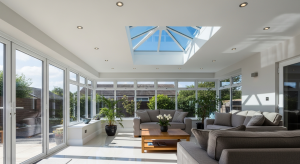
Replacing the roof on an existing conservatory costs £5,500 to £14,500 fitted in 2026. Building a brand new conservatory with a tiled or glass roof from scratch costs £15,000 to £45,000 fitted. The decision between the two comes down to four things: the structural condition of your existing conservatory frame, whether you want more floor area than you have today, your appetite for the planning and Building Regs route a new build often triggers, and the property-value calculation on resale. For most homeowners with a sound post-2005 conservatory frame, replacing the roof is the better-value choice by £10,000+; for tired pre-2000 conservatories or homeowners who want a properly-insulated extension, building new wins.
FREE QUOTE COMPARISON
Compare Conservatory Roof Quotes from Trusted Suppliers
100% free • No obligation • Takes under 2 minutes
This guide compares roof replacement vs new-build conservatory across cost, planning, lifespan, property value, and disruption. We then walk through three real-world scenarios so you can match the right path to your situation. All prices are verified against quotes from regional installers as of May 2026. For the underlying roof choices, see our tiled vs glass vs polycarbonate comparison. For the cheapest replacement route, our polycarbonate-to-tiled conversion cost guide covers the most common upgrade.
Replacement vs New Build: Side-by-Side
The two routes diverge sharply on every factor except final aesthetic. Replacement is faster, cheaper, and avoids planning. New build delivers a higher-spec extension that may count as habitable space on resale. The size of the gap depends almost entirely on the condition of the existing frame.
| Factor | Replace existing roof | Build new conservatory |
|---|---|---|
| Total cost (12–18m²) | £5,500–£14,500 | £15,000–£45,000 |
| Install time on site | 3–7 days | 4–8 weeks |
| Planning permission | None (Permitted Development) | Often needed if >30m² or front of house |
| Building Regs | Exempt unless heated envelope changes | Required if >30m² or used as habitable space |
| Structural foundations | Reuses existing | New 600–900mm dig + concrete £2,000–£5,000 |
| Frame replacement | No | Yes – new uPVC, aluminium, or timber frame |
| Floor area gained | Same as existing | Whatever you design (plus any extension uplift) |
| Lifespan of new structure | 30–40 years (roof + reused frame) | 30–50 years (full new structure) |
| Property value uplift | +£5,500–£6,800 (60–80% of cost) | +£9,000–£30,000 (60–75% of cost) |
| Disruption to household | Minor – conservatory unusable 2–3 days | Major – building site for 4–8 weeks |
When Replacement Is the Right Choice
For most UK homeowners with a conservatory built between 2005 and 2020, replacing the roof is the right call. The existing aluminium or uPVC frame is engineered to take the load of a lightweight tiled or glass replacement, the foundations are sound, and you get most of the comfort upgrade for a third of the cost.
- Frame is post-2005 and structurally sound: No sagging, no rot, no movement at corners. A free structural survey from Guardian or Equinox will confirm load capacity in 90 minutes.
- You are happy with the current footprint: The conservatory is the right size for the room you want, and you do not need extra floor area.
- Budget is under £15,000: A full new build at this budget is only possible at the smallest sizes (under 10m²) and lowest spec; replacement gets you a properly-insulated mid-size roof in the same envelope.
- You want to be done in a week: Roof replacement is 3–7 days on site. New build is 4–8 weeks of dust, scaffolding, and lost garden access.
- The conservatory is recently built (under 10 years): Replacing the entire structure means writing off thousands of pounds of value in the existing frame and base.
- Planning approval is unlikely or restricted: Conservation areas, listed buildings, or front-of-house conservatories often hit planning roadblocks on new builds.
When New Build Is the Right Choice
New build is the right call when the existing structure is at end-of-life, when you want significantly more floor area, or when you specifically want a properly-insulated extension that counts as habitable space on resale. The cost is 2–3 times higher but you get a higher-spec result and a fresh 30–50 year clock.
- Existing frame is pre-2000 or compromised: Visible sag, rot, condensation between glass panels, or movement at corners. Reinforcement to take a tiled roof can add £1,500–£3,500, narrowing the gap to new build.
- You want significantly more floor area: Doubling a 10m² conservatory to 20m² is impossible with replacement; new build lets you size the structure to your needs.
- Budget is £20,000+ and you want a proper extension: A new build with insulated walls, underfloor heating, and a tiled roof legally counts as habitable space on the floor plan and adds £15,000+ in property value. See our full UK conservatory cost breakdown for pricing across size and style.
- Planning permission is straightforward: Rear of house, under 30m², no listed building or conservation constraints, neighbours unlikely to object.
- You want full Building Regs compliance: SAP calculation, Part L compliance, full insulation spec, building notice signed off.
- Aesthetic on the existing conservatory was wrong: Wrong shape, wrong roof pitch, wrong frame colour, or wrong relationship to the house – new build resets all of these.
Three Real-World Scenarios
The right choice depends on the specifics of your situation. Three patterns we see repeatedly in homeowner enquiries.
Scenario 1: 2010 Edwardian Conservatory, Tired Polycarbonate Roof
The conservatory is 14m², fitted in 2010 with a polycarbonate roof, sound aluminium frame, family of four use the room as a second sitting area. Polycarbonate has yellowed and the rain noise has become unbearable.
Recommendation: Replace the roof. The frame is well within its service life and engineered for a tiled or glass replacement. Spending £9,000 on a Guardian Warm Roof gets you a year-round room and a 10-year insurance-backed guarantee (25-year tile warranty) for a third of the new-build cost. New build at this point would be writing off the £6,000–£8,000 value in the existing frame and base.
Scenario 2: 1995 Victorian Conservatory, Visible Frame Sag
The conservatory is 16m², fitted in 1995, uPVC frame showing visible sag at the eaves and condensation between glass panels. Owners want a proper room for hosting family at Christmas.
Recommendation: Build new. A 30-year-old uPVC frame with visible sag will not safely take a tiled roof and reinforcement to make it work would cost £3,000–£4,000 – on top of the £9,000 roof. At £12,000–£13,000 you are within £5,000 of a properly-built new conservatory with insulated walls, underfloor heating, and a fresh 30–50 year clock. The new build also unlocks Building Regs habitable status and an extra £10,000+ in property value.
Scenario 3: 8m² Lean-To Porch, Front of House
The conservatory is a small front-of-house lean-to porch, used as a coats-and-boots room. Polycarbonate roof from 2008. Property is in a conservation area.
Recommendation: Replace the roof with self-cleaning glass. A new build at the front of a conservation-area property is a 6–9 month planning saga with high refusal risk. Replacement is Permitted Development on a like-for-like basis, takes 2–3 days, and the porch is small enough that a glass roof at £3,500 fits the use case. Save the new-build budget for the rear of the property if floor area is a future need.
Always commission a free structural survey before deciding. Reputable installers (Guardian, LivinROOF, Equinox) include the survey in the quote process. The survey will tell you whether your existing frame can take a replacement roof - and if not, that information shifts the calculation toward new build.
How to Tell If Your Existing Frame Is Sound
The single biggest factor in the replace-vs-build decision is the structural condition of your existing frame. There are five things you can check yourself before commissioning a survey, and they will give you a strong indication of which path is realistic for your property.
- Stand inside the conservatory and look up at the corners: Visible sag at the eaves where the roof meets the wall is a warning sign. A sound frame should sit flush at every corner.
- Open and close every window and door: Sticking, dropping, or hard-to-close openings indicate frame movement or settlement. Resolved cleanly with a new build, expensive to fix on a replacement.
- Check for condensation between glass panels: Misted double glazing is a failed seal and points to a frame that has worked and flexed over time.
- Inspect the base from outside: Cracks in the brick plinth, displaced mortar, or visible damp on the inner brick face all suggest foundation issues.
- Try to rock the frame at any corner: Stand outside, place your palm flat against the corner upright, and try to push gently. Any movement is a frame integrity issue.
Two or more of these signs makes new build the better-value path even at higher up-front cost – the cost of reinforcing or rebuilding a compromised frame typically lands within £3,000–£5,000 of starting fresh, and you avoid lifetime warranty disputes. Zero or one sign and you are clear for a roof replacement on the existing structure.
Property Value: Which Adds More on Resale?
New build adds more in absolute terms (£9,000–£30,000 vs £5,500–£6,800) but replacement adds more as a percentage of cost (60–80% return vs 60–75% return). The right answer depends on your selling timeline and how much equity you want to recycle on resale.
Estate agents in the UK consistently price a tiled-roof conservatory conversion as adding £5,500–£6,800 to a typical £300,000–£450,000 family home, on the basis that the room becomes year-round usable. A brand-new fully-insulated conservatory with Building Regs sign-off adds £9,000–£15,000 on the same property because it counts as habitable extension space on the EPC and floor plan. On a new build above 25m², the uplift can reach £25,000–£30,000 if it functions as a proper kitchen-diner extension.
The math: roof replacement at £9,000 returning £6,000 on resale gives a net cost of £3,000 for 25–30 years of better living. New build at £25,000 returning £15,000 gives a net cost of £10,000 for the same period plus extra floor area. Replacement is the cheaper net cost; new build buys more value but at higher absolute outlay. Selling within 3 years of either project changes the math – resale value typically lags install cost by 12–18 months as the property re-prices.
Our Verdict
For most UK homeowners with a conservatory built between 2005 and 2020, roof replacement is the right call. The frame is well within service life, the foundations are sound, and you get most of the comfort upgrade for £5,000–£10,000 less than a new build. New build only makes sense if the existing structure is genuinely failing, you want significantly more floor area, or you specifically need the Building Regs habitable status that comes with a properly-insulated extension.
The biggest mistake we see is homeowners deciding before getting a structural survey. The survey is free from any reputable installer (Guardian, LivinROOF, Equinox) and is the single most important data point in the decision. Get the survey first, then make the call – do not commit to a route until you know what your existing frame can support.
For three quotes from FENSA-registered conservatory specialists in your area – covering both replacement and new build – use the form below. We pre-screen every installer for trade body membership, structural survey practice, and warranty cover, so the quotes you receive are from companies who will still be trading in five years.
FREE QUOTE COMPARISON
Compare Conservatory Roof Quotes from Trusted Suppliers
100% free • No obligation • Takes under 2 minutes
Last updated: May 2026. Prices verified against direct quotes from Guardian, LivinROOF, Equinox, and three regional installers covering both replacement and new build. Property value uplift figures based on UK estate agent benchmarks for 2025–2026.