Vehicle tracking feels like a must-have for UK businesses with fleets, but the legal maze can get confusing fast. Plenty of employers worry about crossing privacy boundaries or getting hit with fines while just trying to keep tabs on their vehicles and boost efficiency.
FREE QUOTE COMPARISON
Compare Vehicle Tracking Quotes from Trusted Suppliers
✓ Plans from £6/vehicle per month
100% free • No obligation • Takes under 2 minutes
Tracking company vehicles is legal in the UK, but businesses must follow strict data protection laws, get employee consent, and be open about how they use tracking data. The main legal framework circles around GDPR and the Human Rights Act 1998, both of which protect employee privacy even while they’re on the clock.
From consent rules to data security, getting vehicle tracking right takes planning and a bit of ongoing effort. This guide was last updated in June 2026.
- GDPR fines reach £17.5 million or 4% of global turnover for tracking without proper consent - businesses must have a lawful basis (legitimate interest or consent) documented before installing any vehicle tracker
- 72-hour breach notification to the ICO is mandatory when tracking data is compromised - failure to report unauthorised access to vehicle location data carries separate penalties of up to £8.7 million
- Employers must inform drivers in writing before installing trackers on company vehicles - the ICO sets no fixed notice period, but you must explain what data is collected, why, and who can access it before monitoring starts
- Personal use tracking outside work hours requires explicit opt-in consent from drivers - continuous 24/7 tracking without justification is likely to breach UK GDPR proportionality requirements and a privacy mode should disable tracking off-shift
- UK GDPR sets no fixed maximum retention period - data must be deleted once no longer needed - most businesses retain routine tracking data for 12-24 months, holding incident data longer only where a legal, tax or insurance reason applies
Data Protection and Employee Privacy
Vehicle tracking grabs personal data, so employers have to balance business needs with worker privacy. GDPR and the Data Protection Act 2018 lay out exactly how tracking data should be handled and protected.
Understanding Personal Data in Tracking
Location data from tracking systems counts as personal data under UK law. This covers GPS points, routes, and anything that could identify an employee.
Examples of personal tracking data:
- Live location (GPS coordinates)
- Past journeys
- Speed and driving habits
- Time stamps showing work patterns
The law treats this data just like any other sensitive employee info. You can’t collect it without a legal reason.
Tracking data can reveal a lot about an employee’s habits, making it especially sensitive under privacy laws.
Role of GDPR and the Data Protection Act
UK GDPR and the Data Protection Act 2018 apply to all tracking. Employers need a lawful basis for collecting any tracking data.
Acceptable legal reasons include:
- Legitimate interests – Usually the reason for tracking business vehicles
- Legal compliance – Needed in some sectors
- Consent – Not always ideal because of the employer-employee power gap
Employers should do a Data Protection Impact Assessment before setting up tracking. This helps spot risks and figure out how to handle them.
The Information Commissioner’s Office enforces these rules. Fines can hit £17.5 million or 4% of global turnover, whichever is bigger.
Employee Rights and Privacy Safeguards
Employees have rights over their tracking data, and employers need to respect these. These rights keep things fair while letting businesses monitor legitimately.
Main employee rights:
- Right to be informed – Employees must know what data is collected
- Right of access – They can see their tracking data
- Right to object – They can challenge tracking if it isn’t justified
- Right to rectification – They can correct mistakes in their records
Employers should turn off tracking outside working hours if the vehicle is used personally. No one wants their weekend trips logged by the boss.
Only trained staff should access tracking data. Regular security checks help keep this information safe from leaks or hacks.
Employee Consent and Transparency
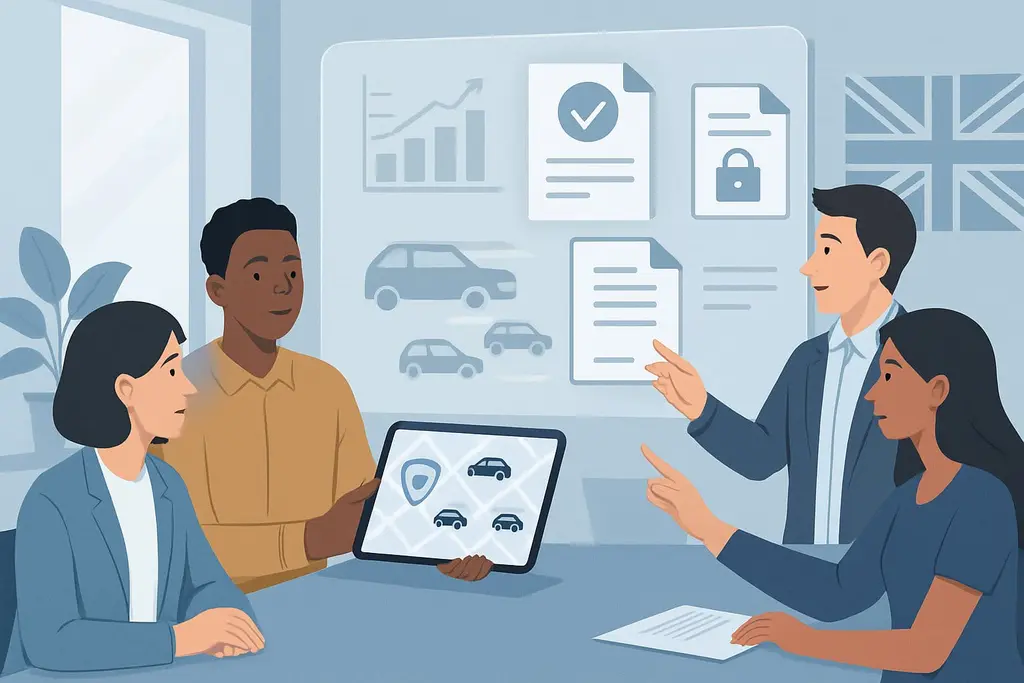
UK law says employers need to be totally upfront about tracking and get proper consent from employees. Companies should have clear policies and let workers see their own data.
Informing Employees About Tracking
Employers must spell out exactly what tracking data they’ll collect before any monitoring starts. That means location, speed, journey times, and driving patterns.
The explanation needs to be in plain English. Ditch the jargon and keep it simple for everyone.
What employers should tell staff:
- What data is collected
- How long it’s kept
- Who can see it
- Why tracking is used
- Employee rights over their data
Workers need to know about tracking before it kicks off. Starting first and telling them later isn’t allowed.
It’s worth explaining how tracking helps keep everyone safe and improves things like route planning. It can actually be a win-win if done right.
Obtaining Express Consent
Consent has to be freely given and only for tracking. Employees shouldn’t feel pressured or punished if they say no.
Consent should be separate from other agreements. Don’t bury it in the employment contract or company handbook.
Proper consent means:
- Clear explanation of what they’re agreeing to
- Freedom to withdraw consent any time
- No punishment for saying no
- A separate agreement just for tracking
Sometimes employers can rely on legitimate business interests instead of consent, but that’s riskier and not always the best route.
Most companies find that getting real consent makes for a better relationship with staff. Employees are usually more accepting when they’ve been asked properly.
Written Permissions and Documentation
Companies need to keep written records of all tracking consents. This proves they’re sticking to the rules.
The tracking policy should be a clear, written document. It needs to lay out how the business handles employee privacy and data.
What the policy should cover:
| Section | Required Content |
|---|---|
| Data collection | What info is gathered |
| Storage periods | How long data is kept |
| Access rights | Who can see employee data |
| Withdrawal process | How to remove consent |
Employees should get copies of anything they sign. If the company updates the policy, staff need to see the new version.
If a worker asks to see their tracking data, the company has to handle that properly. Everyone deserves to know what’s being held about them.
Having things in writing protects both sides. It sets expectations and helps avoid arguments down the line.
Company Cars, Fleet Vehicles, and Ownership Differences
Who owns the vehicle changes the rules. Companies have more leeway with their own vehicles than with cars owned by employees but used for work.
Tracking Company-Owned Vehicles
It’s simpler to set up tracking on vehicles the company owns. Fleet vehicles are under the employer’s control, so the process isn’t as complicated as with personal cars. Most businesses start with van trackers as their first deployment.
Legal Requirements:
- Inform employees about tracking
- Get written driver consent
- Follow GDPR data rules
- Allow privacy for personal use
Employers can monitor company cars for things like routes, fuel use, and driver behaviour, but only during work hours.
Managing a fleet is easier with company vehicles. It’s straightforward to have clear tracking policies without messy ownership issues.
Key Compliance Steps:
- Include tracking in employment contracts
- Give clear info about data collection
- Let employees turn off tracking for personal use
- Protect data with encryption
Even if the business owns the car, employee privacy still matters. Tracking should only happen for real work reasons.
Employee-Owned Vehicles Used for Work
Tracking employee-owned vehicles brings stricter legal hurdles. Personal vehicle ownership gives employees extra privacy rights under UK law.
Enhanced Consent Requirements:
- Explicit written agreement needed
- Clear explanation of tracking scope
- Right to refuse without employment consequences
- Separate compensation for tracking acceptance
Employers can’t force tracking on personal vehicles. Employees keep strong privacy rights over their own cars, even for business use. Individuals tracking their own vehicles voluntarily can find options in our guides to best car trackers and motorcycle trackers.
Data collection needs to stay minimal and work-focused. Companies should only track business journeys and job-related activities, not personal trips or private use.
Alternative Solutions:
- Mileage tracking apps instead of permanent devices
- Removable tracking units for work periods
- Business-only tracking policies
- Separate business vehicle programmes
Tracking employee-owned vehicles often gets tricky compared to managing a company fleet. Plenty of businesses just stick with company car schemes to skip these headaches.
Mixed-Use Arrangements and Policies
Many company cars get used for both business and personal trips. These setups need careful policies to balance operational needs with privacy rights.
Privacy Mode Requirements:
- Drivers must be able to disable tracking
- Clear boundaries between work and personal use
- Automatic privacy activation outside work hours
- Simple activation/deactivation processes
Mixed-use policies should spell out when tracking applies. Usually, work hours, business journeys, and company time allow tracking, but personal use needs privacy protection.
Policy Components:
- Defined work hours for tracking
- Personal use privacy protections
- Emergency tracking exceptions
- Data retention timeframes
Fleet tracking systems need to handle different usage patterns. Modern systems now let drivers set privacy modes that change automatically based on time, location, or input.
Companies often draft detailed vehicle use agreements. These documents set tracking boundaries, personal use rules, and privacy expectations for mixed-use situations.
FREE QUOTE COMPARISON
Compare Vehicle Tracking Quotes from Trusted Suppliers
✓ Plans from £6/vehicle per month
100% free • No obligation • Takes under 2 minutes
Developing and Maintaining a Vehicle Tracking Policy
A strong vehicle tracking policy builds the foundation for legal compliance and employee trust. Clear guidelines, careful data handling, and open communication help businesses meet legal standards while respecting employee rights.
Establishing Clear Tracking Guidelines
Every business needs specific rules about when and how tracking happens. The policy should say tracking only runs during work hours and for business reasons.
Core elements must include:
- Work-related tracking only
- No monitoring during breaks or personal use
- Clear start and end times for tracking
- Purpose statements for data collection
The policy has to explain what data gets collected. This usually covers location, journey times, and vehicle performance. It should also state what won’t be collected.
Businesses need to include privacy measures. Employees must be able to disable tracking when using company vehicles for personal trips. This comes straight from the Human Rights Act 1998.
The guidelines should cover disciplinary procedures. They ought to explain when tracking data might get used for reviews or investigations, keeping things transparent and avoiding confusion.
Data Access, Retention, and Deletion
The policy needs to spell out who can see tracking data inside the company. Only authorised staff should view employee location info.
Access controls should include:
- Named job roles with access rights
- Password protection requirements
- Regular access reviews
- Audit trails for data viewing
Data retention periods must have clear limits. Most companies keep tracking data for 12 to 24 months unless legal reasons demand longer. The policy should state the exact timeframe.
Deletion procedures should work automatically if possible. Old data should get removed without staff needing to do it manually. This helps avoid keeping information too long.
Employees can request their data under GDPR. The policy should explain how they can see, correct, or ask for deletion of their tracking info.
Communicating Policies to Employees
Every employee should get a written copy of the tracking policy before it starts. This usually happens during hiring or before the company installs any tracking system.
Communication methods should include:
- Written policy documents
- Face-to-face briefings
- Training sessions
- Regular policy updates
The policy needs to use plain language. Any technical terms should be explained, so everyone knows their rights and what the company has to do.
Regular training sessions help keep things compliant. These sessions should cover policy changes and let employees ask questions. Keeping records of attendance shows the company did its bit.
The policy should list who to contact with questions or worries. This could be someone in HR or a line manager, but employees need to know who to talk to.
Whenever the policy changes, staff must hear about it right away. Changes in law or tech might require updates, and employees need to get those in writing.
Data Security and Legal Risks
Vehicle tracking systems bring serious data security responsibilities. Companies need strong safeguards to stop unauthorised access and must understand the legal fallout if things go wrong.
Protecting Tracking Data
Businesses secure tracking data with several layers of protection. Access controls form the first defence against breaches.
Only trained staff should access vehicle tracking systems. Companies need clear rules about who can view tracking data and when.
Technical safeguards include:
- Encrypted data transmission
- Secure password requirements
- Regular software updates
- Protected server storage
Companies need to check tracking information stays accurate and up to date. Regular maintenance helps with this.
Storage limitations apply to all tracking data. Businesses can’t keep employee location data forever; they must delete it when it’s no longer needed.
Physical security counts as well. Tracking devices and computers need protection from theft or tampering.
Risks of Unauthorised Access
When someone accesses tracking data without permission, it can cause real privacy problems. Internal threats often prove riskier than outside hackers.
Some employees might misuse tracking data to monitor others. Staff could access systems beyond their allowed level.
External threats include hackers trying to steal location info. Criminals might target tracking systems to plan thefts or other crimes.
Weak passwords make it easy for unauthorised users to get in. Default logins on tracking devices are especially risky.
Mobile access brings extra security challenges. Staff using phones or tablets to access tracking data need solid security in place.
Sharing tracking data with third parties without proper agreements breaks data protection rules. Every outside party must have decent security measures.
Data Breaches and Legal Consequences
Data breaches with tracking systems trigger tough legal duties. Companies have to report major breaches to the ICO within 72 hours of finding them.
GDPR penalties can reach £17.5 million or 4% of annual turnover, whichever’s higher. The ICO has handed out some hefty fines for tracking data failures.
Employee disputes often follow tracking data breaches. Staff may claim privacy breaches or unfair monitoring.
Legal requirements after a breach include:
- Immediate breach containment
- Investigation of the cause
- Notification to affected employees
- Documentation of response actions
Insurance might not cover data breach costs. Companies face direct liability if they don’t protect data properly.
Criminal charges can apply if someone deliberately misuses tracking data. Covert tracking without proper consent breaks UK surveillance laws.
FREE QUOTE COMPARISON
Compare Vehicle Tracking Quotes from Trusted Suppliers
✓ Plans from £6/vehicle per month
100% free • No obligation • Takes under 2 minutes
Technology Considerations and Compliance Challenges
Modern GPS tracking technology gives businesses powerful fleet management tools, but compliance can get complicated. GPS jamming is a legal risk that companies can’t ignore.
GPS Tracking Technology Overview
Vehicle tracking systems use Global Positioning System (GPS) satellites to track location in real time. These systems log vehicle movements, speed, and routes travelled.
Most tracking tech stores data on secure servers. Companies can check this info through web dashboards or mobile apps.
Key data collected includes:
- Vehicle location coordinates
- Speed and acceleration patterns
- Journey start and end times
- Route information
- Engine diagnostics
The technology runs continuously when vehicles are in use. Some systems let drivers turn off tracking during personal use of company vehicles.
Data gets sent over mobile networks, so vehicles need cellular connectivity for real-time monitoring.
GPS Jamming and Legal Implications
GPS jamming means blocking or messing with tracking signals using electronic gadgets. This is illegal under UK telecommunications law.
Employees who use jamming devices face harsh penalties. Courts can hand out unlimited fines and up to two years in prison.
Jamming affects more than just fleet tracking. It can disrupt emergency services, aviation, and other critical systems that rely on GPS.
Legal penalties for GPS jamming include:
- Criminal prosecution under the Wireless Telegraphy Act 2006
- Unlimited financial penalties
- Prison sentences up to 24 months
- Seizure of jamming equipment
Companies should make sure employees know these risks. Policies must clearly state that jamming is illegal and will lead to disciplinary action.
Detection systems can spot when jamming happens, helping employers act fast and keep systems secure.
Balancing Tracking and Employee Privacy
Employers have to respect employee privacy rights while meeting business tracking needs. The Human Rights Act 1998 guarantees privacy protection at work.
Companies should use privacy modes for personal vehicle use. Drivers can then turn off tracking outside work hours.
Data collection has to stay focused on business needs. Tracking personal activities or over-monitoring breaks privacy laws and damages trust.
Privacy protection measures include:
- Written consent from all drivers
- Clear policies explaining data use
- Privacy settings for personal use
- Secure data storage systems
- Limited access to tracking information
Regular policy reviews help keep up with changing regulations. Companies should check with legal experts to make sure their tracking practices still fit the law.
Open communication helps build trust. When workers know why tracking happens, they’re more likely to accept it.
For taxi and private hire operators, tracking compliance is especially important – dispatch software must handle both driver location data and passenger booking records within GDPR rules. See our guide to the best taxi dispatch software in the UK for systems that include built-in compliance features. For logistics operators, see our transportation management software guide.