Double glazing costs between £350 and £1,100 per casement window in the UK in 2026, depending on the frame material, window style, and glass specification. A full house of white uPVC double glazing for a typical 3-bed semi-detached costs about £3,750, while aluminium frames push the total to £4,700-£5,600 (MyJobQuote). The biggest cost variables are frame material, window size, and whether you choose a national installer or a local FENSA-registered company. For practical advice on avoiding common mistakes, see our double glazing tips guide.
FREE QUOTE COMPARISON
Compare Double Glazing Quotes from Trusted Suppliers
✓ Save up to £400 per window
100% free • No obligation • Takes under 2 minutes
These prices come from published cost guides (MyJobQuote, Checkatrade, the Federation of Master Builders and GreenMatch), cross-checked against Energy Saving Trust figures. This guide breaks down costs by material, window style, and house size – with verified 2026 pricing, regional price variation across UK postcodes, and the latest on government grants including the Warm Homes: Local Grant (up to £33,200 for eligible homeowners).
Whether you’re replacing single glazing, upgrading older double-glazed units, or fitting windows in a new extension, you’ll find the exact figures you need to budget accurately.
- uPVC casement windows - the most popular choice, costing £350-£550 per window installed, roughly half the price of timber
- Full house costs - expect about £3,750 for a 3-bed semi in uPVC, or £7,500-£12,000 in softwood timber
- Energy savings - A-rated double glazing saves around £85 a year in a single-glazed semi in Great Britain (Energy Saving Trust)
- VAT is charged at 20% - double glazing is standard-rated and does not qualify for the 0% energy-saving-materials relief (GOV.UK Notice 708/6); the prices below already include 20% VAT
- Government grants available - the Warm Homes: Local Grant offers up to £33,200 for eligible homeowners in England
How Much Does Double Glazing Cost Per Window?
A single double-glazed casement window costs between £350 and £1,100 installed in 2026, with the price driven primarily by your choice of frame material. uPVC is the most affordable option at £350-£550 per window, while timber casements cost £750-£1,100.
These prices include both supply and professional installation by a FENSA or CERTASS registered installer. All figures assume standard sizes (around 1200mm x 1200mm for a casement window). Larger windows, non-standard shapes, and ground-floor vs upper-floor access will all affect the final price.
| Frame Material | Cost Per Window | Typical Cost | Premium vs uPVC | Best For |
|---|---|---|---|---|
| uPVC Casement | £350-£550 | – | – | Best value, low maintenance |
| uPVC Sash | £700-£1,100 | – | – | Period properties, traditional look |
| Aluminium | £600-£850 | – | – | Modern aesthetics, slim frames |
| Timber | £750-£1,100 | – | – | Heritage properties, natural look |
| uPVC Sliding | £600-£1,400 | £800-£1,000 | Higher than casement | Limited external space |
Prices sourced from MyJobQuote (updated 29 July 2026) and Checkatrade (2026). All costs include VAT at the standard 20% rate (double glazing does not qualify for the 0% energy-saving-materials relief).
Double Glazing Cost by Material
Frame material is the single biggest factor in double glazing cost, with timber costing roughly twice as much per window as uPVC. uPVC dominates the UK market for good reason – it offers the best balance of cost, durability, and thermal performance.
uPVC Double Glazing
uPVC casement windows cost £350-£550 per window installed, making them the most affordable double glazing option in the UK. They require virtually no maintenance beyond occasional cleaning, won’t rot or warp, and typically achieve A-rated energy performance as standard. Most UK homes now have some form of double glazing.
The main drawback is aesthetics. uPVC frames are thicker than aluminium, and while woodgrain-effect finishes are available, they don’t match the look of real timber. For modern builds or period properties where slim sightlines matter, aluminium or timber may be worth the premium.
Aluminium Double Glazing
Aluminium frames cost £600-£850 per window – more than equivalent uPVC. The premium buys you slimmer frames (maximising glass area and light), a contemporary aesthetic, and exceptional durability. Aluminium won’t discolour over time.
Modern aluminium frames use a thermal break design to prevent heat transfer through the metal, so they now match uPVC on energy ratings. They’re particularly popular for bifold doors and large-format windows where structural strength is needed.
Timber Double Glazing
Timber windows are the premium option at £750-£1,100 per casement window – more than uPVC. They offer the best thermal insulation of any frame material, a natural aesthetic that suits period and heritage properties, and can be repaired rather than replaced if damaged.
The trade-off is maintenance. Timber frames need repainting or re-staining periodically to prevent rot, and they’re more susceptible to warping in wet conditions. Some manufacturers offer engineered timber or timber-aluminium composite frames that reduce maintenance requirements, but these push prices even higher.
Cost by Window Style
Window style affects both the per-unit price and the complexity of installation. Standard casement windows are the cheapest to install, while sash, bay, and tilt-and-turn styles carry significant premiums due to their more complex mechanisms and larger frame sizes.
| Window Style | uPVC Cost | Aluminium Cost | Notes |
|---|---|---|---|
| Casement | £350-£550 | £600-£850 | Most common, side or top-hung |
| Sash (sliding) | £700-£1,100 | £1,100-£1,400 | Period properties, counterbalanced |
| Tilt-and-turn | £450-£700 | £700-£950 | Versatile ventilation, easy cleaning |
| Bay window (3 panels) | £1,200-£2,500 | £2,000-£3,000 | Structural support may be needed |
| Fixed (non-opening) | Get quotes | Get quotes | No moving parts; ask for a separate quote |
Bay windows deserve special attention because the cost isn’t just the glass and frames. If the existing bay structure needs reinforcement or the roof above needs work, structural costs of £500-£1,500 may be added on top. Always get a survey before committing to a bay window replacement quote.
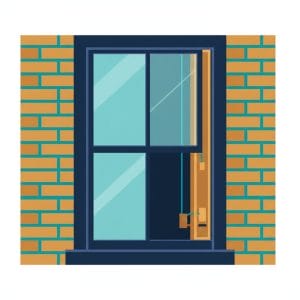
Sash windows are the next most expensive style due to their sliding mechanism and counterbalance system. uPVC sash windows that replicate the look of traditional timber sashes cost £700-£1,100 per window – a significant premium over casement, but cheaper than timber sash replacements at £1,500-£2,000 on MyJobQuote. For period properties in conservation areas, you may be required to install timber sash windows to match the existing street character, which can double or treble the cost of a standard uPVC project.
Tilt-and-turn windows cost £450-£700 in uPVC and are increasingly popular in the UK, particularly for upper-floor windows. They tilt inward from the top for ventilation and turn fully inward for cleaning – a practical advantage for windows above ground level where external access is difficult.
Double Glazing Cost by House Size
The total cost of double glazing a whole house depends primarily on the number of windows, which varies by property type. A 2-bed terraced house might have 6-8 windows, while a 4-bed detached could have 12-15 or more.
| Property Type | Typical Windows | uPVC Cost | Aluminium Cost | Timber Cost |
|---|---|---|---|---|
| 2-bed terraced | 6-8 | Get quotes | £3,000-£4,000 | Get quotes |
| 3-bed semi-detached | 8-10 | £3,750 | £4,700-£5,600 | £7,500-£12,000 |
| 3-bed detached | 10-12 | Get quotes | Get quotes | Get quotes |
| 4-bed detached | 10-15 | £5,500-£7,000 | £7,000-£9,000 | Get quotes |
These figures assume standard casement windows throughout. If your property has sash windows, bay windows or a mix of styles, expect to pay more than the figures above. Our sash window and bay window cost guides give their own prices. Triple glazing, composite frames and specialist heritage windows cost more again.
Cost of Double Glazing a 3-Bed House
A 3-bed semi-detached house is the most common property type in the UK and typically has 8-10 windows. In white uPVC, you’re looking at about £3,750 for the full house on MyJobQuote’s national figure – that’s based on a mix of casement windows in bedrooms and living areas, plus potentially a larger picture window or bay downstairs. The upper end of the range applies to semi-detached homes with more window openings on the exposed side, or those with larger-than-average windows.
For a 3-bed detached house, add 2-4 extra windows (more exposed wall space) and budget more; MyJobQuote’s national figure for a 4-bed detached in white uPVC is £5,500-£7,000. Detached properties often have more complex window configurations – feature windows above the front door, side-panel windows next to external doors, and potentially en-suite bathroom windows that terraced and semi-detached homes lack.
Cost for a 2-Bed or 4-Bed House
A 2-bed terraced house with 6-8 windows is often the most cost-effective whole-house project because fewer windows means lower scaffolding costs and a quicker installation (usually 1-2 days); MyJobQuote puts aluminium for a 2-bed terrace at £3,000-£4,000. For a 4-bed detached house with 10-15 windows, MyJobQuote’s national figure is £5,500-£7,000 in white uPVC. Larger homes usually require 3-4 days of installation and may need scaffolding on multiple elevations, adding £600-£1,200 to the bill.
If you’re on a tight budget, consider replacing the most heat-inefficient windows first - typically single-glazed windows facing north or those in living areas where you spend the most time. You can phase the project over 2-3 years to spread the cost.
What Affects Double Glazing Costs?
Beyond material and style, several other factors change the price of a quote. Knowing them helps you compare quotes properly and avoid surprises on installation day.
Glass Specification
Standard double glazing uses two panes with an air-filled cavity, but upgrading to argon gas filling adds just £30-£40 per window while reducing heat loss through the glass by roughly 10-17% compared with the same unit filled with air. Manufacturer data for Low-E units puts argon at about 1.2-1.5 W/m²K against 1.4-1.7 for air. Combined with Low-E (low emissivity) glass, the total cut versus basic clear double glazing can exceed 30%.
Most reputable UK manufacturers now include argon gas as standard in A-rated windows. If your quote specifies air-filled units, ask why. Argon adds about £30-£40 per window and cuts heat loss through the glass by roughly 10-17% compared with air-filled units.
Installation Complexity
Labour is a large part of the price and depends on access, structural work and the condition of the existing frames. Ground-floor windows are cheaper to fit than upper floors, which may need scaffolding. Listed buildings and conservation areas can need planning permission and specialist installers, which adds to the quote.
National vs Local Installer
National companies like Anglian and Everest often charge more than local FENSA-registered installers for equivalent products. The premium covers marketing overheads, branded products, and extended warranty schemes. Local installers using the same glass and hardware from manufacturers like Yale, Pilkington, or Deceuninck can offer identical performance at a lower price.
That said, national installers offer benefits that some homeowners value: dedicated aftercare teams, insurance-backed guarantees, and the peace of mind that comes with a larger company. See our best window companies guide for a detailed comparison.
Regional Price Variation
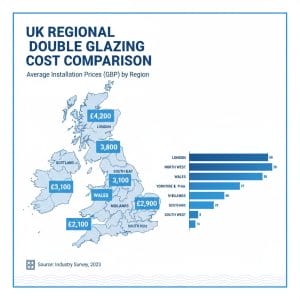
Prices vary by region, and London is usually the most expensive because of higher labour costs. We found no verified regional price figures, so compare local quotes. Our London and Glasgow guides cover local costs and grants.
Energy Rating
Windows are rated from A++ (best) to G (worst) under the BFRC Window Energy Rating scheme. Since 2022, Building Regulations require replacement windows in England to achieve a U-value of 1.4 W/m2K or better, or a BFRC Window Energy Rating of Band B or above. Most mainstream manufacturers now offer A-rated windows as standard, with the price difference between minimum-compliant and A-rated units being relatively small – typically £20-£40 per window.
Upgrading to A+ or A++ rated windows adds £40-£80 per window but delivers marginally better thermal performance. Unless you’re in a very exposed location or replacing a large number of windows, the incremental savings rarely justify the premium. A-rated with argon gas filling is the sweet spot for most UK homes.
Number of Opening Sections
A window with two opening sections (both sides of a casement pair) costs more than a single opener with a fixed pane alongside. Each opening mechanism adds hinges, locks, handles, and weather seals – typically adding £40-£80 per opening section. Where ventilation needs allow, specifying some windows as fixed-pane or single-opener can reduce costs without sacrificing thermal performance.
Labour and Installation Costs
Installation labour typically costs £100-£150 per window for standard casement replacements, with a full day’s work covering 4-6 windows. Most installers charge a day rate of £250-£350 per fitter, and you’ll typically need two fitters working together for safety and efficiency.
| Installation Element | Typical Cost | Notes |
|---|---|---|
| Labour per window | £100-£150 | Standard casement replacement |
| Scaffolding | £300-£800 | Upper floors, per elevation |
| Skip hire | £200-£350 | For old window disposal |
| Making good (plastering) | £50-£100/window | Internal reveals after fitting |
| FENSA certificate | Included | If using FENSA-registered installer |
| Building control (non-FENSA) | £200-£400 | Required if installer not registered |
Always confirm whether the quote is “supply and fit” or “supply only.” Supply-only prices are lower, but you’ll need to arrange a separate installer and will be responsible for ensuring Building Regulations compliance yourself.
Always use a FENSA or CERTASS registered installer. They self-certify that the work complies with Building Regulations, which means you avoid the cost (£200-£400) and hassle of a separate local authority inspection. If you sell the property later, a missing compliance certificate can cost approximately £700 to obtain retrospectively.
Additional Costs to Budget For
The window quote itself is rarely the full cost, and homeowners are often caught out by extras that weren’t in the first quote.
Sills and trims: If your existing window sills are damaged or the wrong size, replacements cost £30-£60 per sill in uPVC. Internal trims and capping can add another £20-£40 per window.
Lintels: Older properties (pre-1980s) may have inadequate lintels above the window opening. Replacing a lintel costs £300-£600 per window and is only discovered once the old frame is removed. A pre-installation survey should identify this.
Redecorating: Budget £50-£100 per window for making good and redecorating the internal reveals after installation. Some installers include basic plastering in the quote, but painting is almost always your responsibility.
Disposal of old windows: Most installers include removal and disposal in their quote, but some charge separately – typically £20-£40 per window or a flat £200-£350 for skip hire on a whole-house job. If your old windows contain lead paint (common in properties built before 1960), specialist disposal may be required at additional cost.
Doors: If you’re replacing all windows, it makes sense to replace external doors at the same time for consistent aesthetics and energy performance. A uPVC front door costs £400-£850 installed, while composite front doors cost £550-£2,350. Patio doors range from £750-£2,500 to replace. French doors cost £950-£1,750 depending on material, offering a classic alternative to sliding patio doors. Bifold doors are the premium option at £1,950-£7,200 depending on material and panel count, but add dramatic light and space to living areas.
Secondary glazing: If your property is listed or in a conservation area where replacement double glazing isn’t permitted, secondary glazing (fitting a second pane inside the existing window) costs £180-£400 per window. It’s less effective than full double glazing but significantly cheaper and doesn’t require planning permission.
Energy Savings from Double Glazing
Replacing single glazing with A-rated double glazing saves around £85 a year on energy bills in a semi-detached house in Great Britain, according to the Energy Saving Trust (£140 in Northern Ireland). The Trust no longer publishes figures for other house types.
Over the typical 25-year lifespan of double-glazed windows, a semi-detached homeowner replacing single glazing would save about £2,125 on energy, well below the typical £4,800 cost of an A-rated set of windows for a semi (Energy Saving Trust). Energy savings alone do not pay for the windows. The real returns are comfort, noise reduction, security and property value.
| Property Type | Annual Saving | CO2 Reduction | 25-Year Total Saving |
|---|---|---|---|
| Semi-detached (A rated, GB) | £85 | 290 kg/year | ~£2,125* |
*Based on Energy Saving Trust figures, assuming replacement of single glazing. Savings are significantly lower when replacing older double glazing with newer units, and depend on your heating system, insulation levels, and energy usage patterns. Energy-efficient windows with argon gas and Low-E coatings will deliver savings at the higher end of these ranges.
Beyond heating bills, double glazing reduces your property’s carbon footprint. A semi-detached home with A-rated double glazing saves around 290 kg of CO2 a year in Great Britain compared to single glazing (Energy Saving Trust). With the UK’s net zero targets driving policy, improved energy efficiency also protects your EPC rating – which increasingly affects both property value and access to government grants.
If you’re replacing double glazing that’s already 15-20 years old (rather than single glazing), the annual saving drops sharply (the Energy Saving Trust publishes no figure for this case). The upgrade from C-rated to A-rated glazing is worthwhile for comfort and noise reduction, but the financial payback is much longer. In that scenario, ensuring your loft and cavity wall insulation are up to standard will typically deliver a better return per pound spent.
Does Double Glazing Add Value to Your Home?
New double glazing can make a home easier to sell, with the biggest gains for properties currently on single glazing or with units more than 20 years old. Any value uplift varies by property and is not guaranteed, so treat it as a saleability and comfort benefit rather than a guaranteed return on a typical £4,000-£6,000 install.
The value impact comes from three signals buyers and surveyors look for:
- EPC rating uplift: Replacing single glazing with modern A-rated double glazing can improve an EPC rating, whereas upgrading existing double glazing usually makes little difference – and EPC matters increasingly to mortgage lenders and renters
- Reduced future maintenance signal: Buyers know they won’t need to budget £4-6k for replacement in the next 5 years
- Comfort and noise reduction: New windows can help a home show better in viewings, particularly on busy roads
The value-add is largest when replacing failing single glazing in a period property. The smallest return is upgrading from already-functional 10-year-old DG to triple glazing, where the resale uplift rarely covers the upgrade cost.
Double Glazing Grants and Financial Help
Several government schemes can reduce or eliminate the cost of double glazing for eligible homeowners. The most significant is the Warm Homes: Local Grant, which launched in April 2025 with £500 million of funding and explicitly covers double and triple glazing for homes in England.
| Scheme | Status | Location | Max Grant | Covers DG? |
|---|---|---|---|---|
| Warm Homes: Local Grant | ACTIVE (to March 2028) | England | Up to £33,200 | Yes |
| Nest Scheme | Active | Wales | Varies | Sometimes |
| Home Energy Scotland | Active | Scotland | £8,000 loan | Loan only |
| Affordable Warmth | Active (check current funding) | Northern Ireland | £7,500 | Yes (single-glazed windows only) |
| ECO4 | Extended to Dec 2026 | Great Britain | – | Yes – via energy suppliers |
The Warm Homes: Local Grant is the most generous scheme currently available. To qualify, you need a household income below £36,000 (or receive a means-tested benefit), an EPC rating of D to G, and must be a private homeowner or renter in England. No household contribution is required – the grant covers the full cost. Apply at gov.uk/apply-warm-homes-local-grant.
Home Energy Scotland offers interest-free loans of up to £8,000 for double glazing - but only for upgrading single glazing to double or triple. It is not a grant, and it does not cover replacing existing double glazing. For full details on all available schemes, see our double glazing grants guide.
VAT on Double Glazing (Standard-Rated 20%)
Double glazing is standard-rated at 20% VAT. It is not an eligible energy-saving material: GOV.UK VAT Notice 708/6 (section 2.23) expressly lists “secondary or double glazing, low-emissivity glass” as standard-rated, so the 0% relief that covers insulation, solar panels and heat pumps does not apply to windows or glazing. The prices throughout this guide are inclusive of 20% VAT – which is what you pay on a standard residential installation. An installer charging VAT on a double glazing job is correct; it is not something you can have supplied VAT-free.
Double Glazing vs Triple Glazing
Triple glazing costs roughly 30-40% more than double glazing, with a typical uPVC triple-glazed casement window costing £500-£800 installed. The additional pane delivers better thermal performance (U-values of 0.8-1.0 vs 1.1-1.6 for double), improved sound insulation, and slightly better security.
However, the energy savings from triple over double glazing are small. Given the 30-40% price premium, the payback period is long, making it harder to justify on pure ROI grounds. Triple glazing makes the most sense for new builds (where the marginal cost is smaller), very exposed properties, or rooms where noise reduction is a priority.
For most UK homeowners replacing single or old double glazing, A-rated double glazing with argon gas and Low-E coatings represents the best balance of performance and value.
| Feature | Double Glazing (A-rated) | Triple Glazing |
|---|---|---|
| Typical U-value | 1.1-1.4 | 0.8-1.0 |
| Cost per window (uPVC) | £350-£550 | £500-£800 |
| Price premium | – | 30-40% more |
| Weight | Standard | Heavier (three panes) |
| Sound insulation | Good | Excellent |
| Best for | Most UK homes | New builds, exposed sites, noise hotspots |
Replace Panes vs Full Window Replacement
If your double glazing has failed – condensation between the panes, blown seals, or draughts around the edges – you don’t necessarily need to replace the entire window. Sealed unit replacement (replacing just the glass unit within the existing frame) costs £55-£145 per window, compared to £350-£550+ for a full window replacement.
Sealed unit replacement makes sense when the frames are still in good condition (no warping, cracking, or discolouration) and the issue is purely with the glass unit. It’s a particularly cost-effective option for homes with relatively modern uPVC frames (10-15 years old) where the seals have failed but the frames have another 10-15 years of life.
Full replacement is the better choice when frames are damaged, the window style needs updating, or you want to upgrade from old C/D-rated units to modern A-rated performance. Replacing just the glass won’t improve the frame’s thermal performance, and older frames may not accept modern high-performance glazing units.
| Option | Cost Per Window | When to Choose | Lifespan |
|---|---|---|---|
| Sealed unit only | £55-£145 | Blown seals, frames still sound | 10-15 years |
| Full replacement | £350-£550+ | Damaged frames, upgrading spec | 20-25 years |
| Secondary glazing | £180-£400 | Listed buildings, conservation areas | 15-20 years |
A useful rule of thumb: if more than half of your windows need sealed unit replacements, it’s often more cost-effective to replace all windows at once. Larger orders often attract a discount per window, and you avoid the hassle and cost of organising separate installations. You’ll also get a consistent finish across the whole house and a single warranty covering everything.
Is It Cheaper to Replace All Windows at Once?
Replacing all windows in one project is usually cheaper per window than doing them in stages. Scaffolding is set up once, labour is bundled and material orders are consolidated, and installers often discount larger orders.
Staging the work pushes the cost up in two ways: scaffolding and minimum-order surcharges are charged each time, and the per-window price tends to rise as the order shrinks. Ask for a quote for the whole job and for a first phase, then compare the per-window prices.
The exception is when budget genuinely can’t stretch. In that case, prioritise the worst-affected rooms first (north-facing rooms, rooms with the most draught complaints, or rooms used most often). Many installers offer finance, so ask about terms before splitting the job into stages.
Signs You Need New Windows
Not every window problem requires full replacement. Understanding which issues are repairable and which indicate end-of-life helps you avoid spending thousands unnecessarily – or delaying a replacement that’s costing you money in wasted energy. Our guide to double glazing repairs covers what each fault type costs to fix.
Condensation between panes means the sealed unit has failed. The gas fill has leaked out and moisture has entered. This can’t be repaired – the sealed unit needs replacing (£55-£145) or the whole window if frames are also deteriorating.
Draughts around the edges may indicate failed seals, which can sometimes be replaced for £20-£40 per window. If the frame itself has warped or the hinges have worn, replacement is likely the better long-term option.
Difficulty opening or closing often signals worn hinges (£30-£50 to replace) or warped frames. If the window mechanism is failing on multiple windows of the same age, it usually makes more sense to budget for phased replacement rather than ongoing repairs.
Visible rot on timber frames means replacement is needed. uPVC frames that have discoloured heavily or become brittle (typically after 20+ years) also indicate end of life.
Is It Worth Replacing 20-25-Year-Old Double Glazing?
Double glazed windows installed before 2005 are typically worth replacing if you notice condensation between the panes, draughts, or rising heating bills. Modern A-rated units lose less heat than 20-year-old equivalents, but on energy savings alone the £350-£550 per-window cost is unlikely to be repaid within the life of the window.
Watch for these specific signs your existing units have failed:
- Misted or fogged glass – the seal between panes has broken; the unit no longer insulates
- Condensation on the inside surface in winter – inner pane is too cold, indicating a thermally inefficient unit
- Draughts you can feel with a hand close to the window edge – frame seals or hinges have degraded
- Difficulty opening or locking – frames warped or hardware corroded, often a sign full replacement is overdue
- Visible damage to the frame – cracks in uPVC, rot in timber, or oxidation pitting on aluminium
If only the sealed unit (the glass) has failed but the frame is intact, you can replace just the unit for £55-£145 – far cheaper than a full window. See our Replace Panes vs Full Window Replacement section above for the decision framework.
How to Get the Best Price on Double Glazing
The single most effective way to reduce your double glazing costs is to get at least three quotes from different installers. Prices for the same specification can vary widely between companies, particularly between national brands and local FENSA-registered firms.
Get multiple quotes: Always compare at least 3 quotes for the same specification. Ensure each quote specifies the frame material, glass type (including gas fill), energy rating, and whether scaffolding and making good are included.
Avoid high-pressure sales: National installers often use home visits with “today only” discounts. These initial quotes are often inflated to leave room for negotiation. Never sign on the day – legitimate discounts will still be available next week.
Time your purchase: Installers are quietest in late autumn and winter (October-February). Booking during off-peak periods can help you negotiate a better price as companies are more willing to negotiate to fill their schedules.
Consider phasing: If budget is tight, replace the worst-performing windows first (single-glazed, north-facing, or those in the rooms you use most) and do the rest in a second phase. Some installers offer better per-window rates on larger orders.
Check for grants first: Before committing to a quote, check your eligibility for the Warm Homes: Local Grant or devolved nation schemes. A successful application could cover the entire cost.
Bundle doors with windows: If you need new doors too, ordering them alongside your windows from the same installer can cost less than separate orders, so ask for a combined price. Matching frames, colours, and hardware also gives a more cohesive finish.
Negotiate on larger orders: Installers expect to negotiate on whole-house jobs. Once you have 3 quotes, use the lowest as leverage. A common approach: tell your preferred installer what the cheapest quote is and ask if they can match it. Many will move on price to win the business.
FREE QUOTE COMPARISON
Compare Double Glazing Quotes from Trusted Suppliers
✓ Save up to £400 per window
100% free • No obligation • Takes under 2 minutes
How to Choose a Window Installer
Choosing the right installer is as important as choosing the right windows. A poorly fitted window will underperform regardless of specification, and using an unregistered installer creates compliance headaches when you come to sell.
Check registration: Insist on a FENSA or CERTASS registered installer. FENSA had issued over 13 million certificates by 2018. Registration means the installer self-certifies Building Regulations compliance, saving you the cost and hassle of a local authority inspection.
Verify insurance: Ask for proof of public liability insurance (minimum £2 million) and employer’s liability insurance. Any reputable installer will provide this without hesitation.
Check guarantees: Look for a minimum 10-year guarantee on frames and sealed units, insurance-backed by a scheme like the GGF Deposit Protection and Performance Guarantee, or similar. An insurance-backed guarantee protects you if the company ceases trading.
Read reviews carefully: Check Checkatrade, Trustpilot, and Google Reviews. Pay attention to recent reviews (last 12 months) and look for patterns in complaints – recurring issues with after-sales service or finishing quality are red flags.
For detailed comparisons of the UK’s main installers, see our guide to the best window companies in the UK.
Get a written quote: Verbal estimates are meaningless. Insist on a detailed written quote that itemises: window units (frame material, glass specification, energy rating), installation labour, scaffolding, disposal of old windows, making good, and any extras like new sills or lintels. This makes comparison between installers straightforward and protects you from unexpected add-ons after work begins.
Survey before committing: Any reputable installer will offer a free home survey before providing a final quote. During the survey, they should check the condition of existing frames, measure each opening individually (standard sizes rarely apply to older properties), assess access requirements, and identify any structural work needed. Be wary of any installer who quotes without visiting your property.
Maintenance Costs
Ongoing maintenance costs depend almost entirely on your frame material. uPVC is the cheapest to maintain by a significant margin, while timber requires regular investment to preserve its appearance and structural integrity.
| Material | Annual Maintenance | Tasks Required | Lifespan |
|---|---|---|---|
| uPVC | £0-£20 | Occasional cleaning, lubricate hinges | 20-25 years |
| Aluminium | £0-£30 | Clean frames, check seals annually | 25-30+ years |
| Timber | £100-£300 | Repaint/restain every 3-5 years, check for rot | 30-60 years (with maintenance) |
Timber frames have the longest potential lifespan (60+ years with diligent maintenance) but the highest maintenance cost. When factoring total cost of ownership over 25 years, uPVC remains the most economical choice: about £3,750 upfront for a 3-bed semi with virtually zero maintenance, versus £7,500-£12,000 upfront plus roughly £2,500-£7,500 in upkeep over 25 years for timber (£100-£300 a year, per the table above).
Year-on-Year Price Trends
Double glazing prices rose noticeably between 2022 and 2024, driven by post-pandemic supply chain disruption, higher energy costs in manufacturing, and raw material inflation. Glass and aluminium were particularly affected, with several installers reporting the steepest increases in aluminium frame costs.
Prices have stabilised in 2025-2026, with most installers holding or making only modest increases as supply chains normalised. The UK glazing industry is valued at approximately £1.7 billion (IBISWorld) and continues to grow steadily, driven largely by the retrofit market – which significantly outpaces new-build installations due to rising energy costs and government energy efficiency targets.
Looking ahead, the GGF and British Glass estimate that 80 million windows across UK homes would benefit from replacement to meet net zero targets, and that 98% of windows in UK homes would not meet current Building Regulations.
The UK residential glazing market is dominated by retrofits, which significantly outpace new builds. With 1.9 million residential window installations carried out in 2024, supply is strong across the UK, which keeps pricing competitive. The glazing industry supports approximately 2,990 businesses, so most areas have multiple local installers competing on price and service.
Is Double Glazing Worth the Cost?
Double glazing is worth the investment for most UK homeowners, particularly those still living with single glazing or double-glazed units more than 15-20 years old. The combination of energy savings, increased comfort, reduced noise, improved security, and added property value makes it one of the most reliable home improvements.
For a semi-detached house replacing single glazing with A-rated uPVC double glazing at the Energy Saving Trust’s typical cost of about £4,800 for a semi-detached house, the energy savings alone (about £85 a year) give a payback period of about 56 years. That’s longer than the window lifespan – but energy savings aren’t the only return. New double glazing can help a sale, and an improved EPC rating matters to buyers and lenders, although any value uplift varies and is not guaranteed.
Where double glazing offers less clear value is replacing relatively modern double-glazed units (installed in the last 10-15 years) that are still performing well. Unless the seals have failed or the frames are damaged, the incremental energy saving from upgrading C-rated to A-rated glazing is modest, and the Energy Saving Trust publishes no figure for it. In that case, investing in loft or wall insulation will deliver a better return per pound spent.
FREE QUOTE COMPARISON
Compare Double Glazing Quotes from Trusted Suppliers
✓ Save up to £400 per window
100% free • No obligation • Takes under 2 minutes
How We Researched These Prices
Prices in this guide come from published cost guides (MyJobQuote, Checkatrade, the Federation of Master Builders and GreenMatch), cross-referenced against Energy Saving Trust figures and industry data from IBISWorld and the Glass and Glazing Federation (GGF). Ranges reflect published national averages, so expect variation by region, specification and installer. All costs include supply, professional installation, and VAT at the standard 20% rate. Prices were last verified in July 2026 and are updated quarterly.