Updated July 2026: this London double glazing guide reflects the current GOV.UK VAT position, Warm Homes: Local Grant eligibility and borough planning guidance. Costs remain estimates, so get a written survey and quote before ordering.
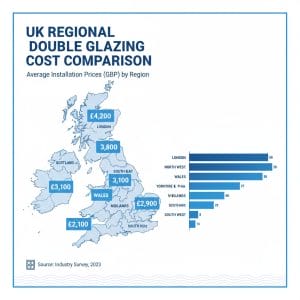
We found no verified London-specific prices, so the figures in this guide are MyJobQuote’s national ones. Treat them as a starting point and get local quotes.
Individual uPVC casement windows cost £350–£550 each supplied and fitted on MyJobQuote’s national figures. Aluminium casements cost more at £600–£850 per window, while timber casements – often required in conservation areas – range from £750–£1,100. Budget for the standard 20% VAT treatment that applies to double glazing. GOV.UK lists secondary and double glazing among products that do not qualify for the reduced energy-saving-materials rate.
London presents unique challenges for double glazing: period housing, conservation areas and listed buildings can require timber sash windows, slim-profile frames or secondary glazing rather than standard uPVC replacements. In this guide, we cover national cost figures, conservation area rules, borough-level planning differences, the Warm Homes: Local Grant and installer checks. See the wider double glazing hub for related cost and product guides.
FREE QUOTE COMPARISON
Compare Double Glazing Quotes from Trusted Suppliers
✓ Save up to £400 per window
100% free • No obligation • Takes under 2 minutes
- A white uPVC set for a 3-bed semi costs about £3,750 - MyJobQuote’s national figure, as we found no verified London-specific price; get quotes to compare
- Over 1,000 conservation areas - so many properties need timber sash or slim-profile aluminium rather than standard uPVC
- The Warm Homes: Local Grant can fund approved home improvements - eligibility usually includes an EPC rating of D-G and household income of £36,000 or less, but the council survey decides the measures
- Double glazing is standard-rated at 20% VAT - GOV.UK specifically excludes secondary and double glazing from the reduced energy-saving-materials rate
- Conservation and access rules can add cost in central boroughs - period homes in Westminster and Kensington often need timber sash or slim-profile frames, so quote on the specific property
How Much Does Double Glazing Cost in London?
On MyJobQuote’s national figures, double glazing a 3-bed semi costs about £3,750 in white uPVC, £4,700–£5,600 in aluminium and £7,500–£12,000 in softwood timber. Older properties needing bespoke windows usually cost more. For a full UK breakdown, see our double glazing costs guide.
Costs vary by window type, frame material, property size and London borough. Access restrictions, limited parking and conservation requirements can all affect the price of a quote.
| Window Type | National Price (Per Window) | Full House (3-Bed Semi) |
|---|---|---|
| uPVC Casement | £350–£550 | £3,750 |
| uPVC Sash | £700–£1,100 | Get quotes |
| Aluminium | £600–£850 | £4,700–£5,600 |
| Timber | £750–£1,100 (casement) | £7,500–£12,000 (softwood) |
National figures cover supply and fitting; confirm that quotes include disposal of old windows and FENSA certification. A typical 3-bed semi has 8-10 windows. For a 4-bed detached home, MyJobQuote’s national figure for white uPVC is £5,500–£7,000.
What Can Affect a London Quote
Quotes in London may include congestion-zone charges, ULEZ compliance and restricted parking. Older housing also means more non-standard sizes, sash replacements and conservation-compliant frames, which add cost compared with straightforward casement installations. We found no verified figure for how much these add.
London’s Victorian and Georgian Housing Stock
London has a high concentration of pre-1919 housing. Many Victorian and Georgian properties retain original single-glazed timber sash windows or early double glazing from the 1980s and 1990s.
Older units may now be past their practical lifespan. That is why uPVC or timber sash replacements (from £700–£1,100 for uPVC sash on MyJobQuote’s national figures, and £1,500–£2,000 for timber sash) are more common here than in cities dominated by modern casement windows.
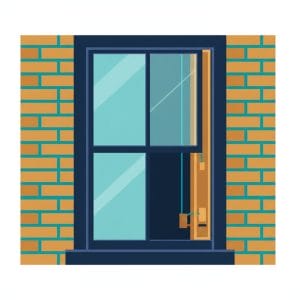
For period properties, slim-profile aluminium sash windows offer a modern alternative that satisfies most conservation officers while delivering excellent thermal performance. Timber sash windows remain the gold standard for listed buildings and the most strictly protected conservation areas, but at a significant cost premium.
FREE QUOTE COMPARISON
Compare Double Glazing Quotes from Trusted Suppliers
✓ Save up to £400 per window
100% free • No obligation • Takes under 2 minutes
Conservation Areas and Listed Buildings
London has many designated conservation areas and listed buildings. Like-for-like replacement may be permitted development in some areas, but Article 4 Directions in boroughs such as Westminster, Camden and Islington can remove that right for visible changes. Check the local planning portal before ordering.
Replacement windows may be permitted development in some houses, but the position changes for flats, listed buildings and properties covered by an Article 4 Direction. London’s conservation areas therefore need a property-specific check before you order. Lambeth’s current planning guidance is a useful example of why the appearance and constraints of the individual property matter.
Check your borough’s planning portal and, where relevant, the Lambeth window guidance or local equivalent. For listed buildings, obtain Listed Building Consent before work starts. Do not treat a contractor’s verbal assurance as planning approval.
The key boroughs with the most restrictive conservation area policies:
- Westminster – 56 conservation areas covering 77% of the borough. The council has refused uPVC replacements on period buildings in and near conservation areas, so expect to need timber or a close match to the original windows on street-facing elevations, and check for Article 4 Directions on your street.
- Camden – 40+ conservation areas including Bloomsbury, Hampstead, and Belsize Park. Street-facing windows usually require timber or slim-profile aluminium to match the original character.
- Islington – 42 conservation areas. Article 4 Directions can apply to Victorian terraces, so check the specific address before ordering.
- Kensington and Chelsea – 38 conservation areas. Council decisions in conservation areas favour replacements that keep the original profile and materials, and replacing timber with uPVC is generally resisted.
- Greenwich – Maritime Greenwich is a UNESCO World Heritage Site with additional protections. Windows on listed buildings need Listed Building Consent, and locally listed buildings can face their own planning controls, so check the specific property.
- Richmond upon Thames – 85 conservation areas, the most of any London borough. Article 4 Directions apply in parts of the borough, so check whether your street needs planning permission.
If your London property is in a conservation area, check your borough’s planning portal before ordering windows. Many boroughs offer free pre-application advice. For listed buildings, you MUST apply for Listed Building Consent before any window work - replacing windows without consent is a criminal offence.
Secondary Glazing as an Alternative
For Grade I and Grade II* listed buildings where replacing original windows is not permitted, secondary glazing offers a practical alternative. It is fitted inside the existing frame, preserving the external appearance while improving thermal and acoustic performance.
Secondary glazing costs £180–£400 per window on MyJobQuote’s national figures, which is usually less than full replacement. It may not require Listed Building Consent when the external appearance is unchanged, but confirm this with the local planning authority. Specialists such as Selectaglaze and Storm Windows work on heritage properties.
Why Quotes Differ Across London Boroughs
We found no verified borough-level prices, so treat any quoted percentage gap between central and outer London with caution. What does differ is the property and the rules: conservation areas, Article 4 Directions, access and parking affect which windows are allowed and how a job is run.
Ask each installer to price the same specification, including survey assumptions, installation, disposal and certification, so the quotes compare like for like.
Government Grants in London
The Warm Homes: Local Grant is the main current route for eligible low-income households in England. It can fund approved energy-efficiency improvements up to the local scheme limit. The official guidance lists insulation, heat pumps, smart controls and solar panels as examples, rather than promising replacement windows.
Ask your council what the home survey recommends. For all UK schemes, see our double glazing grants guide.
| Scheme | Amount | Covers DG? | Eligibility | Status |
|---|---|---|---|---|
| Warm Homes: Local Grant | Local scheme limit | Check council survey | Income ≤£36,000, EPC D-G | Active in participating areas |
| VAT on double glazing | Standard 20% rate | No reduced rate | All residential | Current GOV.UK position |
| GLA Warmer Homes Programme | Varies | Check current offer | Low-income London households | Active (check availability) |
Warm Homes: Local Grant
The Warm Homes: Local Grant is a potential funding route for eligible London households, not a guaranteed double glazing grant. GOV.UK says the local council arranges a survey and agrees the improvements. The current national guidance gives examples such as insulation, heat pumps, smart controls and solar panels, so do not promise windows until the council confirms the measure for the property.
To qualify, the home normally needs to be in England, privately owned or privately rented, with an EPC rating of D, E, F or G. Household income is usually £36,000 or below, although postcode and benefit rules can also apply. Check the current criteria and apply through GOV.UK rather than relying on a contractor’s grant claim.
GLA Fuel Poverty Schemes
London boroughs and the Greater London Authority may offer additional retrofit or fuel-poverty programmes, but names, budgets and eligible measures change. Check your borough’s current energy-efficiency page and ask whether windows are included before treating a local scheme as available funding.
VAT on Double Glazing
GOV.UK currently lists secondary and double glazing as products that do not qualify for the reduced energy-saving-materials rate. Budget for the standard 20% VAT treatment unless your installer or tax adviser confirms a different rule for a specific supply. The current position is set out in the GOV.UK VAT guidance.
FREE QUOTE COMPARISON
Compare Double Glazing Quotes from Trusted Suppliers
✓ Save up to £400 per window
100% free • No obligation • Takes under 2 minutes
Best Double Glazing Companies in London
London’s double glazing market includes both national companies with London branches and specialist local installers. National firms like Anglian Home Improvements and Everest offer finance options, while independent London installers may offer different specifications and lead times. Always confirm FENSA or CERTASS registration before signing. For a national comparison, see our best window companies guide.
The companies below are examples to shortlist, not a ranked list. We have not independently verified their Google reviews, and the local firms’ coverage and registrations should be checked before you request a quote. Before choosing an installer, confirm they are FENSA or CERTASS registered at fensa.org.uk – without certification, you’ll need to arrange separate Building Control sign-off, which adds cost and delay.
| Company | Type | Strengths | Best For |
|---|---|---|---|
| Anglian Home Improvements | National | 50+ years, own manufacturing, 10-year guarantee | Full house, finance options |
| Everest | National | UK manufactured, timber range | Period properties, timber alternatives |
| Wandsworth Sash Windows | Local specialist | Sash window specialist | Victorian/Edwardian sash replacements |
| London Sash Window Repairs | Local specialist | Repair and draught-proofing | Heritage repairs, secondary glazing |
| Enfield Windows | Local (North London) | North London installer (on Solidor’s installer directory) | North London, standard installations |
National companies like Anglian and Everest offer established brands, London installation teams, finance options and long guarantees. Both brands are now owned by ASHI Group, so quotes from the two are not fully independent.
Local specialists such as Wandsworth Sash Windows and London Sash Window Repairs can be valuable for period properties. Ask about their experience with conservation-area and listed-building work; the right specialist can save time and reduce the risk of an unsuitable specification.
Get at least three quotes before committing. A reputable installer will survey your windows, measure accurately, and explain building regulation requirements before providing a fixed-price quote. Avoid any company that pressures you into signing on the day – this is a well-known pressure sales tactic in the window industry.
How to Get the Best Price in London
Get at least three quotes, time your installation for quieter months (January-March), and compare both national and local installers. Quotes for the same job can differ, so comparing like-for-like quotes is essential.
To get the best deal:
- Get three quotes minimum – compare the same specification, survey assumptions, installation, disposal and certification.
- Mix national and local quotes – get at least one quote from a national company (Anglian, Everest) and two from FENSA-registered local firms.
- Ask about timing – installers may be quieter in winter, so ask whether an off-peak installation changes the price or lead time.
- Ask about whole-house pricing – ask whether replacing all windows at once changes the per-window price.
- Include outer-London and home-counties installers – companies based in Kent, Essex and Surrey also serve London, so include one or two in your quotes.
- Check FENSA registration – non-registered installers may quote lower, but you’ll need to pay separately for retrospective Building Control approval (around £700), and without FENSA certification, you may face issues when selling your property.
- Consider energy-efficient A-rated windows – they can cost more upfront but deliver better thermal performance. Replacement windows must meet U 1.4 W/m²K or WER Band B, and the Energy Saving Trust puts the saving from A-rated glazing in a semi at £85 a year, so do not expect a quick payback.
Use our free Double Glazing Cost Estimator to get a personalised cost estimate based on your specific requirements, property type, and London borough.
Expect to pay more than the national figures for period and conservation-area properties. Check the Warm Homes: Local Grant through your council, budget for the standard 20% VAT position on double glazing, get at least three quotes from FENSA-registered installers, and confirm planning constraints before choosing window styles.