Argon gas double glazing uses an inert gas between the panes instead of air, cutting heat loss by over 30%. It costs just £30–40 more per window than standard air-filled double glazing – and virtually all A-rated windows sold in the UK now include it as standard.
For a typical 3-bed semi with 8–10 windows, the argon upgrade adds roughly £240–400 to the total bill. That premium pays for itself within a few years through lower heating bills, and the gas retains about 80% of its effectiveness after 20 years.
This guide covers what argon gas actually does, how much it costs by frame material and property size, how it compares to alternatives like krypton and triple glazing, and what to look out for when getting quotes.
FREE QUOTE COMPARISON
Compare Double Glazing Quotes from Trusted Suppliers
✓ Save up to £400 per window
100% free • No obligation • Takes under 2 minutes
- Argon gas cuts heat loss by 30% - compared to air-filled double glazing, significantly improving thermal efficiency
- Premium costs just £30–40 more per window - minimal upgrade price for substantial energy savings benefits
- Now the industry standard - virtually all A-rated UK windows include argon as a default spec, not an optional upgrade
- Saves £30–40 a year on heating - the argon premium pays for itself within a few years versus C-rated air-filled glazing
- Myth: Gas leaks frequently - quality units retain 80% argon content after 20 years of use
What Is Argon Gas Double Glazing?
Argon gas double glazing fills the cavity between panes with argon – an inert gas that is 38% denser than air and 34% less thermally conductive, reducing heat transfer by over 30%.
Standard double glazing traps a layer of air between two panes of glass. Argon gas double glazing replaces that air with argon, a naturally occurring inert gas that makes up 0.93% of Earth’s atmosphere. It is non-toxic, non-flammable, and completely safe.
Argon works because it is denser than air. That density slows convection currents – the circular movement of warm air rising and cool air falling – inside the sealed unit. Combined with its lower thermal conductivity, heat transfers much more slowly through the cavity.
How Argon Works With Low-E Glass
Most modern argon-filled units pair the gas with Low-E (low emissivity) glass coatings. Low-E reflects radiant heat back into the room, while argon slows conductive and convective heat loss through the gap. Together they deliver over 30% better thermal performance than standard air-filled double glazing.
This combination is now the industry standard for A-rated windows in the UK. The Energy Saving Trust recommends Low-E glass with gas filling as the minimum specification for replacement windows.
U-Values: Argon vs Air-Filled
U-value measures how quickly heat passes through a material – lower is better. The difference between argon and air is significant:
| Window Type | U-Value (W/m²K) | Energy Rating |
|---|---|---|
| Air-filled double glazing | ~1.6 | C-rated |
| Argon-filled double glazing | ~1.1 | A-rated |
| Argon + Low-E glass | ~1.0 | A+ rated |
| Triple glazing (argon) | ~0.8 | A++ rated |
The optimal cavity width for argon is 16–20mm. Below 12mm, the gas cannot form an effective thermal barrier. Above 20mm, convection currents start to form even in argon-filled units.
How Much Does Argon Gas Double Glazing Cost in 2026?
Argon gas adds £30–40 per window (5–10% premium) over air-filled equivalents. A full house of uPVC argon-filled windows costs £4,000–£6,000 for a 3-bed semi.
The argon gas itself is cheap – the premium comes from the manufacturing process of filling and sealing the cavity. Most reputable UK installers now include argon as standard in their A-rated window ranges at no extra charge.
Cost Per Window by Frame Material
| Frame Material | Air-Filled (C-rated) | Argon-Filled (A-rated) | Argon Premium |
|---|---|---|---|
| uPVC casement | £350–£550 | £380–£590 | ~£30–40/window |
| Aluminium | £600–£850 | £630–£890 | ~£30–40/window |
| Timber | £750–£1,100 | £780–£1,140 | ~£30–40/window |
| Composite | £500–£750 | £530–£790 | ~£30–40/window |
Prices include supply and professional installation. uPVC remains the most cost-effective option – aluminium and timber casements cost more than uPVC for the same window size.
Cost by Window Style
Window style affects cost more than the argon fill. More complex designs need more materials and labour:
| Window Style | uPVC With Argon | Notes |
|---|---|---|
| Casement (standard) | £380–£590 | Most common, best value |
| Sash (sliding) | £700–£1,100 | More complex mechanism |
| Bay (3-panel) | £1,000–£3,000 | Multiple units + structural work |
| Tilt and turn | £450–£800 | Popular for upper floors |
Full House Cost by Property Size
| Property Type | Typical Windows | uPVC + Argon | Aluminium + Argon |
|---|---|---|---|
| Flat | 4–5 | £1,500–£3,200 | £2,500–£4,500 |
| Terraced | 6–8 | £2,300–£5,100 | £3,800–£7,100 |
| Semi-detached | 8–10 | £3,750 (before argon) | £4,700–£5,600 (before argon) |
| Detached | 12–15 | £5,700–£9,600 | £7,500–£13,400 |
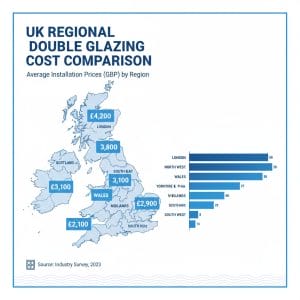
Installers typically offer discounts for whole-house replacements. Always get at least three quotes – prices vary significantly by region, with London and the South East typically 15–20% more expensive than the North.
For a detailed breakdown including bay windows, doors, and extras, see our complete double glazing cost guide or use the free cost calculator.
FREE QUOTE COMPARISON
Compare Double Glazing Quotes from Trusted Suppliers
✓ Save up to £400 per window
100% free • No obligation • Takes under 2 minutes
Argon Gas vs Air-Filled Double Glazing
Argon-filled windows reduce heat loss by over 30% compared to air-filled units, for just 5–10% more on the price – making them almost always worth the upgrade.
| Feature | Air-Filled | Argon-Filled |
|---|---|---|
| U-value | ~1.6 W/m²K | ~1.1 W/m²K |
| Heat loss reduction | Baseline | 30%+ better |
| Energy rating | C-rated | A-rated (with Low-E) |
| Cost premium | – | £30–40 per window |
| Annual energy savings | Baseline | £30–40/year vs C-rated |
| Warranty | 10–15 years | 10–25 years |
| Market status (2026) | Budget/entry-level only | Industry standard |
The annual energy savings figure of £30–40 applies when upgrading from C-rated to A-rated double glazing. If you are replacing single glazing, the savings are much larger – the Energy Saving Trust puts the saving at about £85 a year for a gas-heated semi-detached home switching from single glazing to A-rated double glazing.
Is Argon Gas Standard in Double Glazing Now?
Yes. Virtually all A-rated windows sold in the UK include argon gas as standard. Air-filled units are now rare outside budget ranges.
Argon-filled double glazing is no longer a premium upgrade – it is the default. Most reputable UK manufacturers (including Anglian, Everest, and Safestyle) include argon in their standard specifications. Air-filled units are now uncommon at mid-to-premium price points.
If an installer is quoting you for air-filled double glazing in 2026, ask why. In most cases, there is no good reason to accept air-filled units when argon adds so little to the cost. The only exception is very budget installations where every pound counts – and even then, the payback on argon is just a few years.
Always check the window energy label (WER rating from the British Fenestration Rating Council). A-rated or above means the unit almost certainly uses argon or krypton gas fill.
Common Myths About Argon Gas Windows
Argon is not dangerous, does not leak quickly, and does make a measurable difference to insulation. Most concerns about argon gas windows are based on outdated information.
“Argon gas is dangerous.” False. Argon is an inert noble gas. It does not burn, does not react with other substances, and is completely non-toxic. You breathe it every day – it makes up nearly 1% of the air around you.
“The gas leaks out quickly.” False. Modern sealed units lose approximately 1% of their argon per year. After 20 years, a properly manufactured window still retains about 80% of its original argon content. Even at 70–80% fill, the window remains significantly more effective than an air-filled unit. Older sealed units from the 1990s did have higher leakage rates – up to 65% over time – but manufacturing standards have improved dramatically since then.
“Argon makes no real difference.” False. The U-value improvement from ~1.6 to ~1.1 represents a genuine 30%+ reduction in heat transfer. Combined with Low-E glass, the energy savings are measurable on your heating bills.
“You can refill the argon when it runs low.” Generally false. Most residential sealed units cannot be refilled. If the seal fails completely, the standard solution is to replace the sealed unit (the glass part) rather than the entire frame – typically costing £55–£145 per unit rather than the full window replacement cost.
Does Argon Gas Help With Noise Reduction?
Argon provides a small improvement in sound insulation due to its higher density, but glass thickness and air gap width matter far more for noise reduction.
Argon is denser than air, which means sound waves travel through it slightly differently. In practice, the noise reduction benefit of argon over air is marginal – perhaps 1–2 dB. You are unlikely to notice the difference.
If noise is your primary concern, focus on these factors instead:
- Glass thickness – thicker glass (6mm+) blocks more sound than standard 4mm
- Asymmetric panes – using different thicknesses (e.g., 6mm outer + 4mm inner) disrupts sound resonance
- Cavity width – wider gaps (16–20mm) provide better sound insulation
- Laminated glass – the PVB interlayer in laminated glass is the most effective noise reducer
For a dedicated guide on noise reduction options, see our soundproof windows guide.
FREE QUOTE COMPARISON
Compare Double Glazing Quotes from Trusted Suppliers
✓ Save up to £400 per window
100% free • No obligation • Takes under 2 minutes
How Long Does Argon Gas Last in Double Glazing?
Argon-filled sealed units last 20–25 years. They lose about 1% of gas per year, retaining approximately 80% effectiveness at the 20-year mark.
The lifespan of argon gas double glazing depends entirely on the quality of the seal. A well-manufactured sealed unit will retain its gas – and its thermal performance – for decades.
| Timeframe | Approx. Argon Retained | Performance Impact |
|---|---|---|
| Year 1 | ~99% | Full performance |
| Year 10 | ~90% | Negligible reduction |
| Year 20 | ~80% | Still significantly better than air-filled |
| Year 25+ | ~75% | Seal degradation may accelerate |
Signs Your Argon Gas May Have Leaked
- Condensation between panes – the clearest sign of seal failure. Moisture inside the unit means both gas and waterproofing are compromised.
- Misting or fogging – visible haze inside the sealed unit, especially in cold weather.
- Cold spots near windows – noticeably colder than when first installed, despite the same heating use.
- Rising energy bills – harder to attribute, but worth investigating alongside other signs.
If you notice condensation between the panes, the sealed unit needs replacing. The frame itself is usually fine – you only need to replace the glass unit, which costs £55–£145 per window depending on size.
Argon vs Krypton vs Xenon: Which Gas Is Best?
Argon is the best value for residential double glazing. Krypton suits triple glazing with narrow cavities. Xenon is rarely used outside specialist applications due to extreme cost.
| Property | Argon | Krypton | Xenon |
|---|---|---|---|
| Density (vs air) | 38% denser | 190% denser | 360% denser |
| Thermal conductivity | 34% lower than air | 64% lower than air | 77% lower than air |
| Cost premium per window | £30–40 | ~£100+ | £200+ |
| Optimal cavity width | 16–20mm | 10–12mm | 8–10mm |
| Best use case | Standard DG | Triple glazing, slim units | High-performance specialist |
| UK residential use | Very common | Uncommon | Extremely rare |
Krypton makes sense in specific situations – particularly triple glazing where the two cavities are narrower, or heritage-style windows where a slim profile is needed. At £100+ extra per window, it is hard to justify for standard double glazing when argon already delivers excellent performance.
Xenon is theoretically the best insulator but is prohibitively expensive for residential use. You will rarely encounter it outside laboratory or specialist commercial glazing.
Argon Double Glazing vs Triple Glazing
Triple glazing costs 30–40% more than argon double glazing but only saves an additional £10–20 per year. For most UK homes, argon-filled double glazing offers better value.
Triple glazing adds a third pane and a second gas-filled cavity, achieving U-values around 0.8 W/m²K compared to 1.1 for argon double glazing. The improvement is real – but the diminishing returns are steep.
| Comparison | Argon Double Glazing | Triple Glazing |
|---|---|---|
| U-value | ~1.1 W/m²K | ~0.8 W/m²K |
| Cost (uPVC, per window) | £380–£640 | £390–£900 |
| Cost premium | Baseline | 30–40% more |
| Weight | Standard | Heavier – may need stronger frames |
| Savings vs C-rated DG | £30–40/year | £50–60/year |
| Additional savings vs argon DG | – | £10–20/year |
Triple glazing makes most sense for new-build homes designed for it from the start, passive house projects, or properties in particularly exposed locations. For standard replacement windows on an existing UK home, argon-filled double glazing is the sweet spot of cost and performance.
How to Get the Best Price on Argon Double Glazing
Get at least three quotes from FENSA-registered installers, check the window energy label confirms A-rated or above, and ask for written confirmation of argon gas fill.
Get multiple quotes. Prices for the same job can vary by 30–50% between installers. Three quotes is the minimum – five is better for a full house replacement.
Check FENSA or CERTASS registration. FENSA-registered installers can self-certify that their work meets Building Regulations, saving you the cost and hassle of a local authority inspection. Unregistered installers may be cheaper, but you risk needing a retrospective Building Regulations certificate – which can cost around £700.
Ask about argon specifically. Confirm in writing that the sealed units will be argon-filled. Request the BFRC (British Fenestration Rating Council) energy label for every window – this confirms the WER rating, U-value, and gas fill type.
Check the warranty covers gas retention. The best installers offer 15–25 year sealed unit warranties that specifically mention gas retention. If the warranty does not mention gas fill, ask why.
Consider timing. Winter and early spring tend to be quieter periods for installers, and you may get better prices or shorter lead times. Avoid the summer rush if you can.
You may also qualify for government support. The ECO4 scheme (extended to December 2026) can fund double glazing replacements for eligible households. Check our grants guide for full details.
Not sure which installer to choose? Compare the best double glazing companies in the UK. If energy savings are your priority, our guide to energy efficient windows covers the key specifications.