Double glazing repair costs depend on the problem. Misted or blown units – the most common fault – cost £55–£145 to replace the sealed unit on MyJobQuote’s 2026 figures, and replacing window seals costs £80–£125, while handle, hinge, lock and glass repairs vary by installer, so get quotes. Full window replacement is only necessary when the frame itself is damaged, warped, or rotting. Most double glazing problems can be fixed for a fraction of the replacement cost.
We compared pricing from UK glazing repair specialists and cross-referenced quotes with trade cost databases covering over 50 repair companies. This guide covers repair costs by fault type and window style, how to diagnose common problems, when repair makes sense versus replacement, your warranty and consumer rights, insurance coverage, emergency repairs, and how to find a reliable repair company.
Many double glazing repair companies charge a separate callout fee on top of the repair itself, so it is worth asking whether quotes include diagnosis or bill it separately. Multiple window repairs on the same visit typically attract a discount of 15–25% per additional unit, so it pays to address all problems at once rather than calling out a glazier repeatedly.
FREE QUOTE COMPARISON
Compare Double Glazing Quotes from Trusted Suppliers
✓ Save up to £400 per window
100% free • No obligation • Takes under 2 minutes
- Misted units cost £55–£145 and window seals £80–£125 - far cheaper than full replacement at £350–£600 per window installed
- Misted units are the #1 repair - blown sealed units cost £55–£145 to replace, restoring full clarity and insulation
- Handle and lock repairs are often a quick swap - worn mechanisms that a glazier can usually replace in under an hour; get 3 quotes
- Repairs extend window life by 10–15 years - worthwhile if frames are still sound (check for warping and rot)
- Your warranty may cover it - most double glazing carries a 10–20 year guarantee, and consumer law protects you even after the warranty expires
Double Glazing Repair Costs by Problem
Double glazing repair costs vary significantly depending on the fault type. Sealed unit replacement for misted or blown glass is the most common and cost-effective repair, while frame damage or broken glass may require partial or full window replacement. Below is a complete breakdown of every common double glazing problem and what you should expect to pay.
| Problem | Repair Cost | Time | When to Repair vs Replace |
|---|---|---|---|
| Misted / blown sealed unit | £55–£145 | 1–2 hours | Repair if frame is sound |
| Broken handle | Get quotes | 30 mins | Always repair |
| Faulty hinge | Get quotes | 1 hour | Always repair |
| Broken lock / multipoint mechanism | Get quotes | 1–2 hours | Always repair (security risk) |
| Cracked or broken glass | Get quotes | 1–2 hours | Repair if frame undamaged |
| Draughty seals / gaskets | £80–£125 | 30–60 mins | Always repair |
| Condensation between panes | £55–£145 | 1–2 hours | Sealed unit replacement needed |
| Window won’t open or close | Get quotes | 1–2 hours | Usually hinge or mechanism fault |
| Warped uPVC frame | £150–£350 | 2–3 hours | Replace if severely warped |
| Rotten timber frame | £200–£400 (partial) | 3–4 hours | Splice repair if localised; replace if widespread |
| Toughened or safety glass replacement | £80–£180 | 1–2 hours | Must be replaced like-for-like (Building Regs) |
Most repairs can be completed in a single visit. Sealed unit replacements require a measurement visit first, then a return visit 1–2 weeks later once the replacement unit has been manufactured to size. Labour costs for double glazing repairs typically run £40–£60 per hour, with most jobs taking 1–2 hours per window. For a full breakdown of new window costs, see our complete double glazing cost guide.
What Affects Double Glazing Repair Costs
The price you pay for a double glazing repair depends on more than just the fault type. Five key factors determine the final bill, and understanding them helps you assess whether a quote is reasonable.
Window size and type. Standard casement windows are the cheapest to repair. Sash windows, bay windows, and tilt-and-turn windows cost 20–50% more due to their mechanical complexity and specialist parts. Large picture windows or floor-to-ceiling units require bigger sealed units, which cost more to manufacture and may need two people to install.
Glass type. Standard float glass sealed units are cheapest. Toughened safety glass (required by Building Regulations for any glazing below 800mm from floor level, or within 300mm of a door) costs 15–30% more. Laminated glass, acoustic glass, or Low-E coated energy-efficient glass adds a further premium. If your existing unit has argon gas fill, the replacement should match – expect an extra £10–£20 per unit.
Access and location. Ground-floor windows are straightforward. Upper-floor repairs may require scaffolding (£200–£500 per day) or ladder work with a second operative, adding £50–£100. Properties in London and the South East pay 15–20% more than the national average due to higher labour rates – see our London double glazing guide for regional pricing. Scotland and the North typically match or slightly undercut national averages.
Number of windows. Most repair companies offer multi-window discounts of 15–25% per additional unit when repaired on the same visit. If you have 3–4 windows with the same fault, it is significantly cheaper to fix them all at once than to make separate callouts.
Urgency. Standard repair bookings are cheapest. Emergency callouts for broken glass or security-compromised windows cost 50–100% more – see the emergency repairs section below.
Misted Double Glazing: Causes, Diagnosis and Repair
Misted or blown double glazing is the most common window fault in the UK. It occurs when the perimeter seal between the two panes fails, allowing moisture to enter the cavity. The glass itself is rarely damaged – it is the seal that degrades over time due to UV exposure and thermal cycling, typically appearing 15–20 years after installation.
Replacing a blown sealed unit costs £55–£145 per window depending on size (average about £70 on MyJobQuote). The glazier removes the failed unit from the existing frame, measures for a replacement, and fits a new sealed unit – typically on a second visit 1–2 weeks later. The frame stays in place throughout, which is why it costs a fraction of full window replacement.
How to diagnose a failed sealed unit:
Condensation between the panes – persistent moisture trapped inside the unit that cannot be wiped away from either surface. This is the definitive sign of seal failure. Important: condensation on the room-facing surface is normal in cold weather and does not indicate a sealed unit problem – it means the room humidity is too high or ventilation is poor.
Milky or cloudy appearance – a hazy film that does not clear, caused by mineral deposits left by evaporating moisture inside the unit. This worsens over time and eventually obscures the view completely. By this stage, the unit has also lost most of its insulating gas fill, reducing thermal performance significantly.
Water droplets inside the unit – visible drops of water sitting at the bottom of the cavity, particularly on cold mornings. This indicates significant seal failure with active moisture ingress and should be repaired promptly to prevent mould growth in the surrounding frame.
Leaving misted double glazing unrepaired is not just a cosmetic issue. Failed sealed units lose up to 50% of their insulating value, increasing your heating bills. Trapped moisture can cause mould growth in window reveals and surrounding plaster - a health risk particularly for children, the elderly, and anyone with respiratory conditions like asthma. If you notice black mould around window frames, address both the glazing fault and the mould promptly.
If only one or two windows are misted, sealed unit replacement is almost always the right choice at £55–£145 per window. If more than half your windows are affected and the frames are over 20 years old, it may be more cost-effective to replace all windows – especially if upgrading to A-rated units would improve your energy efficiency – Energy Saving Trust figures show A-rated double glazing saves about £85 a year on heating in a gas-heated semi-detached house, though that figure is based on replacing single glazing, and savings from upgrading older double glazing are typically lower (source: Energy Saving Trust).
Repair Costs by Size and Window Type
Sealed unit prices depend mainly on size. MyJobQuote’s examples, including labour, run from £55 for a 200mm x 400mm unit to £145 for a 900mm x 1,200mm unit. Sash windows, bay windows and tilt-and-turn windows involve more complex mechanisms and specialist parts, so ask for those repairs to be quoted separately.
| Unit size | Replacement incl. labour |
|---|---|
| 200mm x 400mm | £55 |
| 500mm x 700mm | £74 |
| 800mm x 1,000mm | £115 |
| 900mm x 1,200mm | £145 |
Timber window repairs are generally more expensive because the glazier may need to remove and re-apply putty, sand down swollen frames, and treat exposed wood to prevent rot. Aluminium windows sometimes require manufacturer-specific gaskets and seals, which can extend the lead time and add £20–£40 to the cost. French door repairs involving the multi-point locking mechanism typically require a specialist locksmith rather than a general glazier.
When to Repair vs Replace Double Glazing
Repairing double glazing makes financial sense when the frames are structurally sound and the problem is limited to hardware, seals, or individual sealed units. Replacement becomes the better option when frames are damaged, multiple units have failed, or the windows are very old with poor energy ratings.
| Scenario | Recommendation | Typical Cost | Why |
|---|---|---|---|
| 1–2 misted units, frames sound | Repair | £55–£290 total | Far cheaper than replacement |
| Draughty windows, frames sound | Repair | £80–£125 per window | New gaskets restore the seal |
| Broken hardware (handle, hinge, lock) | Repair | Get quotes | Quick fix, no frame work needed |
| 3–4 misted units, frames 15–20 yrs | Repair (borderline) | £165–£580 total | Cheaper now, but more units may fail soon |
| 5+ misted units, frames 20+ years | Replace all | £4,000–£6,000 | Cumulative repair cost approaches replacement |
| Warped or rotting frames | Replace | £350–£600 per window | Frame integrity compromised beyond repair |
| Pre-2002 windows (C/D energy rating) | Replace | £4,000–£6,000 | A-rated saves about £85/yr vs single glazing (EST, semi) |
| Single glazing | Replace | £4,000–£6,000 | Cannot be repaired to DG standard |
A useful rule of thumb: if the total repair bill exceeds 40–50% of the cost of full replacement for the same windows, replacement is usually the better investment – particularly if the windows are over 15 years old, as more sealed units are likely to fail in the coming years. Windows installed before 2002 likely have C or D energy ratings. A-rated double glazing saves about £85 a year on heating in a gas-heated semi-detached house, though the Energy Saving Trust’s figure is based on replacing single glazing rather than older double glazing (source: Energy Saving Trust). Check our double glazing grants guide for funding that can reduce replacement costs, including ECO4 and the Warm Homes: Local Grant.
FREE QUOTE COMPARISON
Compare Double Glazing Quotes from Trusted Suppliers
✓ Save up to £400 per window
100% free • No obligation • Takes under 2 minutes
Double Glazing Warranty and Consumer Rights
Most double glazing installations in the UK come with a manufacturer warranty of 10–20 years, covering the sealed units, hardware, and frame integrity. Understanding your warranty and legal rights can save you the full cost of a repair.
Manufacturer warranty (10–20 years). The warranty period and coverage varies by installer. National brands like Anglian and Everest offer 10-year guarantees as standard, while some manufacturers guarantee sealed units for up to 20 years. Check your original paperwork – if the windows are within warranty and the fault is a manufacturing defect (blown seals, handle failure, warped frame), the repair should be free.
Insurance-backed guarantee (IBG). If your original installer has gone out of business, an insurance-backed guarantee – which should have been provided at installation – transfers the warranty obligation to an insurance underwriter. Contact the IBG provider (usually listed on the guarantee certificate) to make a claim.
Consumer Rights Act 2015. Even if the warranty has expired, the Consumer Rights Act gives you up to 6 years (5 years in Scotland) to claim against the installer if the product was not of satisfactory quality, fit for purpose, or as described. A sealed unit failing after just 8 years, for example, could be argued as not meeting the reasonable expectation of durability for a product marketed as lasting 20+ years. This applies to the original installer, not a third-party repairer.
FENSA certificate. If your windows were installed by a FENSA-registered company, you should have received a FENSA certificate confirming Building Regulations compliance. This certificate is important for house sales and also confirms the date of installation for warranty purposes. If you have lost it, you can request a replacement from fensa.org.uk for £30.
Does Home Insurance Cover Double Glazing Repairs?
Home insurance may cover double glazing damage caused by sudden events – such as a break-in, storm, falling object, or accidental impact – but it does not cover gradual wear and tear like misted units, worn hinges, or degraded seals.
Covered by most policies: broken glass from attempted burglary or vandalism, storm damage (wind, hail, falling trees), accidental breakage (a ball through the window), and malicious damage by a third party.
Not covered: misted or blown sealed units (wear and tear), faulty handles or locks (wear and tear), draughty seals, warped frames, and condensation issues. These are classed as maintenance responsibilities.
Before claiming: check your excess. Many home insurance policies have a £100–£250 excess, and a double glazing repair costing £150 would not be worth claiming against a £250 excess. Making a claim can also affect your no-claims discount and future premiums, so only claim for significant damage – typically broken glass from an insured event costing £300 or more to repair.
If your double glazing was damaged during a break-in, your home insurance buildings policy should cover the full replacement cost minus the excess. Ask your insurer if they have approved glazing contractors - using their preferred supplier may speed up the claim and avoid disputes over pricing. Keep the crime reference number from the police report, as the insurer will require it.
Emergency Double Glazing Repairs
Emergency double glazing repairs are needed when a window is broken, cracked, or cannot be secured – creating an immediate security or safety risk. Emergency glaziers typically charge £100–£250 for a callout, with 24-hour and weekend services costing 50–100% more than standard rates.
Broken or smashed glass. If a pane has shattered or cracked, the immediate priority is making the window safe. A glazier will board up the opening with plywood or fit a temporary pane, then return to fit a permanent replacement unit once manufactured (1–2 weeks). Emergency boarding costs £50–£100 per window. If the glass is toughened safety glass (required for doors, low-level windows, and windows near stairs), it shatters into small granules rather than sharp shards – less dangerous but the window is completely open until boarded.
Security compromised. If a lock or mechanism has failed and the window cannot be closed or locked, treat this as an emergency – an unsecured window is a burglary risk and may invalidate your home insurance. A locksmith or glazier can usually replace the mechanism on the same visit; ask for a quote.
What to do while waiting for the glazier: if glass is broken, tape over cracks with heavy-duty packing tape to prevent further shattering. For a fully broken pane, cover the opening with thick polythene sheeting and secure with duct tape or battens. Do not attempt to remove broken glass from the frame – leave this to the professional who will have the correct tools and protective equipment.
Toughened vs standard glass. Building Regulations (Approved Document N) require toughened or laminated safety glass in critical locations: any glazing within 800mm of floor level, within 300mm of a door, in doors themselves, and in windows next to staircases. When replacing broken glass, the repairer must fit the correct glass type for the location – fitting standard float glass where toughened glass is required is a Building Regulations breach and a safety hazard.
DIY Double Glazing Repairs
Some double glazing repairs can be done yourself, saving £40–£60 per hour in labour costs. However, sealed unit replacement, lock mechanism repairs, and any work on toughened glass should always be left to professionals – incorrect fitting can void warranties, compromise security, and cause condensation problems.
Replacing handles (£10–£30 parts) – most uPVC window handles use a standard espagnolette spindle. Measure the spindle length (typically 20mm, 30mm, or 40mm), buy a matching handle from a hardware store, and swap using a screwdriver. Takes 10–15 minutes per window. Tip: take the old handle with you to the shop to match the spindle size and screw spacing.
Replacing gaskets and seals (£5–£15 per window) – rubber gaskets that seal the glass into the frame can be pulled out and replaced with new strips from a glazing supplier. E-profile or P-profile draught-proofing strips are available from most DIY stores for £5–£10 per roll. Clean the channel thoroughly before pressing in the new gasket.
Adjusting hinges (free) – if a window has dropped slightly and catches on the frame, friction hinges can be adjusted with an Allen key. Most uPVC hinges have three adjustment points: height (top/bottom), lateral (side-to-side), and compression (how tightly the window sits against the seal). A 2mm adjustment is often all that is needed. YouTube videos from the hinge manufacturer are the best guide for your specific type.
Lubricating mechanisms (free) – stiff handles and locks often just need lubrication. Spray a PTFE-based lubricant (not WD-40, which attracts dust) into the locking mechanism and along the espagnolette bar. Work the handle several times to distribute the lubricant. This simple maintenance, done annually, prevents most hardware failures.
Leave to professionals: sealed unit replacement (requires precise measurement, specialist tools, and correct glass specification), multipoint lock mechanism replacement (security implications and complex alignment), any work involving toughened or safety glass (Building Regulations compliance), and frame repairs requiring welding or structural work.
Regional Double Glazing Repair Costs
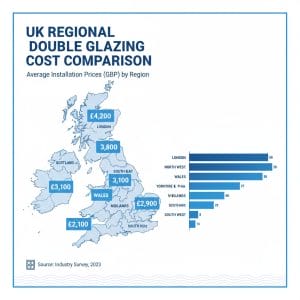
Double glazing repair costs vary across the UK, primarily driven by differences in labour rates. Prices in London and the South East are usually higher because of labour rates, parking and congestion charges, so get local quotes rather than relying on a national average. For London-specific pricing on replacement windows, see our London double glazing cost guide. For Scotland-specific grants and installer options, see our Glasgow double glazing guide.
How to Find a Reliable Repair Company
For sealed unit replacement and hardware repairs, you do not need the original installer. Any competent glazier can replace sealed units and repair hardware on any brand of window, giving you much more choice and often significantly lower prices than going back to the original company.
Get at least three quotes. Local independent glaziers typically charge 20–40% less than national brands for repair work. Check that the quote includes the cost of the replacement sealed unit or parts, not just the labour – some companies quote labour only and add materials later.
Check registration. Verify your glazier at fensa.org.uk or certass.co.uk. FENSA registration is required for full window replacement (Building Regulations compliance) but not for sealed unit swaps or hardware repairs. That said, a FENSA-registered company demonstrates a baseline level of competence and accountability.
Ask about guarantees. Most reputable repair companies offer 5–10 year guarantees on new sealed units and 1–2 years on hardware repairs. Insurance-backed guarantees (IBGs) provide protection if the company ceases trading – worth having for sealed unit replacements.
Check reviews. Look at Google reviews and Trustpilot for the specific company, not just the franchise brand. A company with 50+ reviews and a 4.0+ rating is generally reliable. Be wary of companies with no online presence or very few reviews – the double glazing repair market has a high proportion of sole traders, and quality varies significantly.
For a list of vetted national installers, see our best double glazing companies guide. For properties where replacement may be restricted – such as listed buildings or conservation areas – secondary glazing is an alternative that avoids planning permission while improving insulation.
Double Glazing Maintenance: How to Prevent Repairs
Regular maintenance extends the life of double glazing by 5–10 years and prevents most common faults. A twice-yearly check takes 15 minutes and can save hundreds in repair costs.
Clean and lubricate hardware annually. Spray PTFE lubricant into all locking mechanisms, hinges, and the espagnolette bar. Work the handle several times to distribute. This prevents the stiffness and wear that leads to handle and lock failures – the second most common repair after misted units.
Check drainage holes. All uPVC and aluminium window frames have small drainage slots at the bottom of the outer frame. These allow rainwater that enters the frame cavity to drain away. If blocked by dirt or paint, water pools inside the frame and accelerates seal degradation. Clear them with a thin wire or cocktail stick twice a year.
Inspect seals and gaskets. Run your hand around the edge of each window on a windy day. If you feel a draught, the gasket has likely compressed or perished. Replacing gaskets early (£5–£15 DIY, £40–£100 professional) prevents the greater expense of a blown sealed unit caused by moisture ingress through degraded seals.
Keep frames clean. Wash uPVC frames with warm soapy water – never use solvents, abrasive cleaners, or bleach, which can yellow and weaken the plastic. For timber frames, check for paint cracks or bare wood annually and touch up immediately to prevent moisture penetration and rot.
Use our free cost estimator to compare repair costs versus full replacement for your property, or see our guide to energy efficient windows if you are considering an upgrade.
FREE QUOTE COMPARISON
Compare Double Glazing Quotes from Trusted Suppliers
✓ Save up to £400 per window
100% free • No obligation • Takes under 2 minutes