
Heating and hot water make up over half of a typical UK household’s energy bills. That’s a hefty chunk, so finding the right energy-efficient heating and cooling system can really cut costs and shrink your carbon footprint, all while keeping your home comfortable.
There are plenty of heating options in the UK, from old-school gas boilers to modern heat pumps and electric systems. Knowing how each system works and which one fits your property best helps you make smarter choices.
Government schemes like the Boiler Upgrade Scheme can give you up to £7,500 towards a heat pump, so efficient heating is more within reach than ever.
Understanding Energy Efficiency in Home Heating and Cooling
Energy efficiency in heating and cooling means using less energy to keep your home at a comfortable temperature. Since heating and hot water eat up the biggest slice of energy bills, making things more efficient is a direct way to save money and cut your environmental impact.
Why Energy Efficiency Matters
Efficient heating and cooling systems use less fuel or electricity to get the same job done. Heating alone makes up 17% of the UK’s total emissions, so it’s a big deal for the environment too.
These systems waste less energy by converting more into usable heat or cooling. For example, an A-rated condensing boiler works much better than those old G-rated ones. Heat pumps can beat even the best gas boilers by moving heat rather than burning fuel to make it.
The heating system you choose affects both your running costs and your home’s environmental impact. If you’re stuck with an old, inefficient system, you’ll use more energy just to stay warm.
Impact of Energy Consumption on Energy Bills
Heating and hot water usually make up over half your energy bills. Swapping a G-rated boiler for an A-rated one with full heating controls could save you around £420 a year in Great Britain, or £440 in Northern Ireland.
Inefficient systems burn through more fuel, so your bills go up. Older boilers let a lot of heat escape, which just wastes money every month.
Low carbon systems like heat pumps often cost less to run than older heaters, but savings depend on what you’re replacing and current fuel prices. If you throw solar panels into the mix, you can cut bills even further.
Reducing Carbon Footprint
Low carbon heating systems don’t rely on fossil fuels, so they produce fewer greenhouse gas emissions. That means a smaller carbon footprint for your home.
Heat pumps and solar water heating are solid alternatives to gas or oil boilers. They either use renewable electricity or grab energy from the environment, and when powered by renewables, they barely make any carbon emissions at all.
Boosting your home’s heating efficiency helps the UK reach its emission reduction goals. Every home that switches to a more efficient system chips away at the national reliance on fossil fuels and those unpredictable international gas prices.
Key Considerations for an Efficient Home
If you want a truly energy-efficient home, focus on three things: insulation to keep the heat in, stopping warmth from leaking out, and using your heating system as smartly as possible.
Insulation and Heat Retention
Insulation is the bedrock of an efficient home. Without enough insulation in your walls, loft, and floors, your heating system has to work overtime, and your bills will show it.
Loft insulation should be at least 270mm thick. Cavity wall insulation can slash heat loss by up to 35%.
Older homes without cavities might need solid wall insulation. Internal insulation takes up a bit of space but usually costs less than external options.
Don’t forget the floors, especially if you’ve got suspended timber or rooms above unheated spaces.
Double or triple glazing makes a big difference over single-pane windows. The air gap between panes helps trap heat, and modern windows often have coatings that bounce warmth back inside.
Preventing Heat Loss
Draughts are a real energy thief in UK homes. Gaps around doors, windows, letterboxes, and loft hatches let heat escape, but draught-excluding strips are cheap and really help.
If you’ve got an unused chimney, warm air can sneak out there too. A chimney balloon or cap blocks that, and you can take it out when you want a fire.
Check around pipes and cables coming into your home. Seal up any gaps with the right materials.
Radiators on external walls lose heat, but sticking reflective foil behind them bounces warmth back into the room instead of letting it vanish outside.
Optimising Energy Use
Heating controls help you decide when and how much energy you use. Programmable thermostats let you set up heating around your daily routine, so you don’t waste energy when nobody’s home.
The sweet spot for UK homes is usually between 18°C and 21°C during the day. Smart thermostats can learn your habits and tweak the heating automatically. You can even control them from your phone if you forget to turn things down.
Room thermostats and thermostatic radiator valves give you finer control over each space. Upgrading from a G-rated boiler to an A-rated one with good controls can save a fair bit each year.
Don’t forget to service your boiler annually. A well-maintained boiler runs more efficiently and is less likely to break down. Bleeding radiators helps too, since trapped air can make them less effective.
Energy-Efficient Heating Systems in the UK
Heat pumps can deliver three times more heat than the electricity they use. High-efficiency gas boilers and modern electric systems also offer practical solutions, depending on your budget and needs.
Heat Pumps: Air Source and Ground Source
Heat pumps pull warmth from the air outside or from underground and move it indoors. Air source heat pumps work even when it’s as cold as -6°C, which covers most UK winters.
They usually run at about 55°C and can pump out roughly three times as much heat as the electricity they use. Ground source heat pumps work similarly but draw heat from underground, where it’s a bit warmer all year round.
Both types can link up with your existing radiators and provide hot water. Research suggests any property can have a heat pump, from old Victorian terraces to 1960s flats.
Each heat pump installation can cut your gas use by at least 70%. The upfront cost is higher than a gas boiler, but the Boiler Upgrade Scheme gives up to £7,500 towards installation in England and Wales.
Noise-wise, heat pumps are about as loud as a fridge freezer. Most people don’t even notice them once they’re running.
High-Efficiency Gas Boilers
Gas boilers are still the most common heating system in the UK, with around 23 million homes using them. Modern condensing boilers are over 90% efficient because they capture heat from exhaust gases that older models waste.
They heat water for radiators and taps and are cheaper to install than heat pumps. However, they rely on gas prices, which can swing up and down.
Annual servicing is a must to keep them running efficiently and safely. The government plans to phase out new gas boiler installations soon, so if you’re replacing one now, think about the long-term switch to low-carbon options.
Electric Radiators and Heaters
Electric radiators turn electricity straight into heat, so you don’t need pipes or a central boiler. The newer models come with programmable controls and timers, so you only heat rooms when you need to.
They’re a good fit for homes without gas, especially in rural spots. Electricity usually costs more than gas per unit, but if you’ve got solar panels, you can bring those costs down by making your own power.
The best electric heaters use ceramic or oil-filled elements that hold onto heat after switching off. Some even have smart controls that learn your habits and adjust automatically.
Smart Controls and Zoning for Maximum Efficiency
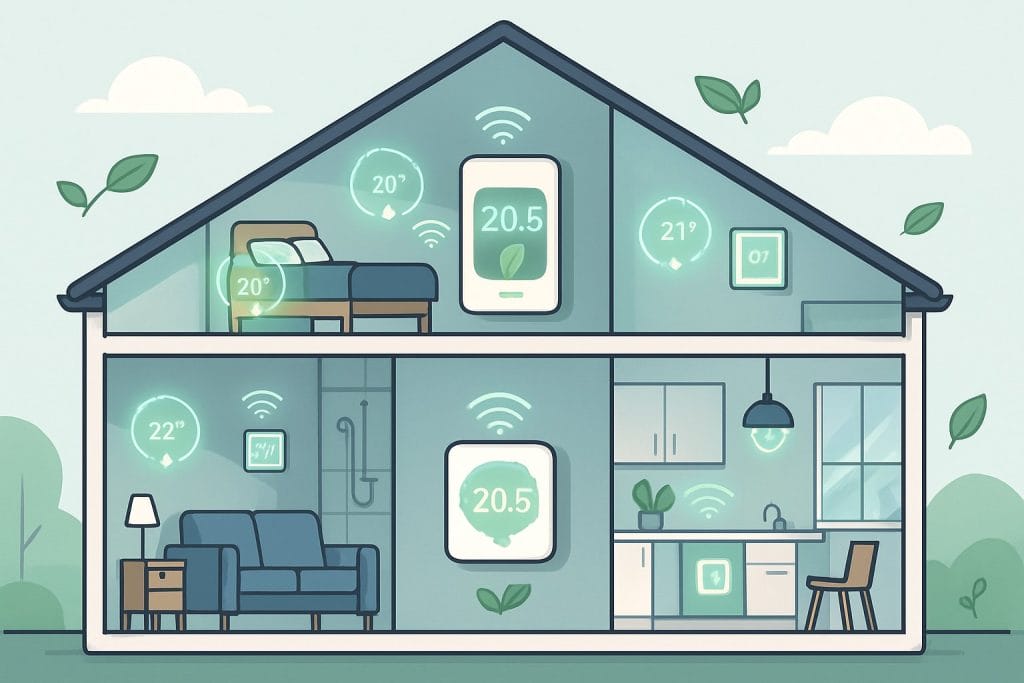
Modern heating controls let you manage temperatures room by room, cutting down on wasted energy. Smart thermostats can save you 8-16% on heating bills, and zoning systems make sure you only heat the spaces you actually use.
Smart Thermostats and Thermostats
Smart thermostats connect to Wi-Fi and let you control your heating from your phone. Unlike old thermostats that keep the whole house at one temperature, smart ones learn your routine and adjust the heating as needed.
They use geolocation to spot when you leave or come home, switching the heating off when you’re out and warming things up before you return. Some even check the weather and tweak the schedule accordingly.
Popular choices in the UK include Nest, Hive, and Tado. They’re compatible with most combi boilers, system boilers, and heat pumps.
Setting one up usually means mounting a receiver near the boiler and connecting the thermostat to your Wi-Fi. Voice control via Alexa, Google Home, or Apple HomeKit adds a bit of convenience if you like talking to your gadgets.
Some models offer real-time energy reports, so you can see exactly what your heating costs day by day.
Smart Radiator Valves and Radiator Valves
Smart radiator valves (TRVs) fit onto your radiators and control heat in each room. Each one has a sensor to track the local temperature and adjusts water flow to avoid overheating sunny or busy rooms.
The old manual valves need you to turn them by hand and don’t offer much control. Smart TRVs work with your thermostat to create a coordinated system, so you can keep the bedroom cool for sleep and the bathroom warm for morning showers.
These battery-powered valves talk wirelessly to the central thermostat. You can set different temperatures for each room throughout the day.
Parents often keep kids’ rooms warm for homework, then turn the heat down overnight. Fitting them is easy—just swap out your old manual valves. Tado and Hive both make TRVs that work with their thermostats, and some even run independently.
Heating System Zoning
Zoning splits your home into areas with separate temperature controls. Each zone runs on its own schedule, based on how you actually use the space.
Maybe you want the living room warm in the evening and bedrooms cosy at bedtime. A typical home might have three zones: living areas, bedrooms, and bathrooms.
Motorised valves control water flow to each zone, managed by the smart thermostat. Sensors in each area keep the temperature where you want it.
Multi-zone systems work especially well in bigger homes or places with changing occupancy. You can leave guest rooms cool to save energy and only heat the home office during working hours.
You’ll need a professional to install the zone valves and connect everything. The payoff is lower running costs, since you aren’t heating the whole house all the time.
Some studies show zoned heating can cut energy use by 20-30% compared to single-zone systems. If you can’t change the pipework, smart radiator valves offer a simpler way to get similar benefits—targeted heating without major changes.
Renewable Energy Integration for Heating and Cooling
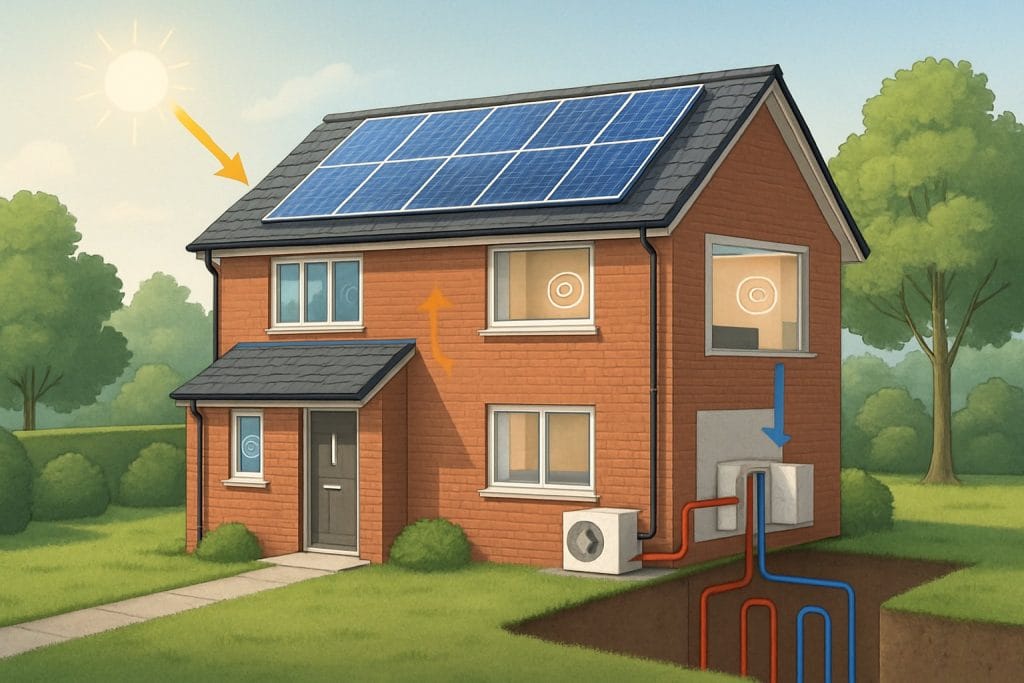
Solar panels can team up with existing heating systems to cut energy costs. Government schemes like the Boiler Upgrade Scheme also chip in with financial support for anyone switching to renewables at home.
Combining Heating Systems with Solar Panels
Solar panels generate electricity, powering heat pumps and electric heaters. This setup means you rely less on the grid and can see lower energy bills all year round.
A solar thermal system can preheat water before it reaches the boiler or heat pump, easing the load on your main heating kit. You can pair this with forced-air systems or underfloor heating for a bit more efficiency.
Homes with both solar panels and heat pumps really shine in spring and autumn. During those months, the panels usually make enough electricity to run the heat pump. If you add battery storage, you can keep any extra solar energy for evenings or the colder winter days when you need more heat.
Key compatibility considerations:
- Heat pumps pair nicely with solar panels since they run on electricity
- Solar thermal collectors can slot into existing boiler setups
- Batteries make solar panel systems more useful, especially after sunset
- Installers need to check roof orientation and shading before fitting panels
Boiler Upgrade Scheme (BUS)
The Boiler Upgrade Scheme offers grants up to £7,500 for homeowners in England and Wales who install heat pumps or biomass boilers. This grant tackles the upfront cost of swapping fossil fuel heating for renewable options.
Eligible systems include air source heat pumps, ground source heat pumps, and biomass boilers. Homes need a valid Energy Performance Certificate with no outstanding loft or cavity wall insulation recommendations.
The grant goes straight to the installer, so homeowners don’t need to pay and claim it back. This setup knocks down the overall installation bill right at the start.
Only MCS-certified installers can handle applications. They sort the paperwork and make sure everything meets the right technical standards.
Supplementary and Specialised Heating and Cooling Solutions
Some heating methods work best as add-ons to main systems, or they need a special approach in certain homes. Underfloor heating gives focused warmth in specific rooms. Older properties often need extra care when upgrading to energy-efficient systems.
Underfloor Heating
Underfloor heating spreads warmth evenly from the ground up, getting rid of cold spots. It runs at lower temperatures than old-school radiators. There are two main types: water-based (wet) systems and electric systems.
Water-based systems work well with heat pumps and suit whole houses or extensions. They use warm water pumped through pipes beneath the floor. Electric systems rely on heating cables or mats, which fit best in smaller spots like bathrooms or kitchens.
Because underfloor heating runs at lower temperatures, it still keeps rooms comfortable. Most systems run at 35-45°C, while radiators usually need 65-75°C to do the same job.
Installers need to add insulation underneath to stop heat escaping into the ground. The type of floor covering matters too—tiles and stone pass heat better than carpet or thick wood. Most systems take 30-60 minutes to warm up, so they’re better left on at a steady low level instead of switching them on and off all the time.
Retrofitting Older Homes
Older UK homes come with some tricky challenges when you want to install energy-efficient heating or cooling. If your house was built before 1990, chances are it’s got solid walls, single-glazed windows, and not much insulation. All that lets heat just slip away.
Honestly, the first thing you should tackle is insulation. Add loft insulation, fill any cavity walls if you can, and block up draughts. That way, you waste less energy and give any new heating system a fighting chance.
Don’t expect miracles from even the best heating tech if your house leaks warmth everywhere. Heat pumps can work in these older places, but you might need bigger radiators or even underfloor heating in rooms downstairs.
Some homes need to run heat pumps hotter, maybe 55 to 65°C, just to keep things cosy. That does knock down efficiency compared to a modern, well-insulated house, but sometimes it’s the only way.
A professional can look over your place and help you figure out what makes sense. They’ll consider your space, the pipes and radiators you already have, and how well your building holds onto heat.