A 3-bed semi in white uPVC costs about £3,750 on MyJobQuote’s national figures, and we found no verified Edinburgh-specific price. Edinburgh’s market, however, is defined by its traditional sash and case windows – the dominant window type across the New Town, Old Town, and most Victorian suburbs – which cost £1,500–£2,000 each for timber replacement on MyJobQuote’s national figures (heritage specifications are quoted individually).
Two factors make Edinburgh unlike any other UK city for window replacement. First, the city has 50 conservation areas including a UNESCO World Heritage Site (the Old Town and New Town) – giving it some of the strictest planning controls in Britain. Second, Scotland’s planning rules changed in May 2024: rear window replacements in conservation areas no longer need planning permission, while front windows go through a new “Prior Approval” process rather than full planning permission.
Scottish homeowners cannot access the English Warm Homes: Local Grant. Instead, the Home Energy Scotland loan offers an interest-free loan of up to £8,000 for upgrading single-glazed windows to double glazing – a significant help for Edinburgh properties that have never been modernised. This guide covers Edinburgh costs by window type, the Scottish grant landscape (see also our Glasgow double glazing guide for west coast pricing), what Edinburgh’s conservation areas actually mean for your window project, and how to choose an installer.
FREE QUOTE COMPARISON
Compare Double Glazing Quotes from Trusted Suppliers
✓ Save up to £400 per window
100% free • No obligation • Takes under 2 minutes
- Edinburgh costs remain planning-sensitive in 2026 - on MyJobQuote’s national figures a white uPVC set for a 3-bed semi is about £3,750, while timber sash replacements run £1,500-£2,000 per window.
- Home Energy Scotland support is the relevant route - the English Warm Homes grant does not apply, but eligible single-glazing upgrades can use the interest-free Scottish loan of up to £8,000.
- Conservation-area rules changed in May 2024 - rear replacements are simpler, while prominent front windows still need careful planning checks before surveys.
- Call Home Energy Scotland before booking installers - use 0808 808 2282 to check funding eligibility and avoid paying for unsuitable quotes.
Double Glazing Costs in Edinburgh
On MyJobQuote’s national figures, double glazing a 3-bed semi costs about £3,750 in white uPVC. Traditional timber sash and case windows – the Edinburgh standard – cost £1,500–£2,000 per window installed. For a New Town townhouse with 10–14 sash windows, that is from £15,000 (10 windows at the £1,500 low end) before any heritage specification premium. For national pricing context, see our double glazing costs guide or use our cost estimator tool.
Edinburgh’s pricing is shaped by the sash and case market. The city’s Georgian and Victorian housing stock – which covers most of the New Town, Stockbridge, Marchmont, Bruntsfield, Morningside, and Newington – was built with tall, elegant sash and case windows that are both architecturally significant and expensive to replace properly. A mass-market uPVC installer is not the right choice for this work: Edinburgh’s conservation officers expect like-for-like proportions, astragal bar patterns, and reveal depths.
| Window Type | National Price (Per Window) | Full House (3-Bed) |
|---|---|---|
| uPVC Casement | £350–£550 | £3,750 |
| uPVC Sash | £700–£1,100 | Get quotes |
| Timber Sash (and Case) | £1,500–£2,000 | £12,000–£20,000 (8 to 10 windows) |
| Secondary Glazing | £180–£400 | Get quotes |
National figures cover supply and fitting; confirm that quotes include disposal of old windows and a written guarantee. FENSA covers England and Wales only, so in Edinburgh ask how the installer will show the work meets Scottish building standards. Double glazing is standard-rated at 20% VAT and does not qualify for the 0% energy-saving-materials relief (GOV.UK Notice 708/6), so quotes should include 20% VAT. A large New Town townhouse with 12–14 sash windows is specialist craftwork, not commodity glazing, so heritage timber replacements are quoted individually.
Sash and Case Windows: The Edinburgh Standard
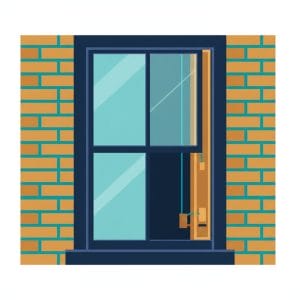
Scotland’s traditional window is the sash and case, not the English-style sash and bay. In a sash and case window, the lower sash slides upward within an outer timber case that runs from floor to lintel – a deeper construction than English sash windows, with a distinctive reveal depth.
Many of Edinburgh’s older properties, from the Georgian New Town to the Edwardian tenements of Marchmont and Bruntsfield, have sash and case windows. Any installer quoting on Edinburgh conservation area work must understand this distinction – the geometry, the astragal bar patterns, and the case dimensions are all character-defining elements.
FREE QUOTE COMPARISON
Compare Double Glazing Quotes from Trusted Suppliers
✓ Save up to £400 per window
100% free • No obligation • Takes under 2 minutes
Double Glazing Grants in Edinburgh
The English Warm Homes: Local Grant does not apply in Edinburgh. Scottish homeowners can access the Home Energy Scotland loan (an interest-free loan of up to £8,000 for single-to-double glazing upgrades only; there is no grant for glazing) and, for eligible low-income households, Warmer Homes Scotland (usually fully funded, but focused on insulation and heating – windows are not a standard measure). Double glazing does not qualify for the 0% energy-saving-materials VAT relief – it is standard-rated at 20% (GOV.UK Notice 708/6). Apply via Home Energy Scotland: homeenergyscotland.org or 0808 808 2282 (free). For all UK schemes, see our double glazing grants guide.
| Scheme | Amount | Covers DG? | Eligibility | Status |
|---|---|---|---|---|
| Home Energy Scotland Loan | Up to £8,000 (interest-free loan) | Single→Double only | Scottish owner-occupiers with single glazing (main residence; affordability check) | Active (ongoing) |
| Warmer Homes Scotland | £10,000+ typical support | No (insulation/heating only) | Passport benefit, age 75+ with no working heating, or DS1500; poor EPC rating | Active (ongoing) |
Home Energy Scotland Loan
The Home Energy Scotland loan for double glazing is an interest-free loan of up to £8,000 – there is no grant for glazing, and a fee of 1.5% of the loan applies (maximum £150). The critical restriction: it only applies to upgrading single-glazed windows to double glazing. It does not cover replacing existing double glazing with newer units.
If your Edinburgh property still has original single-glazed sash and case windows – common in older New Town and Old Town properties that have never been updated – this loan significantly reduces the upgrade cost. Apply through Home Energy Scotland at homeenergyscotland.org or by calling 0808 808 2282 (free) before booking any surveys.
A Home Energy Scotland adviser will assess your home, confirm eligibility, and advise on the right approach before you commit to any installer. This step is worth doing first – the adviser can also flag whether you qualify for Warmer Homes Scotland as well.
Warmer Homes Scotland
For Edinburgh homeowners on qualifying benefits – including Universal Credit and Pension Credit Guarantee, or with a household member aged 75+ with no working heating or holding a DS1500 certificate – Warmer Homes Scotland usually meets all the costs of energy efficiency measures, with support worth £10,000 or more. The scheme focuses on insulation, heating and renewables – windows are not a standard measure, so do not rely on it to fund double glazing.
In conservation areas, planning requirements still apply even for grant-funded work – your installer and the scheme administrator can advise on compatible approaches before any work begins.
Conservation Areas in Edinburgh
Edinburgh has 50 conservation areas, anchored by the Old Town and New Town UNESCO World Heritage Site. Since May 2024, rear window replacements in conservation areas no longer need planning permission. Front and principal elevation windows require “Prior Approval” – a simplified process (£200 fee) rather than full planning permission. Listed buildings and UNESCO World Heritage Site properties are not affected by the 2024 changes and still require full planning permission.
Edinburgh’s conservation framework is demanding. The sheer number of conservation areas – 50, covering large swathes of the city – combined with the UNESCO World Heritage Site designation means a significant proportion of Edinburgh homeowners face planning constraints that don’t exist elsewhere in Scotland.
The May 2024 planning changes are worth understanding. Scotland extended Permitted Development rights in conservation areas: replacing rear windows (on non-principal elevations not facing a road) no longer requires any planning permission. For many Edinburgh homeowners in Marchmont, Bruntsfield, or Stockbridge, rear window replacements are now straightforward.
Front windows and principal elevations still require Prior Approval: submit to [email protected] with a location plan, window description, and £200 fee. Seven criteria are assessed – opening method, pane count, astragal dimensions, frame colour, and more. The 2024 changes do not apply to listed buildings or UNESCO World Heritage Site properties, which still require full planning permission.
| Property Type | Rear Windows | Front Windows |
|---|---|---|
| Outside conservation area | No permission needed | No permission needed |
| Conservation area (non-listed) | No permission needed (since May 2024) | Prior Approval required (£200) |
| Listed building | Full planning permission + listed building consent | Full planning permission + listed building consent |
| UNESCO World Heritage Site | Full planning permission + listed building consent | Full planning permission + listed building consent |
Edinburgh’s key conservation areas and their window implications:
- Old Town and New Town (UNESCO WHS) – The historic core, from the Royal Mile and Grassmarket to Charlotte Square and Princes Street. Full planning permission required for any external changes. Sash and case window character is paramount – slimline heritage double-glazed units or secondary glazing are the typical approved approaches. Standard double-glazed uPVC units are rarely acceptable on street-facing elevations. Many listed buildings sit within the area.
- Stockbridge – Georgian and early Victorian. Sash and case windows throughout. Prior Approval for front elevation changes.
- Marchmont and Bruntsfield – Victorian tenements south of the Meadows. Rear windows now straightforward. Front elevation Prior Approval needed. Most sash replacements are acceptable with correct proportions and astragal pattern.
- Morningside – Victorian and Edwardian detached homes. Conservation area, but more flexibility than the inner city. Standard Prior Approval process applies to front windows.
- Leith – Partially within conservation area. Traditional stone tenements in the designated area; newer housing outside it. Prior Approval for front elevations within the conservation area boundary.
For any New Town or listed building property, obtain pre-application advice from Edinburgh City Council Development Management at [email protected] before ordering any windows. The Prior Approval system is faster and cheaper than full planning permission, but getting it wrong still results in enforcement action. Secondary glazing – fitting an independent internal window behind the original – is worth considering for listed buildings where double-glazed units would harm character.
Choosing a Double Glazing Company in Edinburgh
For New Town, Old Town, or any sash and case conservation area work, ask for documented experience of Prior Approval and listed building applications, and always get written confirmation of how the installer will meet Scottish building standards before signing. For standard uPVC work in suburban Edinburgh, check recent reviews on more than one site.
Get at least three quotes for any Edinburgh window project. Compare guarantee terms and ask each installer how the work will meet Scottish building standards before signing any contract. For a national comparison of window companies and brands, see our best double glazing companies guide.
A white uPVC set for a 3-bed semi costs about £3,750 on MyJobQuote’s national figures, and timber sash and case is £1,500–£2,000 per window. Edinburgh has 50 conservation areas - including the UNESCO Old Town and New Town - with strict planning requirements. Since May 2024, rear windows in conservation areas no longer need planning permission; front windows require Prior Approval (£200 fee). Call Home Energy Scotland on 0808 808 2282 to check loan eligibility, choose an installer with heritage sash experience, and confirm how the work will meet Scottish building standards before signing.