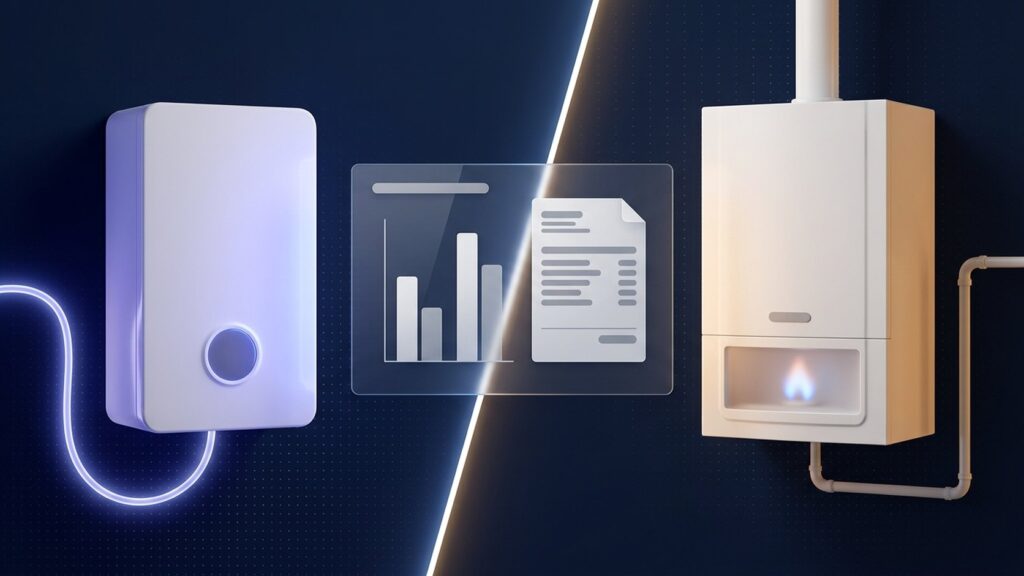
An electric boiler costs about 2.8 times as much as a gas boiler to turn the same amount of energy into heat. At Ofgem’s price cap for 1 October to 31 December 2026, a home using Ofgem’s medium 9,500 kWh of gas pays about £757 a year for that gas, while an electric boiler delivering the same heat costs about £2,105.
That does not make an electric boiler a bad buy. It is the practical answer for flats with no gas supply, small low-use homes, and properties where a heat pump cannot be fitted. This guide works through running costs for three home sizes, installation, efficiency, servicing, the future of gas boilers and Economy 7, then ends with a plain decision framework.
FREE QUOTE COMPARISON
Compare Boiler Quotes from Trusted Suppliers
✓ Save up to £350/year on heating
100% free • No obligation • Takes under 2 minutes
- Electric heat costs about 2.8 times as much as gas - 26.4p against 9.5p per kWh of heat at the October to December 2026 Ofgem price cap
- A typical-use home pays about £1,350 more a year - £2,105 for electric against £757 for gas, before standing charges
- Installing an electric boiler is not reliably cheaper - Centre for Sustainable Energy puts it at £3,000 to £6,000; a gas boiler costs £500 to £3,000 for the unit plus £1,000 to £3,000 to fit
- No ban on gas boilers in existing homes has been set - new homes in England are effectively barred from fossil fuel heating from March 2027
- Electric wins where gas is not an option - a flat with no gas supply or a low-use home saves the £108 a year gas standing charge
Electric boiler vs gas boiler: the short answer
If your home is already on the gas network, a gas boiler is cheaper to run and usually no dearer to fit. An electric boiler wins when there is no gas supply, when a flue route is impossible, or when your heat demand is so low that the running-cost gap stays small in pounds.
| Factor | Electric boiler | Gas boiler |
|---|---|---|
| Cost per kWh of heat | About 26.4p | About 9.5p |
| Installed cost | £3,000 to £6,000 (CSE estimate) | £1,000 to £3,000 fitting plus the boiler |
| Efficiency at the boiler | 99.8% claimed by one maker | 92% minimum label, 84% assumed in homes |
| Lifespan | Makers claim long lives; no independent figure found | 15 years assumed by government |
| Gas supply and flue | Neither needed | Both needed |
| Heat pump grant (£7,500) | Not eligible | Not eligible |
Sources and workings for every figure are in the research section at the end. Electric boiler sizing, supply upgrades and cylinders are covered in more depth in our electric boiler costs guide.
How do electric and gas boilers work?
A gas boiler burns mains gas to heat water for your central heating and taps, and sends the waste gases out through a flue. An electric boiler passes mains electricity through heating elements instead. It heats the same radiators and hot water, with nothing burned and nothing to vent.
Both come as a combi boiler, which heats hot water on demand, or as a system boiler that feeds a hot water cylinder. An electric combi boiler can only draw so much power from your supply, so very high hot water demand is where it struggles most. Because a gas boiler burns fuel, the installer must fit a flue and you should have a carbon monoxide alarm; an electric boiler removes that particular risk.
How much more does an electric boiler cost to run than a gas boiler?
At the 1 October to 31 December 2026 price cap, an electric boiler delivers a kWh of heat for about 26.4p and a gas boiler for about 9.5p. For a medium-use home that means roughly £2,105 a year against £757, a gap of about £1,350 before standing charges.
We built the comparison from Ofgem’s price cap: electricity at 26.32p per kWh and gas at 7.97p per kWh, Direct Debit, Great Britain average. For demand we used Ofgem’s typical consumption bands for gas, which changed on 1 July 2026: 6,000 kWh (low), 9,500 kWh (medium) and 14,000 kWh (high).
| Household gas use | Gas energy a year | Gas standing charge | Electric boiler energy a year | Extra for electric (energy only) | Extra if you drop gas entirely |
|---|---|---|---|---|---|
| Low: 6,000 kWh | £478 | £108 | £1,329 | £851 | £743 |
| Medium: 9,500 kWh | £757 | £108 | £2,105 | £1,347 | £1,239 |
| High: 14,000 kWh | £1,116 | £108 | £3,101 | £1,986 | £1,877 |
The method: the gas boiler uses the full band at 84% efficiency, the figure the government assumes for gas boilers in real homes. The same heat from an electric boiler at 99.8% efficiency needs almost exactly the same number of kWh, but each one costs 26.32p instead of 7.97p. The gas standing charge of 29.68p a day, about £108 a year, only disappears if you remove the gas supply altogether.
Three limits apply. Ofgem’s gas bands cover cooking and hot water as well as heating, so the model slightly overstates heat for homes that cook on gas. A gas boiler running at its 92% label figure rather than 84% would cut the gas bill by roughly 9%, widening the gap. And the Centre for Sustainable Energy’s own average-home estimates, about £3,220 a year for a flow boiler on a single-rate tariff, are higher than ours because it does not publish its tariff or demand assumptions.
The price cap resets every quarter, and electricity carries no VAT only until 31 March 2027, so every pound figure here moves. The direction of the answer is safer than the exact totals, but recheck both after the January cap is published.
For a third option, an air source heat pump delivering 3 units of heat per unit of electricity brings electric heat down to about 8.8p per kWh on the same rates, roughly level with gas. That is why anyone going electric should price a heat pump before an electric boiler; our heat pump vs gas boiler comparison and heat pump running costs guide cover that case.
You can test your own numbers with the boiler running cost calculator.
How much does it cost to install an electric boiler or a gas boiler?
The Centre for Sustainable Energy puts a fitted electric boiler at £3,000 to £6,000. A manufacturer guide puts a gas boiler at £500 to £3,000 for the unit and £1,000 to £3,000 to fit it. The totals overlap (£1,500 to £6,000 for gas), so a like-for-like gas swap is often, but not always, the cheaper job.
Published prices vary by who is selling. One Watford installer advertises electric boilers at £1,500 to £3,000 plus VAT including a survey, supply check and commissioning, and one gas manufacturer lists a single combi package at £2,475 including VAT and installation. Both are named examples rather than national averages, and neither includes extras that a survey can add, such as a hot water cylinder, new pipework or an electrical supply upgrade. Get at least two quotes that state exactly what is included.
The big installation difference is what each system needs around it. A gas boiler needs a gas supply, a flue and an annual safety check by a Gas Safe registered engineer. An electric boiler needs a strong enough electrical supply; a 12 kW unit draws roughly 52 amps at 230 volts (12,000 divided by 230), so your installer should check the supply before quoting. For a closer look at supply upgrades, see our electric boiler installation costs breakdown.
Is an electric boiler really more efficient than a gas boiler?
At the boiler, yes: one manufacturer states its electric boiler is 99.8% efficient, because nothing is lost up a flue. A new gas boiler must meet 92% on its label in England and is assumed by government to deliver about 84% in a real home. Efficiency does not decide running cost, though; price per kWh does.
This is the point most comparison pages blur. Electricity is a premium fuel. Even a boiler that wastes almost nothing still turns 26.32p units into heat, while a gas boiler that wastes 16% turns 7.97p units into heat. After the losses, gas heat costs about 9.5p per kWh and electric boiler heat about 26.4p. The gap in efficiency between the two is small next to the gap in price.
Carbon is a separate question that depends on how the grid is generating electricity on the day, which we have not modelled. If emissions are your main goal, a heat pump delivers far more heat per unit of electricity than any electric boiler.
How long do they last, what does servicing cost and how much space do they need?
Government modelling assumes a gas boiler lasts 15 years. We found no independent figure for electric boilers, only makers and installers claiming longer lives, so treat that advantage as unproven. Gas boilers need an annual service; electric boilers have no combustion, flue or gas safety check, but follow your warranty terms.
A gas boiler service from a large supplier such as British Gas costs £119 as a one-off, or £99 a year on a membership plan. We could not verify a price for servicing an electric boiler, so ask the installer what the warranty requires. Our boiler service costs guide covers gas, oil and electric.
Space is the quiet advantage. With no flue, an electric boiler can sit where a gas boiler cannot be vented, such as an internal cupboard in a flat. If you want stored hot water, though, you may still need a cylinder, which uses cupboard space. The installer’s survey should confirm both.
Do Economy 7 and off-peak tariffs make an electric boiler cheaper than gas?
Only in a narrow case. An electric boiler matches gas running costs only if the electricity it uses costs about 9.5p per kWh or less, roughly 36% of the 26.32p cap rate. Check your actual night rate against that line before assuming an off-peak tariff closes the gap.
The Centre for Sustainable Energy says storage electric boilers can use cheaper off-peak electricity but must be sized and insulated correctly, while flow boilers heat on demand and mostly run at peak rates. Its average-home estimates are about £2,689 a year for a storage boiler on Economy 7 and about £3,220 for a flow boiler on a single-rate tariff. That is a saving of roughly 16%, but both numbers remain well above a gas bill for comparable use.
We have not quoted Economy 7 unit rates because we could not verify current ones from Ofgem. The rule of thumb is simple: if your night rate is nowhere near 9.5p, off-peak electricity narrows the gap without closing it. Solar panels and a battery can change that sum, and are worth pricing alongside an electric boiler.
Are gas boilers being banned in the UK?
Not in existing homes. The government’s Warm Homes Plan, published in January 2026, says consumer choice is at its heart, and we found no ban date for gas boilers in it. New homes in England are different: the Future Homes Standard regulations effectively preclude fossil fuel heating in new buildings, with a year’s lead time from March 2026. The regulations include transitional arrangements, so some homes already in the building pipeline can still be completed under the previous rules.
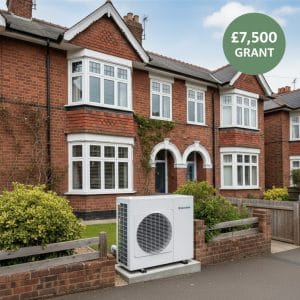
The 2035 date still quoted by some sites comes from the 2021 Heat and Buildings Strategy, which also said no one would be forced to remove an existing boiler. The Warm Homes Plan instead expects heat pumps to become the natural choice when a heating system reaches the end of its life, backed by the £7,500 Boiler Upgrade Scheme grant, which does not cover electric boilers. See our Boiler Upgrade Scheme guide for eligibility.
For a buyer choosing today, the policy direction argues against assuming gas is permanent over a 15-year boiler life, but not against buying one now if your home is on the gas network and heat pumps do not suit you. If you are replacing a failing boiler, our new boiler cost guide shows what a gas replacement costs.
Electric boiler vs gas boiler: pros and cons
Electric boilers are simple, compact and need no flue, but cost far more per unit of heat. Gas boilers are cheap to run and widely fitted, but need a gas supply and a flue, and face a policy squeeze in new homes. Here is the balance for each.
Who should choose an electric boiler, and who should stay with gas?
Choose an electric boiler if gas is unavailable or impractical and your heat demand is low. Stay with gas if you are on the network and use a medium or high amount of heat. If you are off the gas grid, price an electric boiler against a heat pump and your current oil or LPG before deciding.
| Your situation | Best fit | Why |
|---|---|---|
| Flat or small home with no gas supply | Electric boiler | Avoids a gas connection and flue; low demand keeps the bill manageable |
| Low-use home on the gas network | Gas boiler, or electric if a flue is impossible | Gap is about £850 a year at low use, about £740 if you drop gas |
| Medium or high use, on the gas network | Gas boiler (or a heat pump) | Gap is £1,350 to £1,990 a year for electric |
| Off gas, on oil or LPG | Price all three: oil/LPG, heat pump, electric | Oil and LPG are not price-capped; compare per kWh of heat |
| Heat pump cannot be fitted | Electric boiler, ideally with solar or off-peak | Keeps existing radiators and removes combustion |
- Choose electric if your home has no gas supply, a flue is not possible, or annual heat use is low enough that a few hundred pounds extra is acceptable.
- Choose gas if you are connected to the network and use 9,500 kWh of gas or more, since the extra cost of electric exceeds £1,300 a year at today’s cap.
- Price a heat pump first if you are off gas or your insulation is good, because the £7,500 grant is not available for electric boilers.
If you are on oil, work out your own number: divide the price per kWh of your fuel by your boiler’s efficiency. Anything below 26.4p per kWh of heat beats an electric boiler on running cost, and our oil boiler replacement cost guide shows what a switch involves. Whatever you choose, only a Gas Safe registered engineer should touch gas work.
FREE QUOTE COMPARISON
Compare Boiler Quotes from Trusted Suppliers
✓ Save up to £350/year on heating
100% free • No obligation • Takes under 2 minutes
How we researched this guide
Energy prices are from Ofgem’s price cap for 1 October to 31 December 2026: electricity 26.32p per kWh with no VAT until 31 March 2027, gas 7.97p per kWh including 5% VAT. Annual gas use is Ofgem’s 2026 typical consumption values. The 92% gas boiler standard is from the government’s Boiler Plus factsheet, the 84% in-use assumption from a government options assessment.
Installation ranges are from the Centre for Sustainable Energy, a named installer and a boiler manufacturer’s guide. Policy statements are from gov.uk and legislation.gov.uk. Running costs are our own calculations; the assumptions and every workings are in the fact file behind this page, and none is a quote. A heating engineer’s survey is the only reliable way to size and price your home.
Last updated: October 2026. The Ofgem price cap changes quarterly and these comparisons move with it.