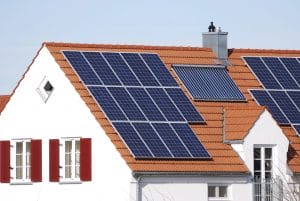
A 4kW solar panel system is the most common size for UK residential solar installations. It’s the sweet spot for a typical 3-bedroom home – large enough to cover most of your electricity usage, small enough to fit on a standard roof.
This guide covers everything specific to 4kW systems: how much power they actually produce across different UK regions, exactly how much roof space you need, what happens when you add battery storage, and whether a 4kW system is the right size for your household. For a broader comparison of all system sizes and general pricing, see our complete solar panel cost guide.
FREE QUOTE COMPARISON
Compare Solar Panel Quotes from Trusted Suppliers
✓ Save up to £975/year on energy bills
100% free • No obligation • Takes under 2 minutes
- £5,000–£8,100 installed - A 4kW system costs this range in 2026 (0% VAT included), down 19–26% since 2023
- 3,400–4,200 kWh annual output - Enough to cover 50–70% of a typical 3-bed home’s electricity usage
- 6–12 year payback period - Savings of £520–£1,380/year depending on battery storage and self-consumption habits
- Battery adds £5,000–£8,300 - But doubles self-consumption from ~40% to ~80%, nearly doubling annual bill savings
- 25-year savings of £13,000–£34,500 - After payback, 15–20 years of virtually free electricity from 10 panels on ~26m² of roof
How Much Does a 4kW Solar System Cost in 2026?
A 4kW solar panel system costs £5,000–£8,100 installed in the UK, including 0% VAT. Without battery storage, expect £5,000–£6,500. With a 9–10 kWh battery, the total rises to £10,000–£16,400.
Prices have fallen significantly – in 2023, the same system would have cost £8,000+. That’s a 19–26% price drop driven by oversupply from panel manufacturers and increased UK installer competition.
| Component | Cost Range | % of Total | Notes |
|---|---|---|---|
| Solar panels (10 × 400W) | £1,500–£3,500 | 40–50% | Monocrystalline standard; premium brands cost more |
| Inverter | £500–£1,500 | 10–15% | String inverter cheaper; micro-inverters better for shading |
| Mounting & racking | £600–£1,200 | 10–15% | Roof-integrated systems cost 20–30% more |
| Scaffolding | £700–£1,200 | 10–15% | Required for most 2-storey homes |
| Electrical work | £600–£1,000 | 10–15% | Consumer unit upgrade if needed |
| Labour | £800–£1,200 | 15–20% | 2–3 day installation, £300–£500/day |
All residential solar installations benefit from 0% VAT until March 2027, saving approximately £1,300 on a £6,500 system compared to the standard 20% rate. This discount is applied automatically by your installer – you don’t need to claim it separately.
How Much Electricity Does a 4kW System Actually Produce?
A 4kW system generates 3,400–4,200 kWh per year in the UK, depending on your location, roof orientation, and shading. That covers 85–100% of a typical household’s annual electricity consumption.
The actual output of your 4kW system depends heavily on where you live. Southern England gets up to 30% more solar irradiance than northern Scotland, which translates directly into more electricity generated.
| Region | Annual Output (4kW) | Daily Average (Summer) | Daily Average (Winter) |
|---|---|---|---|
| South England | 3,800–4,200 kWh | 18–20 kWh | 3–5 kWh |
| Midlands | 3,500–3,900 kWh | 16–18 kWh | 2.5–4 kWh |
| North England | 3,200–3,600 kWh | 15–17 kWh | 2–3.5 kWh |
| Scotland | 3,000–3,400 kWh | 14–16 kWh | 1.5–3 kWh |
| Wales | 3,400–3,800 kWh | 16–18 kWh | 2–4 kWh |
These figures assume a south-facing roof with a 30–40 degree pitch and minimal shading. Roof orientation makes a significant difference:
- South-facing: 100% of optimal output (baseline)
- South-east / south-west: 90–95% of optimal
- East or west-facing: 80–85% of optimal
- North-facing: 50–60% of optimal (generally not recommended)
A 4kW system on an east/west split roof (panels on both sides) can still perform well – you lose peak output but gain a longer generation window across the day, which can improve self-consumption without a battery.
Roof Space: Will a 4kW System Fit Your Home?
A 4kW system needs 16–20 m² of unobstructed roof space (approximately 4m × 4.5m). Most 3-bedroom semi-detached and detached homes have enough south-facing roof area.
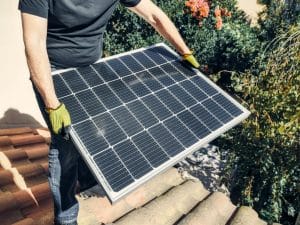
A standard 4kW installation uses 10 panels rated at 400W each. Modern residential panels are typically 1.7m × 1m (1.7 m² per panel), so you need approximately 17 m² of usable roof space plus gaps for ventilation and access.
| Property Type | Typical Roof Area | 4kW Feasible? | Notes |
|---|---|---|---|
| 3-bed detached | 30–40 m² | Yes – comfortable fit | Room for future expansion to 5–6kW |
| 3-bed semi-detached | 20–28 m² | Yes – typical fit | Most common 4kW installation |
| 3-bed terrace | 15–22 m² | Possible – tight | May need higher-efficiency panels |
| 2-bed flat (top floor) | 10–15 m² | Unlikely | Consider 2–3kW instead |
| Bungalow | 35–50 m² | Yes – plenty of space | Lower scaffolding costs too |
Obstructions reduce usable roof space. Chimneys, skylights, dormer windows, and satellite dishes all need clearance zones. If your south-facing roof is partially obstructed, you have two options:
- Use higher-wattage panels: 450W or 500W panels need fewer units (8–9 panels instead of 10) to reach 4kW, fitting into tighter spaces. They cost £50–£100 more per panel.
- Split across two roof faces: Install some panels on the east face and some on the west. You lose 10–15% of peak output but still achieve 4kW capacity.
For a full assessment of how many panels your home needs, see our how many solar panels guide.
4kW With Battery vs Without: Which Makes Sense?
Adding a battery to a 4kW system costs £5,000–£8,300 extra but increases self-consumption from ~40% to ~80%, nearly doubling your bill savings. A battery makes financial sense if you use most electricity in the evening.
Without a battery, a 4kW system generates most of its electricity during the day when you may be at work. You’ll export surplus energy to the grid at 4–15p/kWh via the Smart Export Guarantee, while buying it back in the evening at 24.5p/kWh. That’s a significant gap.
| 4kW Without Battery | 4kW With 9–10 kWh Battery | |
|---|---|---|
| Total installed cost | £5,000–£8,100 | £10,000–£16,400 |
| Self-consumption rate | 30–45% | 70–85% |
| Annual bill savings | £400–£750 | £800–£1,300 |
| Annual SEG income | £120–£170 | £40–£80 |
| Total annual savings | £520–£920 | £840–£1,380 |
| Payback period | 6–12 years | 8–14 years |
| 25-year total savings | £13,000–£23,000 | £21,000–£34,500 |
A battery makes the most financial sense if:
- You’re out during the day and use most electricity evenings/weekends
- You’re on a time-of-use tariff where evening electricity costs more
- You want maximum energy independence and protection against future price rises
- You have or plan to get an electric vehicle (charge overnight from stored solar)
Skip the battery if:
- You work from home and use most electricity during daylight hours
- Your budget is tight – the 4kW panels alone offer excellent ROI
- You’re happy to export surplus at SEG rates (still profitable, just less so)
If budget allows, install the 4kW panels now and add a battery in 2-3 years when prices drop further. Battery costs have fallen 30% since 2023 and are projected to continue falling. Make sure your inverter is battery-ready (hybrid inverter) to avoid replacing it later.
FREE QUOTE COMPARISON
Compare Solar Panel Quotes from Trusted Suppliers
✓ Save up to £975/year on energy bills
100% free • No obligation • Takes under 2 minutes
Best Panel Brands for a 4kW System
For a 4kW system, JA Solar and Trina offer the best value. SunPower and REC are premium choices with higher efficiency and longer warranties. Avoid unbranded or ultra-budget panels – the £200–£500 saving isn’t worth the risk.
| Brand | Panel Wattage | Efficiency | Warranty | 10-Panel Cost (4kW) | Best For |
|---|---|---|---|---|---|
| JA Solar | 400–425W | 20.5–22% | 25 years | £1,500–£2,200 | Best value overall |
| Trina Solar | 400–440W | 20.8–22.5% | 25 years | £1,600–£2,400 | Strong balance of price and performance |
| Canadian Solar | 400–430W | 20.3–22% | 25 years | £1,400–£2,100 | Budget-friendly with decent quality |
| REC Group | 405–430W | 21.0–22.3% | 25 years | £2,000–£3,000 | Premium quality, strong warranty terms |
| SunPower/Maxeon | 410–440W | 22.0–24.1% | 25–40 years | £2,500–£3,500 | Maximum efficiency, tight roof space |
Most UK installers stock JA Solar and Trina as their standard offerings, with REC and SunPower available as upgrades. The efficiency difference between mid-range and premium panels is typically 1–3%, which on a 4kW system translates to roughly 50–120 kWh extra per year – worth approximately £12–£30 annually.
For most 4kW installations, mid-range panels (JA Solar, Trina) offer the best return on investment. Premium panels only make financial sense if you have limited roof space and need maximum output from fewer panels. For detailed reviews of each brand, see our best solar panels guide.
Rooftop vs Ground-Mounted: Which Is Better for 4kW?
Rooftop installations are £2,000–£4,000 cheaper than ground-mounted for a 4kW system. Choose ground-mounted only if your roof is unsuitable (north-facing, heavy shading, structural issues) and you have 40–50 m² of garden space.
| Rooftop (Standard) | Ground-Mounted | |
|---|---|---|
| Installed cost (4kW) | £5,000–£8,100 | £8,000–£12,000 |
| Space needed | 16–20 m² roof | 40–50 m² garden |
| Planning permission | Usually not needed (permitted development) | May be required |
| Optimal angle | Fixed to roof pitch | Adjustable to perfect 30–40° |
| Output boost | Baseline | +10–15% (optimal angle & orientation) |
| Maintenance | Needs scaffolding/ladders | Easy ground-level access |
| Installation time | 1–2 days | 2–4 days (foundations needed) |
For the vast majority of UK homes, rooftop is the clear winner. It’s cheaper, uses space that’s otherwise wasted, and doesn’t eat into your garden. Ground-mounted systems only make sense in specific situations: properties with unsuitable roofs, listed buildings where roof-mounted panels aren’t permitted, or rural homes with ample land.
Is 4kW the Right Size for Your Home?
4kW is right for households using 2,900–4,000 kWh per year (the UK average is 2,900 kWh). If you have an EV, heat pump, or high usage above 5,000 kWh, consider 5–6kW instead.
The right system size depends on your actual electricity consumption, not just your property size. Check your electricity bills or smart meter data for your annual kWh usage, then use this table:
| Annual Electricity Usage | Recommended System | 4kW Coverage | Notes |
|---|---|---|---|
| Under 2,500 kWh | 3kW | Oversized (export surplus) | 4kW works but you’ll export more than you use |
| 2,500–4,000 kWh | 4kW | 85–100% coverage | Ideal match for most UK households |
| 4,000–5,500 kWh | 5kW | 60–80% coverage | Consider 4kW if budget or roof space is limited |
| 5,500+ kWh | 6kW+ | Under 60% coverage | Likely have EV or heat pump – go bigger |
Consider sizing up to 5–6kW if:
- You own or plan to buy an electric vehicle (adds 2,500–4,000 kWh/year)
- You have or plan an air source heat pump (adds 3,000–5,000 kWh/year)
- You work from home (higher daytime consumption = more self-consumption)
- You have the roof space and budget – the marginal cost per extra kW drops
Stick with 4kW if:
- Your roof space is limited to ~20 m²
- Your annual usage is under 4,000 kWh
- You want the fastest payback period (smaller system = lower cost = quicker ROI)
For a detailed sizing tool, try our solar panel calculator.
4kW Solar and EV Charging
A 4kW system can charge an electric vehicle with free solar energy during the day, adding 15–25 miles of range per hour of sunshine. However, it won’t fully power both your home and an EV – consider adding a battery or upgrading to 5–6kW.
With EV adoption accelerating in the UK, many homeowners are asking whether a 4kW system can handle the extra load. The short answer: partially.
A 4kW system generates approximately 3.5 kWh per hour during peak sunshine. A typical 7kW home charger would draw more than the panels produce, so you’d still pull from the grid. However, with a smart charger that limits charging speed to match solar output, you can charge your EV entirely from solar during sunny hours.
The average UK commute (26 miles/day) requires roughly 8 kWh per charge. On a good summer day, a 4kW system produces 18–20 kWh – enough to charge your EV and power your home. In winter, you’ll need grid top-up.
If you’re buying solar panels primarily to charge an EV, consider:
- 5–6kW system: Provides enough surplus for daily EV charging even on average days
- 4kW + battery: Store daytime solar, charge EV overnight from the battery
- Solar-aware smart charger: Zappi, Ohme, or myenergi eddi can automatically divert excess solar to your EV
What Happens on Installation Day?
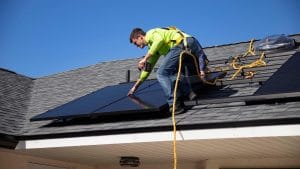
A 4kW rooftop installation takes 1–2 days. Day 1: scaffolding, mounting rails, and panel fitting. Day 2: inverter installation, electrical connections, and commissioning. Your electricity is off for 1–2 hours during final connection.
Knowing what to expect helps you plan around the installation. Here’s a typical timeline for a standard 4kW rooftop system:
Before installation day:
- Site survey (30–60 minutes) – usually 1–2 weeks before install date
- Scaffolding erected – often the day before, sometimes same day
- DNO (Distribution Network Operator) notification submitted by your installer
Day 1 (full day):
- Mounting rails attached to roof rafters
- 10 panels fitted to rails and secured
- DC cabling run from panels to inverter location
Day 2 (half to full day):
- Inverter mounted (usually in garage, utility room, or loft)
- AC wiring connected to consumer unit (electricity off for 1–2 hours)
- System commissioning and testing
- Generation meter installed (for SEG payments)
- Monitoring app set up on your phone
- MCS certificate and handover documentation
Scaffolding is usually removed within 3–5 days of completion. Your system starts generating immediately – no waiting period.
FREE QUOTE COMPARISON
Compare Solar Panel Quotes from Trusted Suppliers
✓ Save up to £975/year on energy bills
100% free • No obligation • Takes under 2 minutes
Savings and Payback for a 4kW System
A 4kW system saves £520–£1,380 per year (depending on battery) and pays for itself in 6–12 years. After payback, you benefit from 15–20 years of virtually free electricity.
Your savings come from two sources: reduced electricity bills (using solar instead of buying from the grid) and SEG export income (selling surplus to your energy supplier). Here’s what a typical 4kW system delivers annually:
| Scenario | Bill Savings | SEG Income | Total Annual Savings | Payback Period |
|---|---|---|---|---|
| Low self-consumption (30%) | £250–£400 | £140–£170 | £390–£570 | 10–14 years |
| Average self-consumption (45%) | £400–£650 | £100–£140 | £500–£790 | 7–10 years |
| High self-consumption (60%+) | £550–£850 | £60–£100 | £610–£950 | 6–9 years |
| With battery (80%+) | £800–£1,300 | £40–£80 | £840–£1,380 | 8–14 years |
Self-consumption is the single biggest factor in your financial return. The more solar energy you use directly (rather than exporting at 4–15p and buying back at 24.5p), the faster your payback. Simple habits make a big difference: run your washing machine, dishwasher, and tumble dryer during daylight hours.
For a full breakdown of solar panel finances across all system sizes, see our complete cost guide. To understand the long-term investment case, see solar panel profitability.
Even in the worst case (low self-consumption, no battery), a 4kW system still pays for itself within 14 years and delivers net savings of £6,000-£12,000 over its 25-year lifespan. With a battery and good habits, savings reach £21,000-£34,500.
Government Incentives for 4kW Systems
All the major UK solar incentives apply to 4kW residential systems. The most impactful are:
- 0% VAT until March 2027 – saves £1,000–£1,300 on a typical 4kW system. Applied automatically by your installer.
- Smart Export Guarantee (SEG) – pays 4–15p/kWh for exported surplus. Requires MCS certification and a smart meter. Shop around between suppliers for the best rate.
- ECO4 scheme – free or subsidised panels for income under £31,000 or benefits recipients with EPC D–G homes. Ends December 2026 (extended by 9 months from the original March 2026 date).
- Home Energy Scotland – £6,000–£7,500 grant + £5,000 interest-free loan for Scottish residents.
For full details on all available grants and how to apply, see our solar panel grants guide.
Maintenance and Lifespan of a 4kW System
Solar panels are remarkably low-maintenance. A 4kW system has no moving parts and requires minimal ongoing attention:
- Panel cleaning: £100–£200 per year (professional) or free (DIY with a hose and soft brush). Cleaning improves output by 3–5% – rain does most of the work, but bird droppings and tree sap need attention.
- Inverter replacement: £500–£2,000, typically needed once at the 10–15 year mark. Micro-inverters last longer (20–25 years) but cost more to replace individually.
- Panel degradation: Modern panels lose approximately 0.3–0.5% output per year. After 25 years, expect 85–88% of original output – still generating meaningful electricity.
- Insurance: Add your panels to your home contents insurance (£20–£50/year extra). This covers storm damage, theft, and accidental damage.
Total lifetime maintenance costs for a 4kW system are typically £3,000–£5,000 over 25 years – a fraction of the £13,000–£34,500 in savings the system generates.
Ready to get quotes for a 4kW solar system? Compare prices from up to 3 MCS-certified installers in your area – free, no-obligation, and takes 30 seconds.